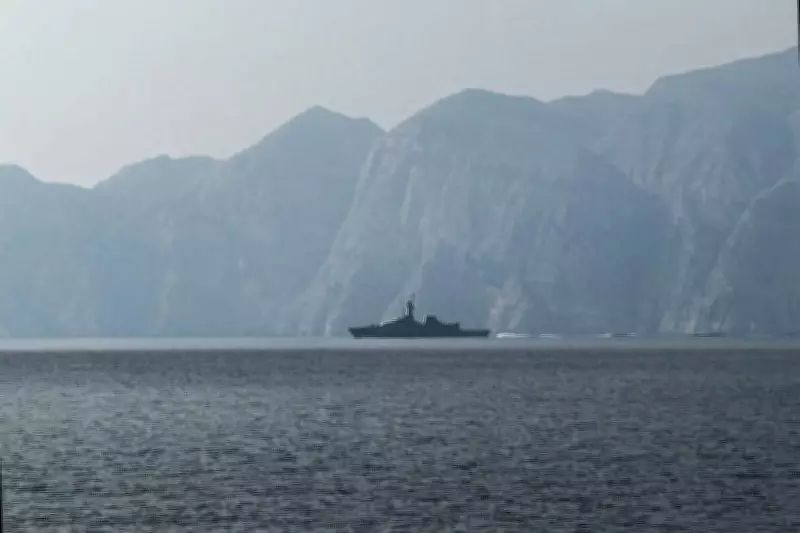
Iran's Strategic Opening in the Strait of Hormuz
The Strait of Hormuz, a critical global shipping chokepoint, has descended into perilous uncertainty since Iran asserted complete control over the waterway following the outbreak of war. This strategic move came days after the United States and Israel declared war and assassinated Iran's supreme leader, Ali Khamenei. According to the UK Maritime Trade Organisation, at least sixteen vessels have been attacked in the Gulf since hostilities commenced on February 28th, creating a maritime crisis of significant proportions.
Diplomatic Passage Emerges Amidst Turmoil
In a potentially groundbreaking development, the Pakistan-flagged Karachi ship, previously known as the Lorax, successfully transited the Iranian-controlled Strait on Sunday afternoon with its Automatic Identification System signal activated. This vessel represents the first non-Iranian ship to navigate these dangerous waters with its tracking system operational, signaling what maritime experts describe as a major diplomatic breakthrough.
Matthew Wright, a freight analyst from global trade firm Kpler, explained to The Independent: "This is Iran's widening strategy. The amount of control Iran has over the waterway is significant. They've been able to move their own cargoes comfortably over the last two weeks. Now they are selectively managing oil flows through that checkpoint, primarily with friendly Asian partners."
Selective Access and Economic Implications
The strategic importance of the Strait of Hormuz cannot be overstated, with approximately twenty million barrels of oil passing through daily, making it one of the world's most valuable shipping routes. Iran's selective granting of safe passage appears calculated to maintain pressure on global oil prices while rewarding diplomatic engagement.
Wright further elaborated: "What's significant is we don't expect this to be a trend they can expand more broadly without undermining the pressure they're able to keep on oil prices." This delicate balancing act represents Tehran's attempt to leverage its control while avoiding complete economic isolation.
International Negotiations and Regional Dynamics
Several nations have engaged in behind-the-scenes negotiations with Iran regarding maritime access. According to Reuters, Iran has requested India release three tankers seized in February following discussions about safe passage for India-bound vessels. Indian authorities had detained these Iran-linked ships near Indian waters, alleging identity concealment and involvement in illegal ship-to-ship transfers.
Meanwhile, Iraq's oil minister confirmed Baghdad is actively communicating with Iran to secure passage for some oil tankers through the Strait, as reported by state news agencies. These diplomatic efforts highlight how regional powers are navigating the complex geopolitical landscape created by Iran's control of this vital waterway.
The Karachi Tanker's Unusual Transit
The Lorax, carrying a crude blend called DAS from Abu Dhabi, took an unconventional route through the Strait, bypassing the typical hairpin bend by navigating north around Larak Island on the Iranian side before exiting. Wright suggested this deviation might have been directed as the safest available passage.
"We don't have confirmation, but it does suggest this vessel was probably asked to keep its AIS on and was probably guided by Iran through the Strait," Wright noted. "We can only speculate as to why that necessarily happened, but it could be so they can ensure the vessel's safety."
Shadow Fleets and Risk-Tolerant Operators
At least twenty non-Iranian oil ships have successfully exited the Strait since the conflict began, according to Kpler data. The majority have operated with their AIS systems deactivated, a common practice among vessels carrying sanctioned cargo to conceal identities and origins.
Wright explained this tactical approach: "What we've seen for non-Iranian cargoes leaving the region is they will go dark and then reappear on the other side. The thinking is it's much harder to track and maybe fire on a vessel that's not broadcasting its AIS."
Many transits are conducted by companies considered "risk-tolerant," such as Greek firm Dynacom, whose SMYRNI oil tanker has undertaken multiple passages despite the dangers. "Because the rates are very, very high," Wright clarified regarding their motivation.
Destination Patterns and Trapped Shipping
Analysis reveals distinct patterns in oil destinations: Iranian oil primarily flows to China, while non-Iranian oil reaches India and Pakistan. The Lorax was Pakistan-bound, while Dynacom ships loaded in Saudi Arabia or the United Arab Emirates typically deliver to India.
As of March 16th, an estimated 743 cargo ships remain trapped in the Gulf due to Iran's control, though this number has decreased from 778. Wright noted the challenge of accurate tracking: "With the AIS blackout, it's pretty hard to know. There's definitely been more exit than entry."
This evolving situation demonstrates how Iran is using its strategic control of the Strait of Hormuz to pursue diplomatic objectives while maintaining economic pressure, creating a complex challenge for the Trump administration's regional strategy.