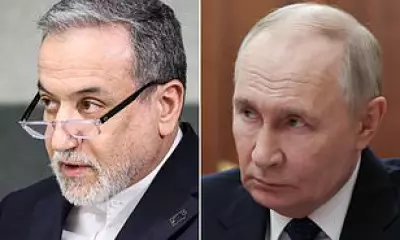
Israel has intensified its military campaign by systematically eliminating high-ranking Iranian officials through a series of precision airstrikes. This aggressive strategy is explicitly designed to destabilise and ultimately overthrow the Islamic Republic of Iran. However, security analysts and regional experts are issuing stark warnings that this approach carries significant risks and may ultimately prove counterproductive.
Historical Precedents of Targeted Assassinations
Targeted killings of enemy leadership have been a recurring tactic in Israel's national security playbook for decades. Yet, the long-term outcomes have often fallen short of strategic objectives. Palestinian and Lebanese militant organisations have frequently demonstrated remarkable resilience, regrouping and sometimes growing stronger following the loss of their top commanders.
The Hezbollah Example
In 1992, an Israeli airstrike successfully killed Hezbollah's then-leader, Abbas Musawi, in southern Lebanon. His successor, the charismatic Hassan Nasrallah, not only consolidated control but transformed the group into the region's most formidable non-state military force. Hezbollah fought Israel to a bloody stalemate in the 2006 war. Although Nasrallah and nearly all his deputies were killed during the 2024 conflict, Hezbollah resumed missile and drone attacks against Israel shortly after the current war began.

The Hamas Precedent
Similarly, Hamas has endured the loss of numerous leaders. Israel assassinated the group's founder and spiritual leader, Sheikh Ahmed Yassin, in 2004. Nearly every architect of the devastating October 7, 2023, attack has since been eliminated. Despite these decapitating blows, Hamas retains control over significant portions of Gaza and continues its armed resistance, fuelled by deep-seated grievances from the Israeli-Palestinian conflict.
Experts Question the Efficacy Against a State
Jon Alterman, Chair of Global Security and Geostrategy at the Center for Strategic and International Studies, argues that the impact of targeted killings often diminishes over time. He emphasises that Iran's complex governmental and military structures, comprising multiple overlapping institutions, have withstood successive waves of punishing strikes from both the United States and Israel.
"Even dictators need to rely on entire networks that support them," Alterman noted, suggesting that eliminating individual figures does not dismantle the system.
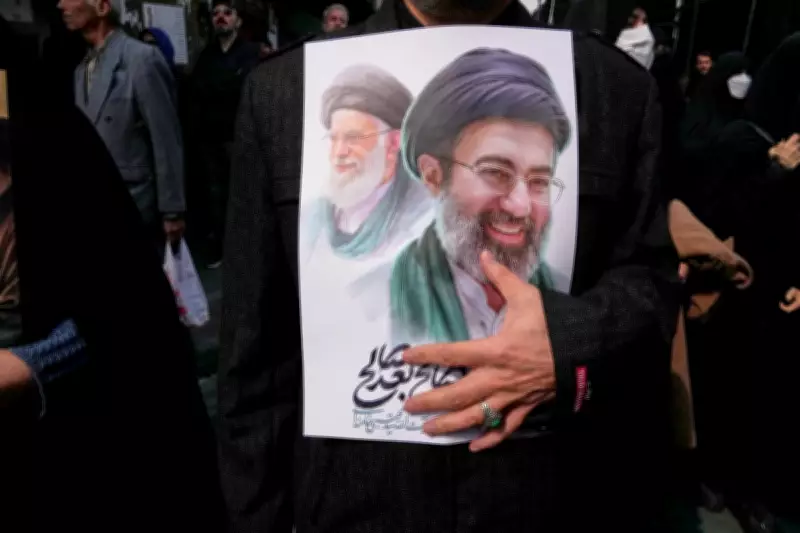
Iran's Supreme Leader, Ayatollah Ali Khamenei, was killed in the opening phase of the war. He has been succeeded by his son, Mojtaba, who is perceived as even less willing to compromise. The Islamic Revolutionary Guard Corps continues to launch missile barrages at Israel and neighbouring Gulf states, and has effectively restricted traffic through the critical Strait of Hormuz, despite the loss of several top commanders.
A Strategy Fraught with Unintended Consequences
Israeli Prime Minister Benjamin Netanyahu has framed the assassination campaign as a means to weaken the Iranian government sufficiently to spark a popular uprising, ideally leading to a pro-Western regime. However, no such revolt has materialised since the war's onset, following the brutal suppression of mass protests by Iranian authorities in January.
Yossi Kuperwasser, former head of research for Israeli military intelligence, acknowledges that targeted killings can be a useful tool but are not a panacea. "These operations by themselves don't dramatically change the ability of those organisations to cause damage and to carry out attacks," he stated. "But it's important for Israel to weaken its enemies."
He posits that while full "regime change" in Iran may not have occurred, there has been a "change in regime," with the leadership cadre being fundamentally altered.
The Risk of Radicalisation and Martyrdom
A significant danger of leadership decapitation is the potential for severe backlash. Eliminating leaders can radicalise their followers, elevate more extreme successors to power, and transform the slain into powerful martyrs whose influence endures.

Max Abrahms, a political scientist at Northeastern University, points to data from conflicts in Afghanistan, Pakistan, Israel, and the Palestinian territories showing a spike in violence against civilians following targeted killings.
"Leadership decapitation is risky," Abrahms warned. "When you take out a leader that prefers some degree of restraint and had influence over subordinates, then there's a very good chance that, upon that person's death, you're going to see even more extreme tactics."
The Necessity of a Political Strategy
Mohanad Hage Ali, Deputy Director of the Carnegie Middle East Center in Beirut, argues that military action alone is insufficient. "You can decapitate an organisation or defeat it militarily, but if you don't follow through politically, it doesn't work. And it's hard to see how this goes much further," he said.
This view finds support in modern history. The assassinations of figures like Congo's Patrice Lumumba (1961), Libya's Moammar Gadhafi (2011), and Iraq's Saddam Hussein (2006) did not usher in stability. Instead, these nations were plunged into prolonged periods of authoritarian rule, civil war, and factional chaos.
The United States' own use of targeted killings against Al-Qaeda and the Islamic State group, including the operations that eliminated Osama bin Laden and Abu Bakr al-Baghdadi, only achieved lasting degradation of those groups after years of comprehensive warfare involving ground forces.
As Israel persists with its high-stakes campaign against Iran's leadership, the central question remains whether eliminating individuals can truly alter the trajectory of a state-level conflict, or if it merely sows the seeds for a more volatile and dangerous future.