Supreme Leader Khamenei Confirmed Dead Following Coordinated US-Israeli Military Strikes
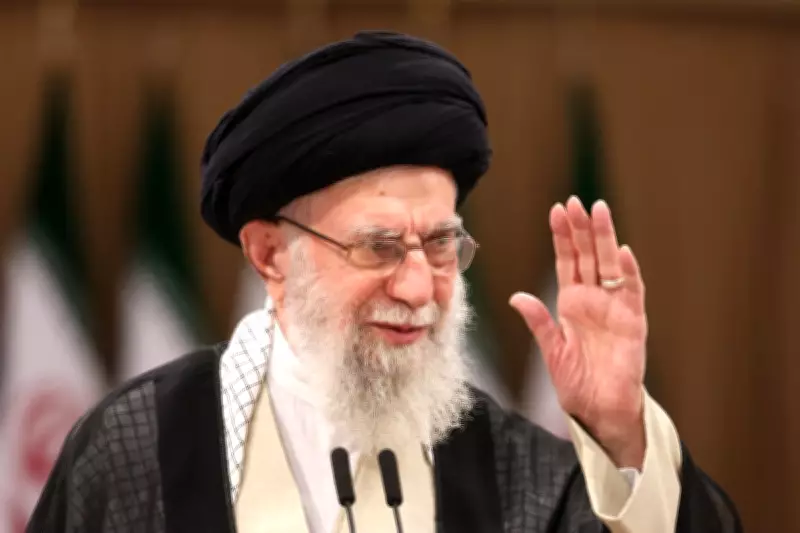
Iran's Supreme Leader Ayatollah Ali Khamenei has been killed in a series of targeted strikes conducted jointly by the United States and Israel, according to statements from former US President Donald Trump. The attacks, which occurred on Saturday morning, targeted dozens of locations across Iran, including Khamenei's personal compound, resulting in significant casualties reported by Iranian authorities.
Trump publicly confirmed Khamenei's death through his Truth Social platform, describing the Iranian leader as "one of the most evil people in History" and framing his elimination as a pivotal opportunity for the Iranian population to reclaim their nation. The former president asserted that justice had been served not only for Iranians but for all victims of Khamenei's regime worldwide.
Thirty-Seven Year Reign Abruptly Ended
Khamenei's death marks the sudden conclusion of his thirty-seven year leadership of Iran, during which he oversaw the country's transformation into a dominant regional power. His compound was reportedly completely destroyed in the precision strikes that claimed his life, according to senior Israeli government sources.

The Iranian government has acknowledged that the coordinated attacks resulted in hundreds of fatalities, though exact numbers remain unconfirmed. This development has created an immediate power vacuum in Tehran, raising urgent questions about potential successors and the future stability of the Islamic Republic.
Potential Successors and Opposition Groups Emerge
With Iran's leadership structure now in disarray, several opposition factions and potential claimants to power have begun positioning themselves for influence in the post-Khamenei era.
The People's Mujahideen Organisation (MEK/MKO) represents one potential contender. This leftist militant group, which played a significant role in overthrowing the Shah in 1979 before falling out with the ruling clerical establishment, maintains some influence despite years of limited activity within Iran's borders. Currently led by Maryam Rajavi from exile, the organization drives the National Council of Resistance of Iran and maintains a presence in Western nations, though it faces criticism from human rights organizations regarding its internal practices.
Monarchist factions have also staked their claim, with Reza Pahlavi, son of Iran's last Shah, declaring from his US residence that Khamenei's death effectively signals the end of the Islamic Republic. Pahlavi has publicly stated his readiness to lead a transitional government through non-violent means, claiming military support and a concrete transition plan, though experts question his actual influence within a country he hasn't inhabited for nearly fifty years.
Ethnic minority groups, particularly Sunni Muslim Kurdish and Baluch communities, have historically opposed Tehran's Shi'ite Persian-speaking government. While these groups have engaged in periodic insurgencies and protests, they lack a unified leadership structure capable of challenging central authority on a national scale.
Protest Movements and Historical Precedents
Iran has experienced significant protest movements throughout recent decades, often centered around economic grievances, electoral disputes, or social issues like women's rights. The December-January protests, which began over economic concerns before evolving into broader anti-regime demonstrations, were met with severe repression resulting in thousands of casualties.
Historical protest movements include the Green Movement following the disputed 2009 presidential election, led by former prime minister Mir Hossein Mousavi, and the 2022 women's rights protests associated with Nobel Peace Prize winner Narges Mohammadi. However, these movements have been systematically suppressed by authorities, leaving their current viability uncertain.

Immediate Power Struggle and Regional Implications
The most immediate concern following Khamenei's death involves potential violent power struggles within Iran's power structures. The Islamic Revolutionary Guard Corps (IRGC) represents the most formidable military force that could potentially impose martial law and assume control if the clerical leadership proves unable to maintain authority.
Regional stability hangs in the balance, as a civil conflict in Iran could easily spill across borders, destabilizing neighboring countries including Iraq, Turkey, and Pakistan. Historical precedents from Afghanistan and Libya demonstrate the dangers of regime collapse without clear transition plans toward stable governance.
As Iran enters this unprecedented period of uncertainty, the international community watches closely to see which factions will emerge to fill the leadership vacuum left by Khamenei's sudden demise and how the resulting power dynamics will reshape the Middle Eastern geopolitical landscape.