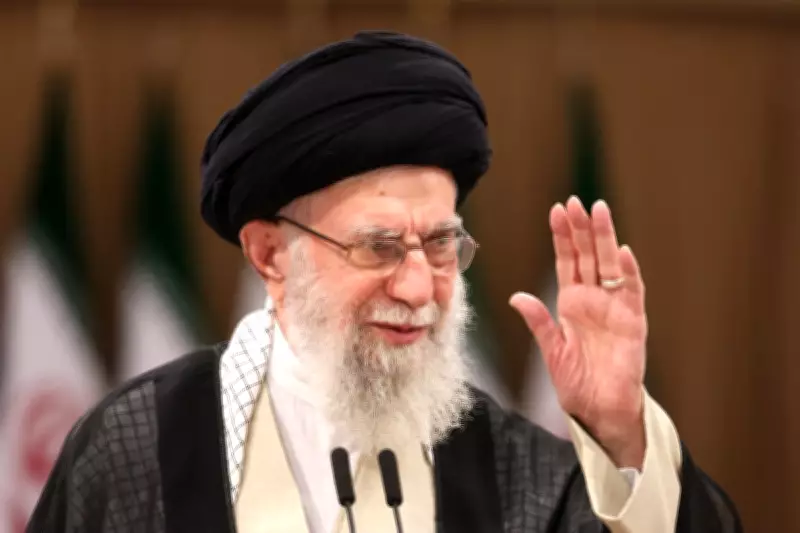
Ayatollah Khamenei Killed in Coordinated US-Israeli Military Strikes
Iran's Supreme Leader Ayatollah Ali Khamenei has been killed in a series of US-Israeli strikes across Iran, according to former US President Donald Trump. The attacks, which occurred on Saturday morning, targeted dozens of locations including the supreme leader's compound. Iranian authorities report the strikes resulted in at least hundreds of fatalities.
Trump confirmed Khamenei's death after a senior Israeli government source informed The Independent that the clerical ruler had been killed when his compound was flattened. Khamenei, who has overseen Iran's transformation into one of the Middle East's dominant powers since assuming leadership in 1989, ruled for 37 years until his death.
Trump's Response and Claims of Justice Served
On his Truth Social platform, Trump declared: "Khamenei, one of the most evil people in History, is dead," adding that this presents "the single greatest chance for the Iranian people to take back their country." He further stated: "This is not only Justice for the people of Iran, but for all Great Americans, and those people from many Countries throughout the World, that have been killed or mutilated by Khamenei and his gang of bloodthirsty THUGS."

Potential Successors in Iran's Fragmented Political Landscape
With Khamenei's death creating a significant power vacuum, attention turns to the various groups that could vie for leadership in Iran. The country's opposition remains fragmented, with several distinct factions potentially positioning themselves for influence.
The People's Mujahideen Organisation (MEK/MKO)
The remnants of this once-powerful leftist militant group, which bombed the Shah's government and US targets in the 1970s, still maintain some influence in Iran. Now advocating for the overthrow of the Iranian government, the group initially helped depose the Iranian Shah and establish the Islamic Republic in 1979 before falling out with other factions.
The Mujahideen developed numerous enemies in Iran after siding with Iraq during the 1980-88 war. Former leader Massoud Rajavi remains in exile and hasn't been seen for over two decades, while his wife Maryam Rajavi now controls the group. Despite showing little evidence of activity within Iran's borders recently, the group drives the National Council of Resistance of Iran, led by Ms. Rajavi, which maintains an active presence in many Western countries.
Human rights groups have criticized the Mujahideen for what they describe as cult-like behavior and abuse of followers, allegations the group denies.
The Monarchist Movement
When revolution transformed Iran into an Islamic Republic in 1979, Mohammed Reza Pahlavi – Iran's last Shah – fled the country, dying in Egypt in 1980. His son Reza Pahlavi, heir to the Iranian throne at the time of the revolution, now lives in the United States and calls for regime change through non-violent means and a referendum on a new government.
Following reports of Khamenei's death, Pahlavi wrote on X: "Ali Khamenei, the bloodthirsty despot of our time, the murderer of tens of thousands of Iran's bravest sons and daughters, has been erased from the face of history. With his death, the Islamic Republic has in effect reached its end and will very soon be consigned to the dustbin of history."
In a recent Fox News interview, Pahlavi claimed he has the support and mandate necessary to lead a transitional government in Iran, stating: "The military will side with us, and we have a plan of action and a transition plan." However, experts question his actual influence in a country he hasn't lived in for nearly fifty years, and significant splits exist even among pro-monarchist groups within Iran.
Ethnic Minority Groups
Iran's Sunni Muslim Kurdish and Baluch minorities have long opposed Tehran's Persian-speaking and Shi'ite government. Kurdish groups have carried out periods of active insurgency against government forces in western Iran where they form a majority. In Baluchistan, along the Pakistan border, opposition ranges from supporters of Sunni clerics to armed jihadists linked to al-Qaeda.

While major protests in Iran have often been fiercest in Kurdish and Baluchi areas, no strong, unified resistance against Tehran's rule currently exists among these groups.
Leaders of Mass Protest Movements
Mass protest movements with key figureheads have swept Iran at different points over decades. Protests in December and January, beginning over economic unrest but spiraling into anti-regime demonstrations, were met with brutal force by Iranian authorities, with some reports suggesting around 30,000 were killed by regime forces.
Whether mass unrest will erupt following Khamenei's death remains uncertain, as does the question of Tehran's potential response and who might lead such movements.
Iran has a history of significant protests, most notably after the 2009 presidential election when thousands filled Tehran's streets accusing authorities of rigging the vote in favor of incumbent Mahmoud Ahmadinejad against rival candidate and former prime minister Mir Hossein Mousavi. Mousavi's Green Movement was crushed, and he was placed under house arrest along with political ally and former parliament speaker Mehdi Karoubi. The movement, which sought democratic reform within the existing Islamic republic system, is now widely considered defunct.
In 2022, major protests centered on women's rights again gripped Iran. Narges Mohammadi, a 2023 Nobel Peace Prize winner who served as one of the figureheads, remains imprisoned in Iran's notorious Evin prison.
Concerns Over Violent Power Struggle and Regional Implications
Serious concerns now exist about the possibility of a violent power struggle in Iran's current vacuum. The powerful Islamic Revolutionary Guard Corps (IRGC) could impose martial law and take control of the country in the short term if the clerical elite are removed from power.
A civil war in Iran would bring significant disorder to the Middle East and risk destabilizing neighboring countries including Iraq, Turkey, and potentially Pakistan. Observers note that Trump need only look at Afghanistan and Libya for examples of the dangers inherent in ousting a regime without a clear plan for transition to liberal democracy.
The death of Ayatollah Khamenei marks a pivotal moment in Middle Eastern politics, with implications that extend far beyond Iran's borders. As various factions position themselves in the power vacuum, the international community watches closely to see whether Iran will experience peaceful transition or descend into violent conflict with regional consequences.