Lebanon Condemns Israeli Demolition of Homes in Occupied Southern Areas
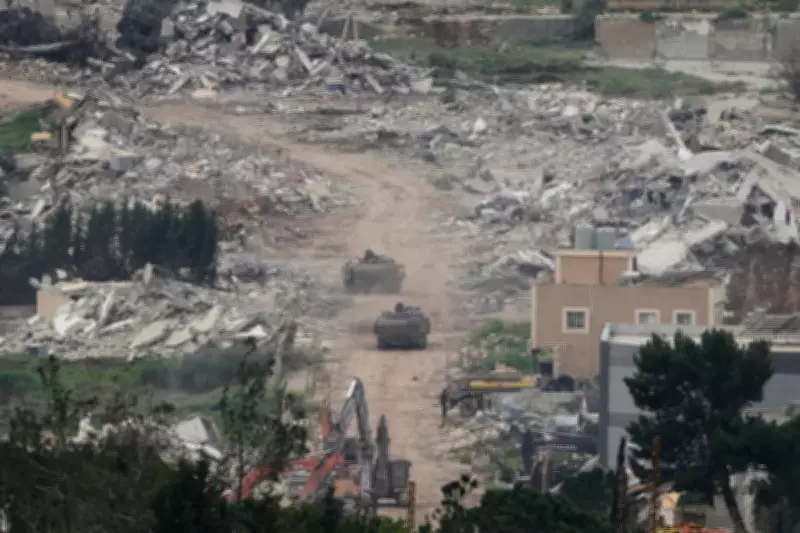
The Israeli military has been systematically destroying homes in areas of southern Lebanon it has occupied since agreeing to a ceasefire with Hezbollah last week. This widespread demolition campaign is causing growing alarm among residents, Lebanese officials, and United Nations peacekeepers, who fear that thousands of people displaced by the recent conflict will have nowhere to return if the fragile truce holds.
Systematic Destruction of Residential Areas
From a hill overlooking Beit Lif—approximately 4 kilometers north of Lebanon's border with Israel—Associated Press journalists observed that the village, once home to several thousand people, has been almost entirely flattened. "They were demolishing it gradually until they reached the main square and now, as you can see, there are no more houses," said Hassan Sweidan, a resident of a neighboring village.
Observers have reported entire residential neighborhoods in multiple villages being systematically destroyed. Due to security concerns and limited access, neither U.N. peacekeepers nor Lebanese officials have been able to conduct a detailed survey of the affected villages. However, the scale of destruction is evident and deeply concerning.

Ceasefire Talks and Diplomatic Efforts
Lebanese officials plan to raise the issue of widespread demolitions on Thursday during ceasefire talks with their Israeli counterparts in Washington. These negotiations mark the first direct talks between the two countries in decades and are expected to focus on extending the current 10-day truce and establishing a framework for future peace discussions.
Lebanese President Joseph Aoun emphasized in a statement that "halting Israel's demolition operations in southern villages and towns" is a priority that Lebanese ambassadors will address with Israeli officials. The talks come amid a shaky ceasefire that began on Friday, with both sides having carried out strikes since its implementation.
Context of the Conflict and Justifications
The recent conflict escalated on March 2 when Hezbollah fired missiles into northern Israel, following the U.S. and Israel's initiation of war with Iran. Israel responded with an intense bombing campaign and ground invasion of Lebanon, displacing hundreds of thousands and killing approximately 2,300 people in Lebanon, including hundreds of women and children.
Israeli officials have stated their intention to occupy parts of southern Lebanon, with the military issuing maps of a "forward defense line" extending several miles into Lebanon and encompassing dozens of villages. Israeli Defense Minister Israel Katz asserted that this area has been "cleared of terrorists and weapons and is empty of citizens, and will continue to be cleared of terrorists' infrastructure, including the destruction of houses in Lebanese villages that border Israel and have become terrorists outposts."
Eyewitness Accounts and International Observations
Hassan Sweidan, who returned to check on his home in the village of Yater after the ceasefire, found it intact. However, from his vantage point overlooking Beit Lif, he witnessed Israeli forces arriving with bulldozers, jackhammers, and tanks on the second day of the ceasefire. "We would come each day to see how much of the village was demolished," he recounted.
Tilak Pokharel, a spokesperson for the U.N. peacekeeping force in southern Lebanon (UNIFIL), confirmed that peacekeepers "have observed demolitions taking place in several areas" since the truce. The Israeli military, in a statement, claimed that the demolition work targets Hezbollah, not Lebanon or its civilians, and operates "in accordance with international law and does not destroy civilian property unless required by imperative military necessity."
Compounding Destruction and Regional Impact
This new wave of demolitions adds to existing destruction from the previous Israel-Hezbollah war in 2024, which left border areas devastated with limited reconstruction. During the most recent conflict, photographs from April 12 show excavators and bulldozers destroying homes on the Lebanese side of the border from towns in northern Israel.

Lebanon's state-run National News Agency reported on Wednesday that Israeli bulldozers were destroying neighborhoods, roads, and infrastructure in the town of Khiam, "in a scene that suggests an attempt to completely erase the town's identity." The agency also noted "systematic bombing operations" affecting residential areas in Bint Jbeil and villages like Beit Lif, Shamaa, Tair Harfa, and Hanine.
In response, Hezbollah launched drone and rocket attacks on Tuesday—the first since the ceasefire—citing Israeli "attacks on civilians and the destruction of their homes and villages in southern Lebanon." As diplomatic efforts continue, the situation remains tense, with the future of displaced residents hanging in the balance amid ongoing demolitions and fragile peace negotiations.