French President Emmanuel Macron has launched a blistering critique of the United States, accusing the transatlantic ally of abandoning the international rulebook and distancing itself from its partners. The stark warning came during his annual address to French ambassadors at the Élysée Palace on Monday, against a backdrop of escalating transatlantic tensions.
A Stark Warning from Paris
In a speech that represents one of the strongest European condemnations of Washington's recent actions, Macron did not mince his words. He described the US as "an established power, but one that is gradually turning away from some of its allies and breaking free from international rules that it was still promoting recently." The French leader painted a picture of a fragmenting global system, stating, "We are living in a world of great powers with a real temptation to divide up the world," and lamented that multilateral institutions are "functioning less and less effectively."
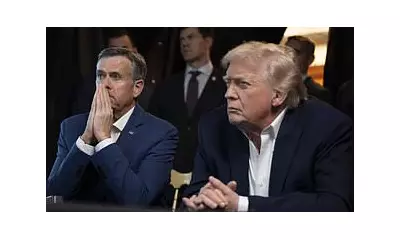
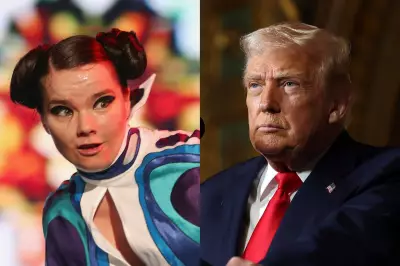
Macron's impassioned address followed a deeply personal slight from US President Donald Trump just a day earlier. At a meeting of Republican leaders, Trump mocked Macron's accent while recounting, in disputed terms, how he pressured France to agree to higher drug prices by threatening tariffs on all French imports, including champagne and wine.
Europe's Tepid and Divided Response
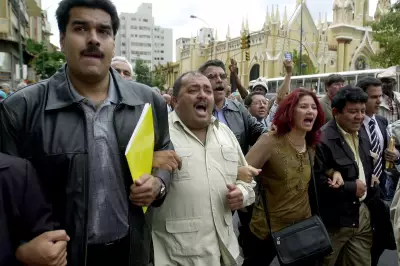
The immediate catalyst for Macron's remarks was a series of aggressive foreign policy moves by the Trump administration in recent days. These included an unprecedented military incursion into Venezuela that resulted in the capture of President Nicolás Maduro, who was subsequently paraded in handcuffs in New York. Concurrently, Trump renewed threats to annex Greenland, an autonomous territory of EU member state Denmark.
The European reaction to the Venezuelan operation has been notably fragmented and cautious. The EU's initial response, articulated by High Representative Kaja Kallas and backed by 26 of 27 member states, was to call for "calm and restraint" rather than outright condemnation. It subtly reminded the US of its "particular responsibility" as a UN Security Council member to uphold international law.
National responses varied wildly:
- Germany's Chancellor Friedrich Merz called for a "complex" legal assessment, acknowledging doubts about Maduro's legitimacy but stopping short of endorsing the US action.
- Italy's Prime Minister Giorgia Meloni offered forceful praise, labelling the raid an act of "legitimate" self-defence.
- Spain's Prime Minister Pedro Sánchez led a small group of critics, stating Spain would not recognise any intervention violating international law.
- UK Prime Minister Sir Keir Starmer said he "shed no tears" for Maduro but emphasised the importance of adhering to international law.
A More United Front on Greenland
In contrast to the disarray over Venezuela, the European stance on Greenland has been more decisive and unified. Following days of heightened tension, leaders including Macron, Starmer, and Meloni issued a joint statement vowing to defend Greenland's "territorial integrity" and the "inviolability of borders." They firmly declared that "Greenland belongs to its people" and that only Denmark and Greenland could decide on its future, referencing a 1951 defence pact between the US and Denmark.
Behind the scenes, European capitals are scrambling to formulate a coordinated contingency plan. French Foreign Minister Jean-Noel Barrot confirmed the issue would be discussed with German and Polish counterparts, stating, "We want to take action, but we want to do so together with our European partners." A German government source echoed this, confirming close cooperation with other European nations and Denmark on "next steps."
However, the planning appears embryonic. A senior European official noted that while Denmark must lead the response, it has yet to communicate what concrete support it desires from allies. Spain's foreign minister, José Manuel Albares Bueno, even stated his nation was unaware of any specific EU-led plan regarding Greenland, highlighting the ongoing challenges of European coordination in the face of an assertive and unpredictable American presidency.