Macron Visits Cyprus as Europe Bolsters Defences Amid Iran War Drone Strike
French President Emmanuel Macron is making a significant visit to Cyprus on Monday, demonstrating strong European support for the island nation following a recent drone attack linked to the ongoing Iran war. This high-profile trip comes just days after France dispatched the frigate Languedoc to reinforce Cyprus's anti-drone and anti-missile capabilities, marking a decisive response to the first such assault on European Union territory.
Military Buildup and Diplomatic Coordination
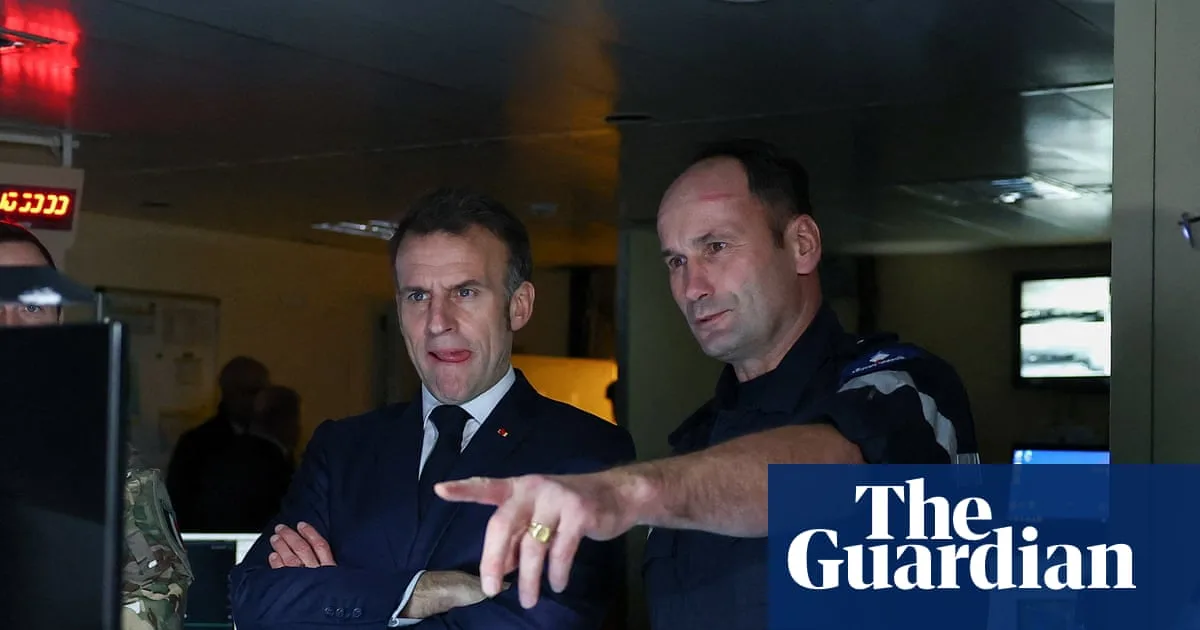
Macron's office confirmed that the president will meet with Cypriot President Nikos Christodoulides and Greek Prime Minister Kyriakos Mitsotakis at Cyprus's main air base in the southwest. This location currently hosts four deployed Greek F-16 fighter jets, symbolising the heightened military readiness in the region. The discussions aim to strengthen security around Cyprus and across the Eastern Mediterranean, as stated in an official French communiqué.
In addition to the Languedoc, France's nuclear-powered aircraft carrier Charles de Gaulle is expected to arrive in the Eastern Mediterranean shortly, having been redirected from the Baltic Sea. This move was explicitly ordered by Macron in response to the drone strike on Cyprus, underscoring the strategic partnership recently signed between France and the EU member state.
European Solidarity and Regional Tensions
The military support extends beyond France, with Greece's advanced Kimon and Psara frigates already patrolling off Cyprus's southern coast. Warships from Italy, the Netherlands, and Spain are anticipated in the coming days, while the UK destroyer Dragon is scheduled to arrive next week. This collective deployment represents a robust European rally around Cyprus during the Iran war, showcasing unity and deterrence.
Despite this buildup, the three leaders have consistently urged against any expansion of the conflict. President Christodoulides has repeatedly emphasised that Cyprus will not participate in military operations, focusing instead on defensive measures and diplomatic efforts.
Details of the Drone Attack and Aftermath
The incident that triggered this response occurred on March 2, when a Shahed drone struck the RAF Akrotiri air base on Cyprus's southern coast just after midnight. The attack caused minor damage to a hangar but resulted in no injuries. Later that day, British Typhoon and F-35 warplanes intercepted two additional drones scrambled from the same base.
Cyprus officials confirmed last week that the Shahed drone originated from Lebanon, with speculation pointing to the Hezbollah militant group, an Iranian proxy. Hezbollah's arsenal is known to include exploding drones similar to those used by Iran. In response, Lebanese Foreign Minister Youssef Rajji condemned the attack on Sunday, urging Cypriot authorities not to associate the Lebanese state with non-state actors like Hezbollah. The Lebanese government has since ordered its security agencies to crack down on such groups.
Diplomatic Efforts and Future Implications
Macron has been deeply involved in diplomatic talks to prevent further escalation in the Middle East, including discussions with Iranian President Massoud Pezechkian on Sunday, where he urged an end to strikes. Cypriot government spokesman Constantinos Letymbiotis noted that the leaders will assess regional developments and coordinate on preemptive measures, expressing gratitude for the swift European assistance.
This visit and the accompanying military deployments highlight Cyprus's vulnerability and the EU's commitment to its defence during the Iran war. The situation underscores the broader geopolitical tensions in the Eastern Mediterranean, with Europe taking a proactive stance to protect its member states and maintain regional stability.