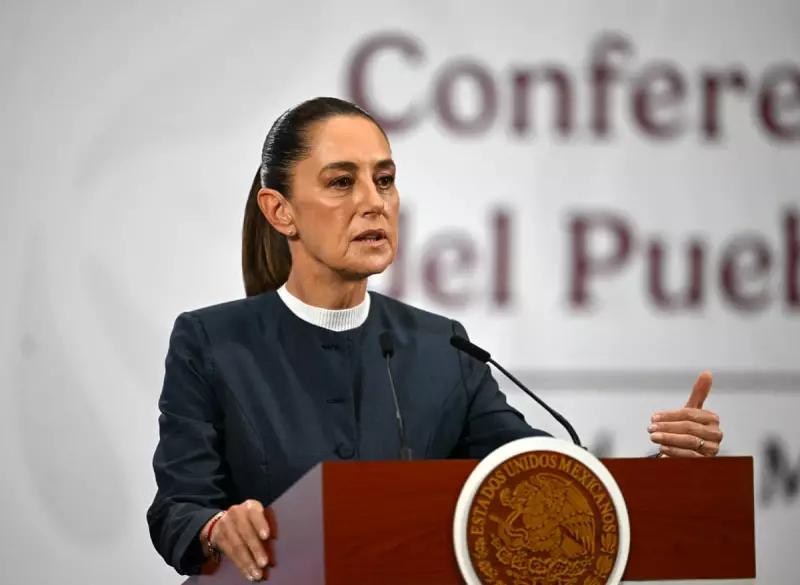
In a decisive move that has captured international attention, Mexican President Claudia Sheinbaum has firmly rejected the possibility of allowing US military forces to operate within Mexican territory to combat powerful drug cartels.
A Question of Sovereignty
The newly elected leader emphasised that such foreign military intervention would constitute an unacceptable violation of Mexico's national sovereignty. Her stance comes amid ongoing discussions about cross-border security cooperation between the two neighbouring nations.
Domestic Strategy Against Organised Crime
Rather than relying on external military support, President Sheinbaum outlined her administration's commitment to strengthening Mexico's own institutions and security forces. The government plans to confront criminal organisations through enhanced intelligence operations and targeted law enforcement actions, while simultaneously addressing the root causes of violence through social programmes.
Regional Security Implications
This position establishes clear boundaries in the complex US-Mexico relationship, particularly regarding security matters that affect both countries. The decision reflects Mexico's determination to handle internal security challenges through sovereign means, despite the transnational nature of drug trafficking networks.
Historical Context and Future Relations
The debate over military cooperation resurfaces periodically, especially as cartels continue to wield significant power in certain regions. Sheinbaum's unequivocal rejection sets the tone for her administration's approach to bilateral relations, prioritising mutual respect and cooperation within clearly defined parameters.