Moldova's President has issued a stark warning that any lopsided peace agreement to end the war in Ukraine would fail to secure a lasting peace, instead merely providing a pause for Vladimir Putin's forces to regroup before attacking again.
A 'Pause' Not Peace: The Risk of an Uneven Deal
President Maia Sandu cautioned that a settlement favouring one side would not bring a sustainable end to the conflict. She argued such an outcome would directly threaten not only Ukraine but also other former Soviet states, including Moldova, while handing the Kremlin dangerous leverage over the wider European continent.
Her intervention comes amid continued peace talks, with US President Donald Trump claiming over the weekend that an overall agreement was "close to 95 per cent done" following a meeting with Ukrainian leader Volodymyr Zelensky at his Mar-a-Lago resort.
Call for US Pressure on Moscow
In an interview with The Telegraph, Sandu expressed doubt that sufficient pressure is currently being applied on Russia to force it to agree to stop the war. "I believe that President Trump wants peace and we appreciate this very much," she stated. "I just don’t believe there is enough pressure today on Russia to make them agree to stop the war in Ukraine."
She emphasised the need for a just and durable peace, adding, "We don’t want a peace which is going to provoke Russia in six months from now to come back." Sandu maintained that unless President Trump is willing to impose meaningful pressure on Putin, Russia’s ambitions to subjugate Ukraine and dominate Europe would only be emboldened.
Escalating Threats and Alleged War Crimes
The warning coincides with reports that Putin has ordered his armies to expand the conflict in 2026, aiming to seize vast new tracts of Ukrainian territory. According to Russian state media, Chief of General Staff Valery Gerasimov stated the objective is to expand a buffer zone in Ukraine's Sumy and Kharkiv regions, near the Russian border. Kyiv has rejected this, accusing Moscow of seeking a pretext for deeper incursions.
Meanwhile, the human cost of the war continues to mount. One of Ukraine's most decorated soldiers, Major Oleh Shyriaiev, told The Times that Russian forces are systematically executing prisoners of war, alleging he intercepts transmissions with orders to kill surrendering troops.
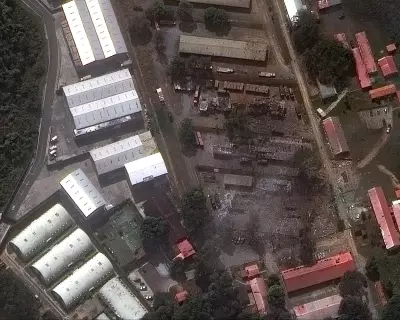
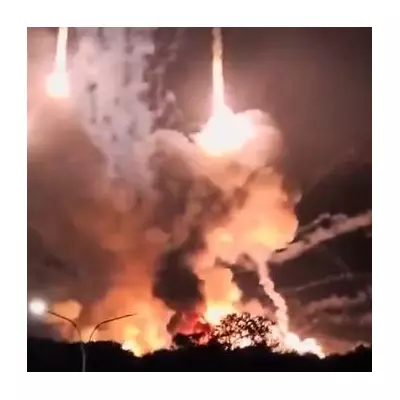
On the ground, attacks persist. Overnight Russian strikes caused significant damage to two energy facilities in Ukraine's southern Odesa region, leading to expected prolonged blackouts for civilians. This follows Moscow's accusation—which Kyiv denies—of a Ukrainian drone attack on Putin's residence.
As diplomatic efforts continue, the stark message from Moldova's leader underscores the precarious security dilemma facing Europe: a peace deal that fails to constrain Russian aggression may simply be a prelude to a wider, more devastating war.