Netanyahu Emulates Putin's Strategy with Iranian Energy System Bombing
The Israeli military's recent bombing of Iran's South Pars gas field has drawn stark and chilling parallels to Russia's ongoing campaign against Ukrainian civilian infrastructure. This strategy, widely condemned as a potential war crime when employed by Moscow, is now being replicated by Benjamin Netanyahu's government in its conflict with Iran. World affairs editor Sam Kiley analyses that such an approach is likely to cause immense and needless suffering while failing to achieve its stated objective of bringing the Iranian regime to its knees.
Mirroring Tactics of Alleged War Crimes
On December 5th of last year, the British government joined forty-two other nations in formally accusing Russia of deliberately targeting civilian infrastructure in Ukraine, actions that may constitute war crimes under international humanitarian law. Neil Holland, the United Kingdom's representative to the OSCE, stated in Vienna that such unlawful targeting violates the Geneva Conventions' principle of distinction. He detailed a clear pattern of Russian missile and drone strikes causing significant civilian casualties, massive damage to residential and energy infrastructure, and widespread emergency power outages across Ukraine.
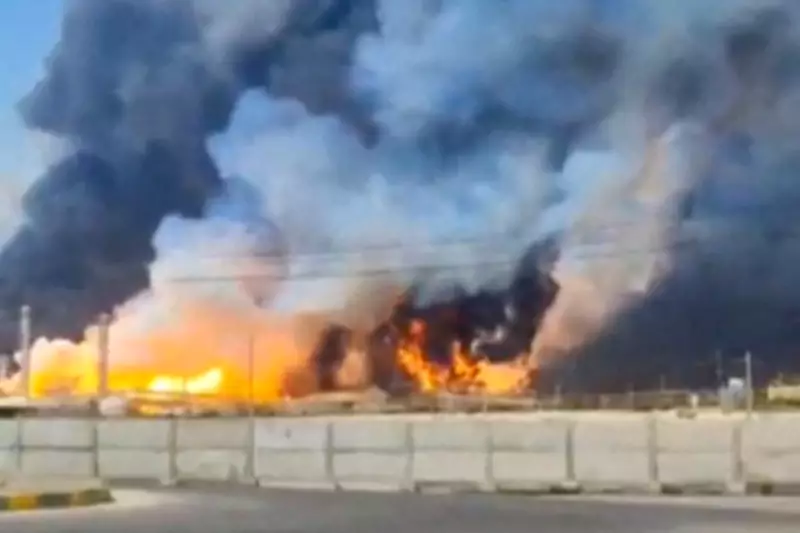
Israel has now executed an almost identical strategy against Iran. By targeting the South Pars gas field, which provides at least seventy-five percent of Iran's natural gas and fuels approximately eighty percent of its electricity generation, Israel aims to shatter the nation's industrial capacity and break its energy backbone. The attack on Wednesday ignited storage tanks, prompting immediate Iranian retaliation against Qatar's Ras Laffan Industrial City, the world's largest LNG export hub. This escalation highlights the interconnected nature of global energy markets and the rapid spread of conflict.

Global Repercussions and Political Reactions
The strategic bombing has triggered significant global economic repercussions. European natural gas prices surged by twenty percent following the Iranian counterattack on Ras Laffan. This price volatility presents a direct concern for political leaders worldwide, including former US President Donald Trump, who has historically shown little regard for human rights allegations but must contend with domestic fuel prices. In a revealing post on his Truth Social platform, Trump came close to apologising to Iran while admonishing Israel for the escalation, explicitly stating the United States had no prior knowledge of the attack.
Trump issued a stark warning, declaring that any further Iranian attacks on the Qatari section of the gas field would prompt a massive US military response against the entire South Pars facility. He expressed reluctance to authorise such destruction due to long-term implications for Iran's future but emphasised his readiness to act. Despite this warning, Iran proceeded with another attack, demonstrating the cycle of retaliation now in motion.
Economic Windfalls and Strategic Miscalculations
The conflict's ripple effects extend far beyond the immediate battlefield, threatening to hobble economies across Asia and the Americas through sustained energy price inflation. Ironically, one major beneficiary appears to be Vladimir Putin's Russia. According to Ukrainian President Volodymyr Zelensky, Moscow's oil sales have already generated up to ten billion dollars in extra revenues for its war effort. Analysis of figures from the Centre for Research on Energy and Clean Air suggests Russia could gain an additional two to four billion euros annually from gas exports to the European Union alone, with global annual windfalls potentially reaching eight to sixteen billion euros for the Kremlin.

Netanyahu's strategy appears to ignore recent history. Russia's sustained attacks on Ukrainian energy systems over the past four years, particularly during last winter, did not break Ukrainian morale or trigger a popular uprising against President Zelensky. Instead, they hardened Ukrainian resolve and deepened hatred towards Russia, with Russian forces now facing significant setbacks on the Donbas battlefields. There is no evidence that bullying civilian populations through energy deprivation breaks their spirit, and little indication suggests Iranians will turn against their theocracy because Israel is cutting their fuel supplies.
International Silence and Legal Hypocrisy
Notably, European nations that condemned Russia's actions last December have so far remained silent regarding Israel's attacks on Iranian energy systems, which by their own previous definition could constitute possible war crimes. This silence suggests a pragmatic calculation that the broader war itself is illegal, coupled with an observation of the outcomes from Putin's alleged crimes in Ukraine. The international community's inaction creates a dangerous precedent, allowing tactics deemed unacceptable in one conflict to be normalised in another, with devastating humanitarian and economic consequences for the global population.