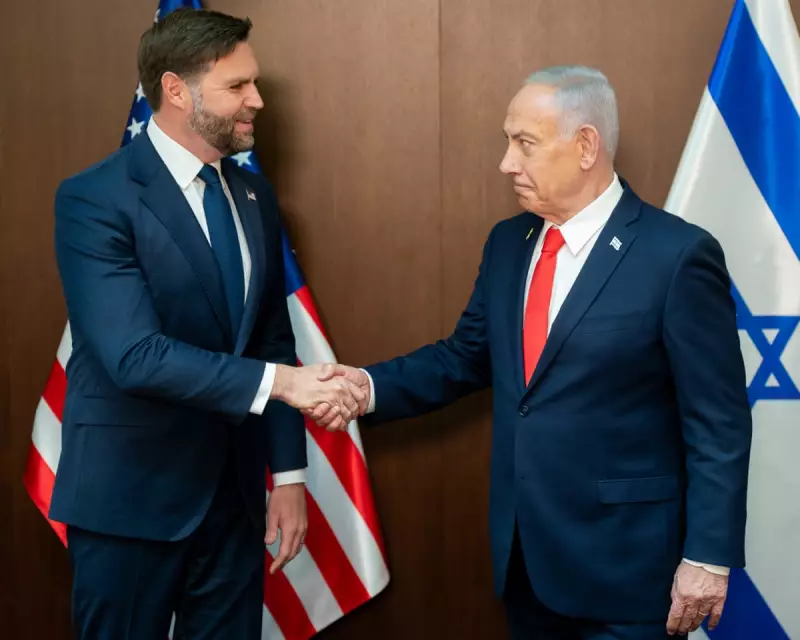
In a fiery rebuttal that has sent shockwaves through diplomatic circles, former Israeli Prime Minister Benjamin Netanyahu has categorically denied explosive claims that Israel operates as a "client state" to the United States, dismissing the allegations as "absolute hogwash."
The diplomatic firestorm
The controversy erupted during a tense exchange where Netanyahu was confronted with assertions about Israel's relationship with its powerful ally. The former leader didn't mince words, delivering a blistering response that highlighted the complex dynamics between the two nations.
"The suggestion that we're some kind of client state is not only offensive but demonstrates a fundamental misunderstanding of our relationship," Netanyahu stated, his comments reverberating across international media.
A relationship under scrutiny
The extraordinary public denial comes at a sensitive time for US-Israel relations, with ongoing debates about military aid, diplomatic support, and strategic independence. Netanyahu's forceful pushback signals growing concern about how the special relationship is perceived on the global stage.
Observers note that the "client state" terminology carries significant political weight, suggesting a level of dependency that many in Israel's leadership vehemently reject. The phrase implies a power dynamic where the smaller nation follows Washington's lead rather than pursuing its own independent foreign policy.
What this means for future relations
This public spat reveals underlying tensions that could have far-reaching implications for:
- Future military and economic aid packages
- Coordination on regional security threats
- Diplomatic efforts in the Middle East peace process
- Bilateral trade and technology partnerships
The strength of Netanyahu's language suggests that behind closed doors, concerns about sovereignty and independence in the relationship may be more pronounced than previously acknowledged.
As both nations navigate increasingly complex global challenges, this very public airing of grievances could either clear the air or create new obstacles in one of the world's most watched international partnerships.