Netanyahu Dismisses Years-Long War as US-Israel Strikes Escalate in Iran
Israeli Prime Minister Benjamin Netanyahu has declared that the ongoing US-Israel military campaign against Iran will not extend into years, despite the conflict intensifying across the Middle East. Speaking on Fox News' Hannity program, Netanyahu emphasised that while the war may require some time, it is not an endless engagement, contrasting with previous prolonged conflicts in the region.
Initial Attacks and Iranian Retaliation
The air war commenced on Saturday with coordinated US and Israeli strikes across Iran, resulting in the death of Supreme Leader Ali Khamenei. This action triggered immediate retaliation from Iran, targeting Arab nations that host US military bases throughout the Middle East. President Donald Trump initially projected the conflict would last four to five weeks but has since advocated for a broader, open-ended campaign against Iran.
Evacuations and Hezbollah Response
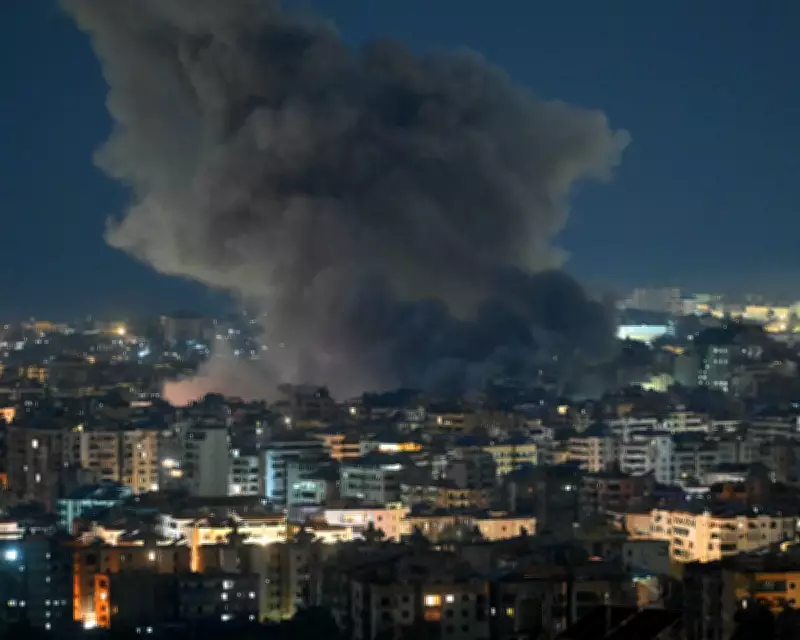
In response to the escalating violence, the Israeli military issued new evacuation orders on Tuesday morning for dozens of locations in Lebanon, including warnings for residents in two southern Beirut neighbourhoods to avoid specific buildings ahead of anticipated military operations. Concurrently, Hezbollah claimed responsibility for launching drones at northern Israel, further heightening tensions.

Key Developments in the Crisis
US Embassy Attack in Riyadh: A drone strike hit the US embassy in Riyadh, Saudi Arabia, early Tuesday morning, causing a fire and producing loud blasts and black smoke over the diplomatic quarter. Reports indicate flames were visible, underscoring the volatile security situation.
State Department Travel Warnings: The US State Department has urged all American citizens to evacuate from 14 Middle Eastern countries due to escalating risks. The list includes Bahrain, Egypt, Iran, Iraq, Israel and the Palestinian territories, Jordan, Kuwait, Lebanon, Oman, Qatar, Saudi Arabia, Syria, the United Arab Emirates, and Yemen.
Confusion Over Strait of Hormuz: Navigation in the Strait of Hormuz, a critical route for global oil and gas shipments, faced uncertainty after an Iranian Revolutionary Guards general threatened to "burn any ship" attempting passage. However, US Central Command clarified via Fox News that the strait remains open, contradicting the Iranian warning.
US Justification for Strikes: Secretary of State Marco Rubio explained that the US preemptively attacked Iran upon learning Israel was planning a strike, which would have led to retaliation against US forces. Rubio stated, "We knew that if we didn’t preemptively go after them before they launched those attacks, we would suffer higher casualties." He added that the "hardest hits" from the US military are yet to come, promising a more punishing phase ahead.
Trump's Objectives and Extended Timeline: President Trump outlined four key goals for the US strikes on Iran: destroying Iran's missile capabilities, annihilating its navy, preventing Iran from obtaining nuclear weapons, and halting its support for terrorist groups abroad. He signalled that the conflict could last longer than initially predicted, aligning with a strategy for sustained military pressure.