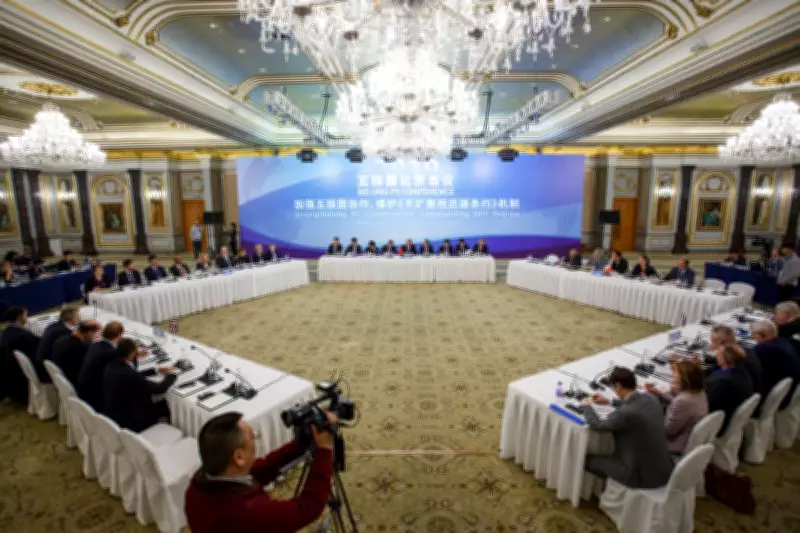
Diplomats from nearly every nation are convening in New York for a four-week review of the Treaty on the Non-Proliferation of Nuclear Weapons (NPT), the world's most comprehensive nuclear arms agreement. The NPT, a cornerstone of international law, was established in the late 1960s as a bargain where nuclear-armed states committed to disarmament in exchange for non-nuclear states foregoing acquisition, but it lacks defined processes or enforcement mechanisms for disarmament.
Despite its moderate success in discouraging additional states from acquiring nuclear weapons, the NPT has largely failed in its disarmament goals. Nuclear-armed states continue to modernise their arsenals, and key agreements have lapsed, pushing the 'Doomsday Clock' closer to midnight. Review conferences have been fraught with difficulties, with recent failures to reach consensus. In 2022, Russia blocked adoption of the final text, and in 2015, the US and UK blocked a text at Israel's behest.
Current Challenges Facing the NPT
Current challenges include Russia's weaponisation of nuclear facilities in Ukraine and US-Israeli attacks on Iran's nuclear facilities. These actions raise profound questions about the NPT's credibility and increase the risk of states abandoning the treaty to develop nuclear weapons. The conference will address these issues as diplomats seek to reaffirm the treaty's relevance in a volatile geopolitical landscape.

Key Issues on the Agenda
- Disarmament Commitments: Nuclear-armed states face pressure to demonstrate progress toward disarmament, with many criticising the modernisation of their arsenals.
- Non-Proliferation: Concerns over Iran's nuclear programme and North Korea's continued development remain central to discussions.
- Peaceful Use of Nuclear Energy: The treaty guarantees the right to peaceful nuclear technology, but safeguards must be strengthened to prevent diversion to weapons programmes.
The outcome of this review conference will be critical for the future of the non-proliferation regime. Without meaningful progress, the treaty risks becoming obsolete, potentially triggering a new arms race. Diplomats must navigate deep divisions to reach a consensus that upholds the treaty's objectives.