Palestinian Civilians Become Casualties in Iran-Israel Conflict After Beauty Salon Strike
For nearly three weeks, Palestinians residing in the occupied West Bank had largely remained bystanders as Israel and Iran exchanged airstrikes. However, on Wednesday, this changed dramatically when four women tragically became direct victims of the escalating hostilities.
Deadly Strike on Beit Awa Beauty Salon
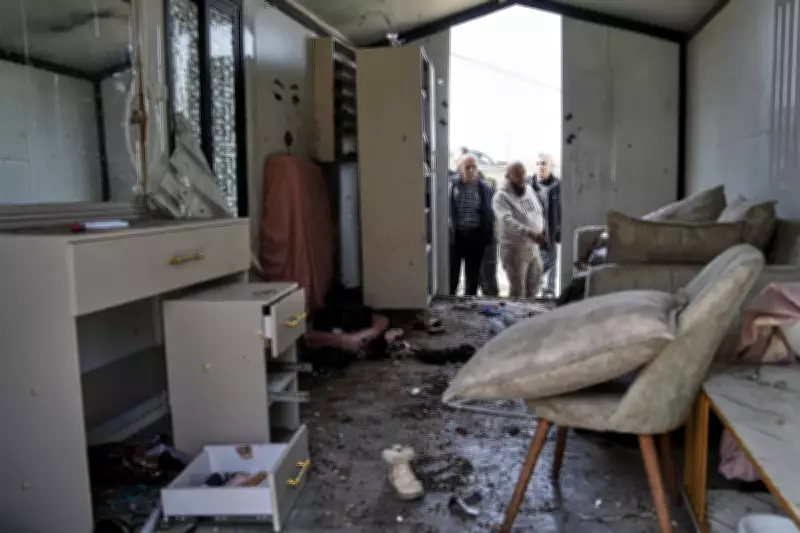
In the town of Beit Awa, women and their daughters were gathered inside a modest beauty salon when an Iranian missile struck mere steps away. The impact sent shrapnel tearing through walls and shelves stacked with boxes of acrylic nails and bottles of turquoise and scarlet polish.
According to the Palestinian Red Crescent and eyewitness accounts, more than a dozen individuals were injured, with four fatalities. Among those killed were a single mother who was six months pregnant and her young daughter.

The morning after the strike revealed a harrowing scene: hundreds of coffee cups and acrylic nails lay scattered across a floor stained red with dried blood. The salon, operated from a metal container in a family's yard, was pocked with holes, with debris piles surrounding a small crater marking the impact site.
Ambulances Delayed During Critical 'Golden Hour'
Salon owner Hadeel Masalmeh lost friends and her business partner, Sahera Atileh, in the attack. She recounted hearing sirens from the nearby Israeli settlement of Negohot, approximately two miles away. "We didn't pay much attention and didn't expect any shrapnel or anything like that to fall on us," she said.
While much of Israeli life has revolved around sirens and alerts since the conflict began, Palestinians had continued their daily routines largely uninterrupted. They rarely paused for distant sirens or the occasional phone alert from Israeli services.
However, the response to Wednesday's tragedy highlighted systemic issues. Abedullraziq Almasalmeh described how the drive to Beit Awa, which should have taken less than ten minutes, stretched to twenty-five, leaving victims without crucial medical care during the critical 'golden hour.'
The Palestinian Red Crescent attributed these delays to Israeli gates outside Beit Awa that forced ambulances to take longer, alternative routes. Qusai Jabr, manager of the group's disaster risk management department, emphasized that these obstacles have increasingly prevented emergency crews from reaching Palestinians in need, including women in labor, elderly stroke victims, and those injured in settler attacks.
"This forced closure caused significant delays, compelling ambulances to take long, rugged alternative routes, which critically impacted the 'golden hour' essential for life-saving interventions," the Palestinian Red Crescent stated.
Lack of Civilian Protections in West Bank
The beauty salon strike underscored the vulnerability of Palestinians living close to Israel who lack access to shelters and robust medical assistance systems. Israel maintains a comprehensive alert system directing residents to fortified shelters, which has effectively minimized casualties during Iranian airstrikes.
Although not all Israeli communities enjoy equal access to shelters, building codes have required them in homes since the first Gulf War, with public shelters available for those without private ones. In contrast, Palestinians in the West Bank—whether in crowded cities or rural areas—lack such protections entirely.
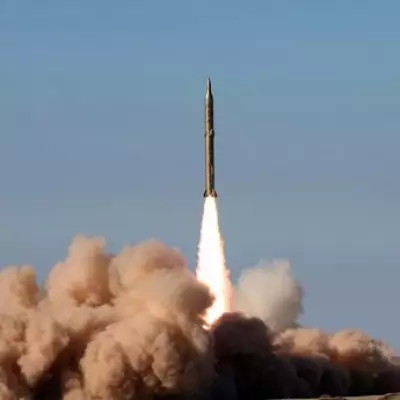
While the West Bank is not a primary Iranian target, it has previously been hit by shrapnel and debris from intercepted missiles. The nature of Wednesday's strike remains unclear: Israel's military described it as a direct hit from a submunition of a cluster bomb, rather than falling debris, noting that such weapons can disperse smaller bomblets across wide areas.
These fatalities mark the first Palestinian deaths in the West Bank since the Iran-Israel conflict began. Jabr noted that the number of Israeli gates and roadblocks has increased from approximately 800 during last year's conflict to roughly 1,100 currently, further complicating emergency response efforts.