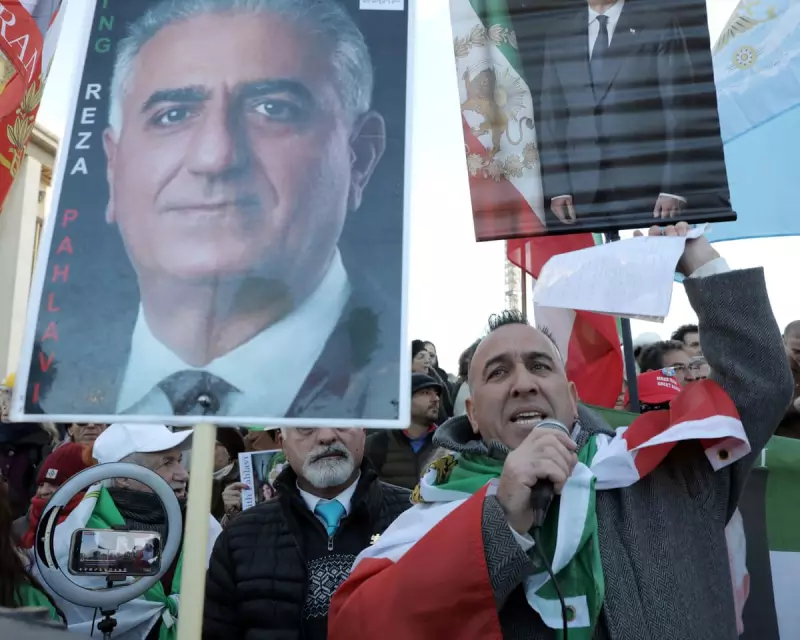
In a show of international solidarity, people have gathered in the streets of Paris near the Eiffel Tower to voice their support for a rapidly expanding protest movement within Iran. The demonstration underscores the global attention on the unrest shaking the Islamic Republic.
A Claim to Leadership and a Cautious World
Amid the turmoil, supporters of Reza Pahlavi, the exiled son of Iran's deposed shah, have been quick to assert that the crowds mobilising inside Iran are heeding his call to action. They frame the protests as a de facto referendum on his leadership, suggesting the public response signifies a victory for his cause.
However, the critical question of who could lead a post-clerical Iran remains profoundly unanswered. While many Iranians are desperate to conclude the 47-year rule of the theocratic establishment, a restoration of the monarchy is viewed with deep suspicion by significant segments of society. On the international front, former US President Donald Trump has notably withheld any endorsement of Pahlavi.
The Complex Reality Behind the Slogans
Pahlavi's advocates, particularly on foreign satellite channels, point to chants calling for the shah's return heard among protesters. Yet, analysts caution that these slogans are not necessarily an embrace of the past. An internal analysis provided to the Guardian quotes one Iranian observer: "What is heard in the slogans today is not a call to return to the crown; it is an escape from a dead end."
The source describes a society exhausted by decades of unfulfilled promises, where the monarchist cry is more a declaration of disgust for the Islamic Republic than love for Pahlavi. It is a visceral "no" shouted when no viable "yes" appears on the horizon. This leadership vacuum has, paradoxically, benefited Pahlavi, who possesses immediate name recognition after decades of advocating for the royal cause.
Meanwhile, other potential leaders within Iran who could steer the country toward a secular future, such as activists Narges Mohammadi and Mostafa Tajzadeh, have been repeatedly imprisoned. The absence of a unified political manifesto among protesters, beyond ending corruption, repression, and inflation, further complicates the picture.
Domestic Skepticism and International Diplomacy
Domestic resistance to a Pahlavi resurgence is palpable. The Iranian left has long opposed him, and the Syndicate of Workers of Tehran and Suburbs Bus Company recently stated its opposition to "the reproduction of old and authoritarian forms of power." Similarly, the Iranian Writers' Association warned against "externally imposed solutions," asserting that freedom will not arrive via foreign bombs.
Trump's caution is multifaceted. Reports suggest he may be exploring back-channel deals with factions inside the Iranian government, with Omani officials—traditional mediators—due in Tehran. He has also avoided acting on vague pledges to aid Iranians under attack. This prudence stems from a fear of the US being drawn into a potential civil war, a concern that previously guided his stance on Venezuela.
As Pahlavi prepares to attend an event in Mar-a-Lago, Florida, his team stresses he has no scheduled meeting with Trump. Within Iran, the regime, struggling to comprehend the fading nationalism from a recent short war, is left with few options: rallying against foreign interference or hoping technocrats can stabilise the crippled economy.
As Ahmad Naghibzadeh, an emeritus professor at the University of Tehran, told Euronews, the ultimate solution may be historic, not technocratic—following Europe's path in deciding the dispute between religion and state firmly in favour of the state. For now, the protests represent a society's desperate search for an exit, with the destination still unknown.