Pentagon Condemns Starmer's 'Pearl-Clutching' Over US Iran Strikes
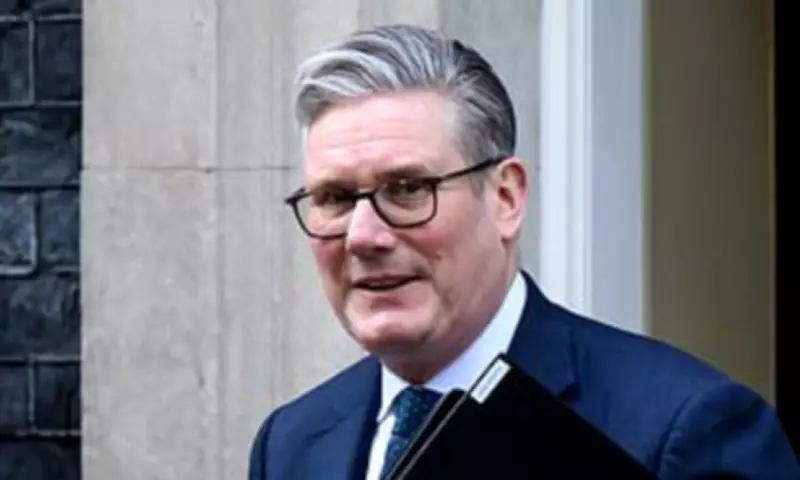
The Pentagon has vented its fury at Prime Minister Keir Starmer, accusing him of "pearl-clutching" over the recent US-led attacks on Iran. This strong criticism emerged on Monday, with US officials suggesting that Starmer's actions are undermining the long-standing Special Relationship between the United Kingdom and the United States.
Ban on US Bombers and Legal Concerns
Sir Keir initially banned American bombers from using British bases, such as RAF Fairford in Gloucestershire and Diego Garcia in the Chagos Islands, to launch Saturday's assault on Tehran. This move was met with sharp disapproval from Washington. The Prime Minister further risked aggravating the White House by suggesting that the attack, which resulted in the death of Iran's Supreme Leader, was illegal and could lead to significant regional destabilisation.
In an outspoken intervention, US Secretary of War Pete Hegseth praised Israel for its central role in the offensive but savaged the legalistic approach taken by Britain and other European allies. "Israel has clear missions for which we are grateful," he stated. "Capable partners are good partners. Unlike so many of our traditional partners who wring their hands and clutch their pearls, humming and hawing about the use of force."

Partial U-Turn and Ongoing Tensions
Following Iran's retaliation against civilian targets in Gulf states and RAF Akrotiri in Cyprus, Sir Keir made a partial U-turn on Sunday. He announced that US jets would be permitted to fly from British bases, but only for the "limited" objective of destroying Iranian missile launchers and stockpiles. Addressing MPs on Monday, the Prime Minister highlighted that an estimated 300,000 British nationals in the Gulf region were "at risk" as Tehran targeted hotels and airports.
However, Starmer ruled out further involvement, explicitly stating he would not participate in US-led attempts to bring about "regime change from the skies." He emphasised that any military action must have a "lawful basis" and a "viable thought-through plan," implying the US lacked both. Downing Street reinforced this stance, declaring the PM's commitment to upholding international law as "iron-clad."
Political Reactions and Criticisms
Former US President Donald Trump criticised Starmer, saying the PM took "far too long" to lift the ban on US forces using British bases. Trump also expressed disappointment over Starmer's attempts to hand sovereignty of Diego Garcia to Mauritius. In response, Sir Keir acknowledged Trump's disagreement but insisted that abiding strictly by international law was in Britain's national interest.
Domestically, political figures weighed in on the controversy. Kemi Badenoch suggested that Starmer was distancing himself from US actions to avoid alienating Muslim voters and progressives, who deserted Labour for the Greens in a recent by-election. She accused him of making "pure, partisan, political calculations" rather than acting in the British national interest.
Reform UK leader Nigel Farage labelled the PM's dithering as "pathetic," adding, "Our Prime Minister is not a leader, he's a follower, and he looks weak in the eyes of everybody." Meanwhile, former Tory security minister Tom Tugendhat argued there was "zero comparison" with the Iraq War, despite Starmer's references to learning from past mistakes.
Broader Regional and Economic Impacts
The row unfolded against a backdrop of escalating regional conflict. President Trump declared that the US was "knocking the crap" out of the Iranian regime, with more attacks anticipated. Ministers scrambled to draw up evacuation plans for over 100,000 British nationals registered in the Gulf region.
Economically, European gas prices surged by 52% after Iran targeted production facilities in Qatar and Saudi Arabia. Security sources warned that Tehran possesses enough missiles and drones to continue terrorising the region for at least another week. The conflict spread, with Israel and Hezbollah exchanging fire, Qatar shooting down Iranian fighter planes, and three US jets accidentally downed over Kuwait.

Legal and Historical Context
Sir Keir, who marched against the Iraq War in 2003 and declared it illegal, told MPs he was determined to prevent Britain from being dragged into another legally questionable conflict. "We all remember the mistakes of Iraq, and we have learned those lessons," he asserted. A legal opinion from the PM's Attorney-General, Lord Hermer, ruled that the assault on Iran could not be deemed self-defence, despite Iran's history of attacks on Western targets.
As tensions persist, Starmer hinted at pressuring Chancellor Rachel Reeves to increase defence spending more quickly. The Prime Minister remains steadfast in his judgment, stating, "It is my duty to judge what is in Britain's national interest, and that is the judgment I made. I stand by it."