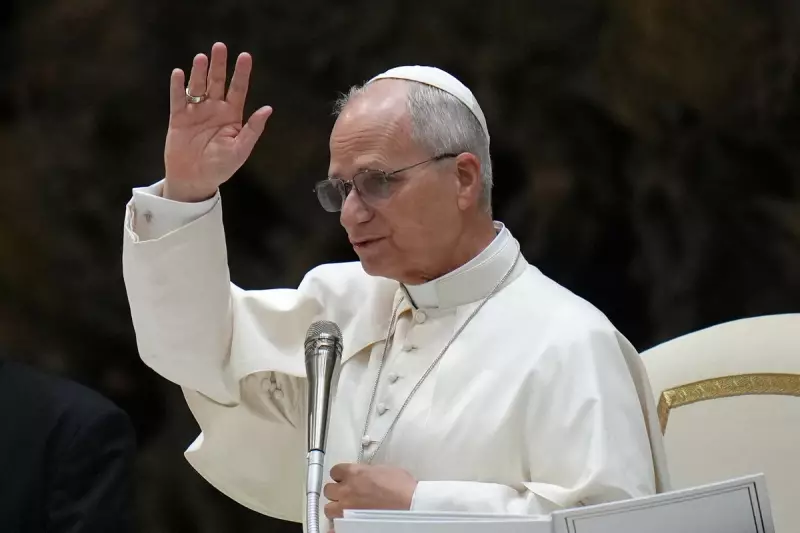
Pope Leo XIV has decisively opened a new chapter in his leadership of the Catholic Church, signalling a clear commitment to reform and a renewed focus on the foundational teachings of the Second Vatican Council.
A New Direction After the Holy Year
The pontiff's fresh start began on Wednesday 7 January 2026, just one day after he formally concluded the 2025 Holy Year. He convened the world's cardinals to Rome for a two-day consistory, marking a symbolic shift from the ceremonial obligations of the Jubilee to the substantive governance of his papacy.
In his weekly general audience, Leo XIV declared that the teachings of the 1960s Second Vatican Council remain the "guiding star" for the modern church. He announced plans to dedicate his upcoming catechism lessons to a direct re-examination of key Vatican II documents.
"It will be important to get to know it again closely, and to do so not through hearsay or interpretations that have been given, but by rereading its documents," he told the faithful, noting the generation that crafted the reforms has now passed.
Embracing a More Collegial Style
This gathering of the College of Cardinals represents a significant stylistic departure from his predecessor. Pope Francis had largely relied on a select group of nine cardinals for counsel, whereas Leo XIV is now actively seeking broader input from the entire college.
The Vatican stated the consistory aims to foster "common discernment" and offer support to the Pope in governing the global church of 1.4 billion members. This move appears to address previous criticisms from cardinals about a more centralised style of governance under Francis.
The agenda for the meeting underscores a balance between continuity and new direction, featuring discussions on:
- Two of Pope Francis's key reform documents.
- The call for a more "synodal" church responsive to ordinary Catholics.
- Ongoing divisions concerning the liturgy, particularly the celebration of the pre-Vatican II Latin Mass.
Navigating Church Divisions and Legacy
A particularly sensitive topic is the traditional Latin Mass. Pope Francis had restricted its use, arguing it fostered division, a move that sparked a conservative backlash, notably in the United States. The Chicago-born Leo XIV is now tasked with addressing these tensions.
Of the 245 cardinals worldwide, nearly half are under 80 and eligible to vote in a conclave. The Vatican did not specify how many attended the meeting, but the guest list highlighted a notable figure: Cardinal Joseph Zen, the 93-year-old retired Archbishop of Hong Kong and a prominent conservative critic of Francis's outreach to China, who was granted a private audience.
By initiating his pontificate's next phase with this collegial summit and a clear doctrinal compass, Pope Leo XIV is charting a course that seeks to unify the church around Vatican II's modernising legacy while cautiously managing its deep-seated internal divisions.