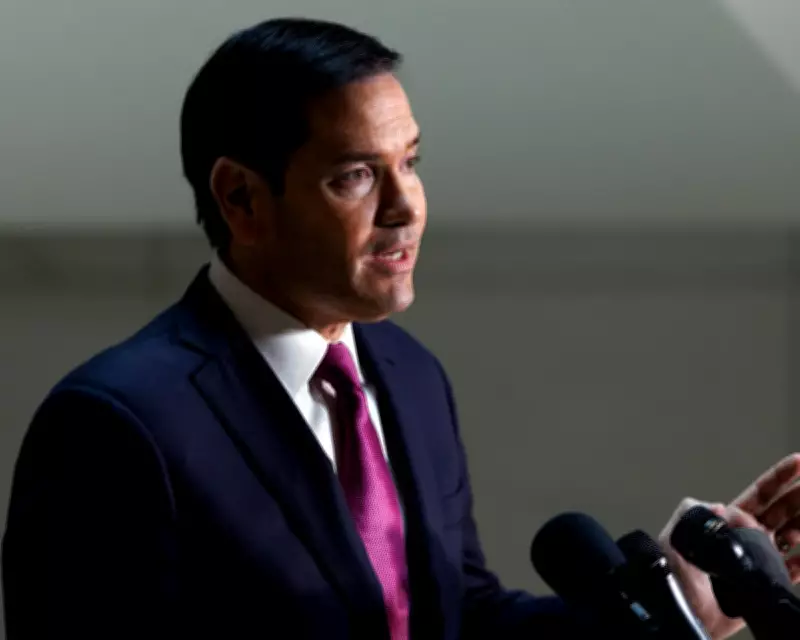
Rubio Reveals US Strikes on Iran Triggered by Israeli Attack Plan
Secretary of State Marco Rubio has disclosed that the United States' pre-emptive strikes on Iran were initiated due to Israel's determination to launch an attack, which would have provoked Iranian retaliation against American forces. This new explanation emerged during a classified briefing for top members of Congress on Monday evening, following the Trump administration's surprise entry into the conflict over the weekend.
Rationale for Pre-emptive Action
Rubio, alongside CIA Director John Ratcliffe and Joint Chiefs of Staff Chair Dan Caine, addressed lawmakers behind closed doors at the Capitol. He stated that it was "abundantly clear" Iran would respond against the United States if attacked by Israel or any other nation. "We knew that there was going to be an Israeli action. We knew that that would precipitate an attack against American forces, and we knew that if we didn't pre-emptively go after them before they launched those attacks, we would suffer higher casualties," Rubio told reporters.
Conflict Developments and Casualties
Since the conflict began, the United States and Israel have conducted waves of airstrikes across Iran, with Tehran retaliating using drone and missile attacks against US-aligned countries in the Middle East. The air campaign has resulted in the deaths of several of Iran's top military and political leaders, including Supreme Leader Ayatollah Ali Khamenei. The US military has acknowledged six service member fatalities, while the Iranian Red Crescent Society reports over 500 casualties in Iran.

Partisan Reactions in Congress
Reactions to the administration's rationale split along party lines. Republicans defended Trump's decision, with House Speaker Mike Johnson calling it a "defensive operation" and praising Khamenei's death as "a great development for freedom loving people around the world." In contrast, Democrats condemned the move. Senate Minority Leader Chuck Schumer labeled it "Trump's war" with "no strategy" and "no endgame," finding the briefing responses "completely and totally insufficient."
Unclear Objectives and Congressional Oversight
Rubio mentioned only two goals to reporters: destroying Iran's ballistic missile capability and their navy. However, Trump has outlined broader objectives in recent interviews, including preventing nuclear weapon development and cutting off support for proxy forces. Senator Mark Warner expressed concern over the implications of the US being drawn into war by Israel, questioning the lack of an imminent threat to America and calling for clarity on objectives and exit plans.
War Powers Resolution and Legislative Hurdles
The House is expected to consider a war powers resolution later this week, which, if enacted, would force Trump to end hostilities against Iran. However, it faces significant challenges. Republicans control both chambers of Congress and rarely oppose Trump in large numbers. Even if passed, Trump could veto the resolution, requiring a two-thirds majority in Congress to override. Previous resolutions have been voted down, and Johnson expressed confidence this one would not pass, citing the danger of limiting presidential authority during the conflict.
Rubio noted that the Gang of Eight lawmakers were notified before the attack, though Trump did not seek broader Congressional permission. The ongoing debate highlights deep divisions over US foreign policy and military engagement in the Middle East.