Russia Emerges as Critical Military Partner for Iran in Middle East War
Russia has positioned itself as one of Iran's most significant allies since hostilities erupted in the Middle East last month, with the Kremlin providing substantial intelligence sharing and military expertise to the Islamic Republic. According to Western officials, Moscow's assistance ranges from supplying satellite imagery and battlefield intelligence to advising on drone warfare tactics honed during the conflict in Ukraine. While direct Russian military intervention has not yet occurred, analysts caution that expanded on-the-ground support remains a distinct possibility.
Intelligence Sharing Enhances Iranian Precision Strikes
Western intelligence sources confirm that Russia has been supplying Iran with detailed information about American military positions across the region, including the precise locations of warships and aircraft. Three officials familiar with the intelligence indicate this assistance has been ongoing since the conflict's inception. One source described the Russian support as a "pretty comprehensive effort" to help Tehran target US forces effectively.
Dara Massicot, a Russian military expert at the Carnegie Endowment for International Peace, noted that Iran has been executing "very precise hits" on radar installations and command infrastructure, demonstrating highly targeted strike capabilities. Russia's advanced satellite network likely plays a crucial role in this precision. Iran operates only a limited number of military reconnaissance satellites, restricting its ability to track naval assets and other mobile targets independently.
Russia's surveillance systems, including the Kanopus-V satellite redesignated "Khayyam" for Iranian operational use, provide continuous optical and radar imagery. This intelligence pipeline reportedly enables Iran to locate US and Israeli assets with accuracy previously unattainable through its own resources.
Drone Tactics Transferred from Ukrainian Battlefields
Western officials further reveal that Russia has been advising Iran on unmanned aerial system (UAS) strategies developed during the Ukraine war. Shahed drones, originally designed by Iran but mass-produced by Russia for use against Ukrainian cities, are now being deployed with similar tactical approaches against US and Gulf nation targets. One intelligence official stated that previously general support has escalated to include concerning elements like drone targeting strategies employed by Russia in Ukraine.
Russian forces have frequently launched large drone waves in Ukraine, deploying multiple aircraft simultaneously while altering flight paths to evade air defence systems. Ukrainian President Volodymyr Zelensky remarked that Russia has begun supporting Iran with drones and will likely expand to missiles and air defence assistance.
Political Backing and Strategic Calculations
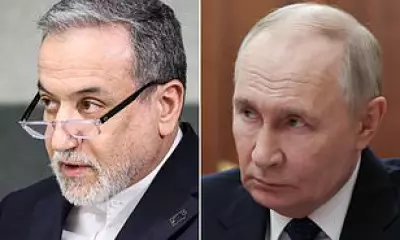
Russia has offered robust political support to Iran's leadership alongside military cooperation. President Vladimir Putin pledged "unwavering support" to Iran's new supreme leader, Ayatollah Mojtaba Khamenei, affirming Russia as a "reliable partner" during Iran's confrontation with armed aggression. Andrey Kelin, Russia's ambassador to the UK, explicitly stated Moscow is "not neutral" in the conflict and supports Tehran.
Keir Giles, a Russian military expert, suggested there are currently no consequences deterring Russia from assisting Iran's attacks on US and allied forces in the Gulf region. He noted that expanding such support aligns with Russia's objective of weakening Western influence globally. While Russia has called for hostilities to cease and a return to diplomatic solutions, its actions demonstrate deepening military collaboration with Iran.
US Sanctions Easing Fuels Criticism and Strategic Concerns
Concurrently, the United States has relaxed sanctions on Russian oil sales in an effort to contain rising energy prices exacerbated by the Middle East conflict. Critics warn this move effectively finances Moscow's prolonged invasion of Ukraine, now entering its fifth year. The US Treasury authorized deliveries of Russian crude oil and petroleum products loaded before specific deadlines, drawing sharp rebukes from European allies.
German Chancellor Friedrich Merz condemned the sanctions easing as "wrong," arguing it enables Russia to exploit the Iran war to weaken Ukraine. European Council President Antonio Costa expressed serious concern, emphasizing that maintaining economic pressure on Russia is crucial for meaningful peace negotiations. British Energy Minister Michael Shanks confirmed the UK would not loosen Russian sanctions, while French President Emmanuel Macron stated that Strait of Hormuz disruptions do not justify lifting sanctions against Putin.
A Pragmatic Partnership with Global Implications
Analysts describe the Russia-Iran relationship as pragmatic rather than a formal alliance, built on years of military and industrial cooperation. Iran previously supplied drone technology for Russia's Ukraine campaign, while Moscow has provided combat trainer aircraft, armoured vehicles, attack helicopters, and air defence systems to Tehran. The two nations have also collaborated on space and nuclear technology, including Russian construction of a nuclear power plant in Iran.
Giles observed that Russia's willingness to risk offending the US by supplying targeting intelligence to Iran is surprising given ongoing Ukraine negotiations. However, he noted that senior US figures have been willing to disregard reports of Russian assistance to Iran, suggesting Russia receives preferential treatment from current US leadership. The sanctions easing further demonstrates this dynamic, with politicians warning it emboldens Putin's war efforts.
As Russia deepens its involvement in the Middle East conflict, Giles contends that denying the existence of a global conflict becomes increasingly difficult. He described Ukraine as merely one frontline in a broader confrontation challenging the rules-based international order, with decisive action postponed for too long by Western governments. With neither the US nor UK currently willing or able to deter Russian support for Iran, the strategic landscape grows increasingly complex and dangerous.