Russian Strike on Ukrainian Hydropower Plant Cuts Water to Tens of Thousands in Moldova
Tens of thousands of Moldovans have been left without access to clean water after a Russian military strike on a hydroelectric facility in neighboring Ukraine caused significant oil pollution in the Dniester River, which flows through both nations. The incident, which occurred on March 7, 2026, has triggered a severe humanitarian and environmental crisis in Moldova, a European Union candidate country.
Moldovan President Blames Russia for Pollution
Moldovan President Maia Sandu has publicly attributed responsibility for the contamination to Russia, stating that the attack on Ukraine’s Novodnistrovsk hydropower plant directly threatens Moldova’s water supply. In a social media post, Sandu emphasized, “Russia bears full responsibility.” The targeted plant is located approximately 15 kilometers upstream from Moldova’s northern border with Ukraine and supplies water to around 80% of Moldova’s population of 2.5 million people.
Environmental Alert Declared Amid Health Risks
In response to the escalating situation, Moldova’s environment ministry declared a 15-day environmental state of alert. This measure enables authorities to implement enhanced technical interventions and impose temporary restrictions on water supplies to safeguard public health. The ministry cited “the continuous wave of pollution with oil products, the risk of the pollution spreading, and the exceedance of contaminant levels” in the northern section of the Dniester River as primary reasons for the alert.

Widespread Water Supply Disruptions
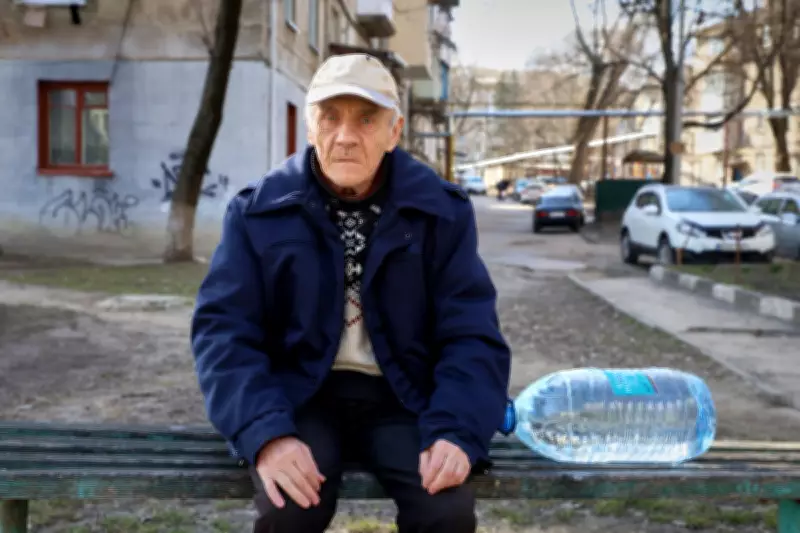
The pollution has forced authorities to cut off water supplies to multiple districts, including Balti, Moldova’s second-largest city with a population of about 90,000. Residents like 84-year-old Liuba Istrati have been struggling, carrying buckets of water up to their apartments. “It’s very hard, very hard,” Istrati lamented, highlighting the difficulties faced by elderly and vulnerable individuals. The water shortage has also led to school closures, with some institutions transitioning to online learning. Teacher Irina Mutluc described the daily challenges, noting, “It’s a complicated situation, I have to come every day to get water.”
International Aid and Cleanup Efforts
Moldova has received humanitarian assistance from neighboring Romania, which has dispatched teams and equipment, such as absorbent materials for dams, to aid in cleanup operations. Additionally, Moldova’s military has been involved in distributing drinking water from a 10-tonne tanker in affected areas. Recent tests indicate some improvement in water quality, with the environment ministry reporting that “the latest samples taken show an improvement in the water indicators, which confirms the effectiveness of the filters and barriers.” However, authorities stress that water supplies will only resume after at least two consecutive sets of analyses confirm safety, prioritizing citizen health.
Ongoing Monitoring and Legal Actions
Environment Minister Gheorghe Hajder noted that three critical monitoring points on the river have “reached the admissible limit” of oil pollution for the first time since the crisis began. If results remain stable or improve over the next 48 hours, authorities may consider reopening a key pumping station on the northeastern border with Ukraine. Meanwhile, Moldova’s General Prosecutor’s Office has announced plans to open a criminal case to investigate the incident, and the foreign ministry summoned Russia’s ambassador to Chisinau, presenting him with a bottle of contaminated water as a symbolic protest.

Russian Denial and Environmental Concerns
The Russian embassy in Moldova has disputed the allegations, arguing that Moldovan authorities have not provided concrete evidence of Russia’s involvement and have presented “conflicting theories.” Biologist Ilya Trombitsky of Eco-TIRAS, an NGO network, expressed concerns about the environmental impact, stating that while short- and long-term consequences are unclear, the pollution has already caused social damage and harmed wildlife, including invertebrates and wetland birds. He added, “Moldova does not have experience in such spills,” underscoring the nation’s vulnerability to such crises.
The Dniester River, originating in southwestern Ukraine and spanning over 1,300 kilometers before emptying into the Black Sea, remains a critical water source for the region, with ongoing pollution waves complicating recovery efforts.