Singapore's former prime minister has issued a stark warning that the recent American military raid in Venezuela has left smaller nations deeply alarmed, joining a chorus of Asian powers voicing concern.
A Dangerous Precedent for Smaller Nations
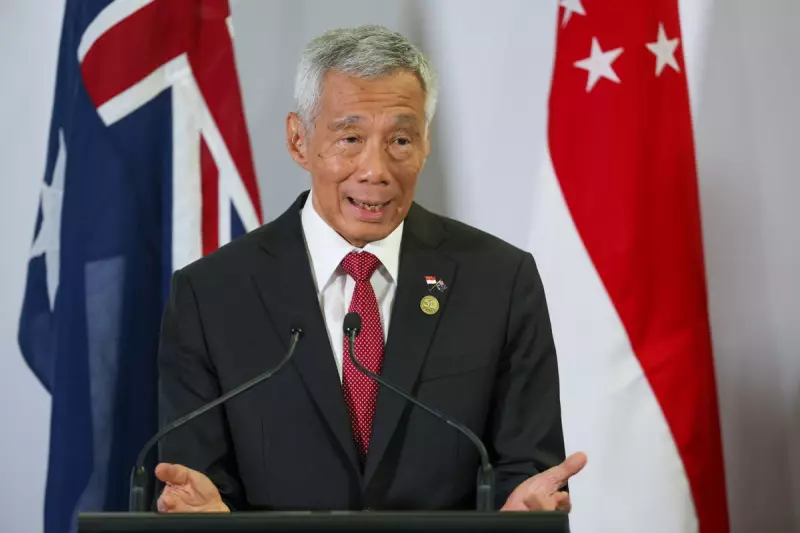
Speaking at the ISEAS Yusof Ishak Institute's regional outlook forum on Thursday, Senior Minister Lee Hsien Loong stated that a difficult domestic situation could not justify "military intervention by one country into another, unilaterally and without any proper authorisation". Mr Lee, who stepped down as prime minister in 2024 after two decades in power, argued that while the attack might seem a "spectacular military success", its long-term consequences for the global order were deeply troubling.
"From the point of view of a small country, if that’s the way the world works, we have a problem," he cautioned. He acknowledged that powerful states had historically acted in this manner, but questioned the net benefit: "You look at the impact of it and you ask yourself, 'Is this a plus or a minus?' I don’t think this is a plus."
Growing Asian Condemnation of US Action
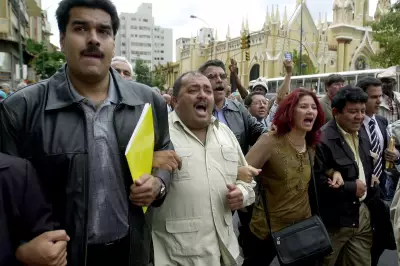
Singapore's comments position it as the latest Asian nation to object to the US military operation earlier this month that seized Venezuelan leader Nicolás Maduro. It now stands alongside Indonesia, Malaysia, India, and China in expressing formal disquiet.
Indonesia voiced "deep concern over any action involving the use or threat of force", warning it was dangerous and destabilising. Malaysia offered stronger criticism, labelling the raid a "clear violation of international law" and an unlawful use of force, with Prime Minister Ibrahim Anwar demanding the immediate release of President Maduro and his wife.
Even India, which typically avoids strong geopolitical stances, said it was concerned by the developments. Foreign Minister S Jaishankar urged all parties to prioritise the safety of the Venezuelan people and seek dialogue.
Flashpoint in US-China Rivalry
The overthrow of Mr Maduro is rapidly becoming a new flashpoint in the strategic competition between China and the US for influence in Latin America. Mr Lee identified the US-China relationship, fraught with tension, as a central global challenge.
He noted that while many Asian nations see the US as a crucial partner, they also recognise China's growing economic power. As Washington steps back from its traditional regional role, Beijing's rhetoric on multilateralism is gaining attention.
China has condemned the US action as a "bullying act", with President Xi Jinping taking a veiled swipe at "unilateral bullying" which he said "seriously undermines the international order". The decades-long close ties between Beijing and Caracas, rooted in shared political ideology and distrust of US leadership, have cemented China's firm stance against the intervention.