Keir Starmer Voices 'Deep Concern' Over Iranian Strikes on Civilian Targets
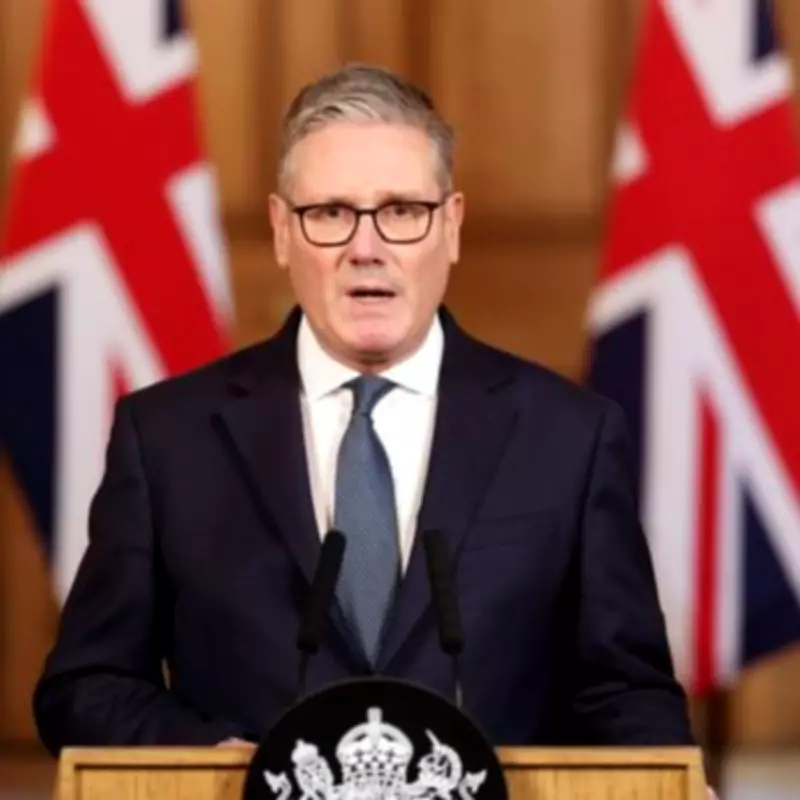
Prime Minister Keir Starmer has expressed "solidarity" with leaders across the Middle East "in the face of dangerous Iranian escalation" following coordinated US-Israeli air strikes. The Prime Minister's comments came during urgent calls with regional monarchs as explosions reverberated throughout Gulf states.
Downing Street Update on Regional Security
In a Sunday afternoon update, Downing Street confirmed that Mr Starmer had spoken with King Abdullah II of Jordan, King Hamad bin Isa Al Khalifa of Bahrain, and Crown Prince Sheikh Mishal Al-Ahmad Al-Jaber Al-Sabah of Kuwait. These discussions occurred as retaliatory strikes continued across the region following the killing of Iran's Supreme Leader Ayatollah Ali Khamenei.
A Number 10 spokesperson stated: "They discussed the safety of civilians in the region, including British nationals and armed forces personnel, and expressed deep concern that strikes have hit civilian and commercial infrastructure - harming innocent people."

The Prime Minister reassured regional partners that the United Kingdom has maintained "planes in the sky" as part of a coordinated defensive response to protect allies. He emphasized that this military presence would continue offering support amid the escalating crisis.
Defence Secretary Details Immediate Threats
Defence Secretary John Healey provided alarming details about the proximity of Iranian attacks to British forces. He revealed that Iranian strikes landed within "a few hundred yards" of British troops stationed in Bahrain, where approximately 300 UK personnel are based.
Mr Healey confirmed that UK defensive aircraft in the Middle East are actively intercepting threats, with British forces having shot down Iranian drones in northern Iraq within the last 24 hours. He described Iran's retaliation as becoming "increasingly indiscriminate, widespread and uncontrolled" in its targeting.
The Defence Secretary highlighted concerning incidents including:
- Attacks on luxury hotels in Dubai and Bahrain
- Strikes near Kuwait's civilian airport
- Two ballistic missiles fired toward Cyprus on Saturday
While the Ministry of Defence doesn't believe the Cyprus missiles were specifically targeted at the island, Mr Healey warned that Iranian missile commanders appear to be "increasingly allowed to choose their own targets" as Tehran loses command and control.
International Responses and Diplomatic Positions
Foreign Secretary Yvette Cooper condemned what she termed "indiscriminate Iranian strikes" after a fire broke out at Dubai's Palm Hotel. In a statement on social media platform X, she expressed solidarity with the United Arab Emirates and described the hotel scenes as "awful."
The UK government, alongside France and Germany, has formally condemned Iran's retaliation while urging Tehran to return to diplomatic negotiations. However, other allies have adopted stronger positions, with Canada and Australia explicitly supporting US actions to prevent Iran from obtaining nuclear weapons.
Mr Healey clarified Britain's position regarding the legality of US strikes: "Britain played no part in the strikes on Iran. We share, however, the primary aim of all allies in the region and the US that Iran should never have a nuclear weapon." He deferred to the United States to establish the legal basis for their actions.
Political Reactions and Criticism
Green Party leader Zack Polanski criticized the government's ambiguous stance, calling the US strikes "illegal and unprovoked" and accusing ministers of failing to condemn what he described as an assassination that undermines international law.
Conversely, Conservative shadow foreign secretary Priti Patel criticized the government for not being more "proactive" in supporting the US-led strikes, highlighting political divisions in Westminster regarding the appropriate response to Iranian aggression.

Mr Healey offered a stark assessment of the late Iranian leader: "I think few people will mourn the Ayatollah's death, not least the family and friends of those thousands of young protesters murdered on the streets of Iranian cities. Iran and the regime he's led for so long, it's a source of evil, murdering its own citizens and sponsoring and exporting terror, including to countries like Britain."
As the situation develops, the UK maintains defensive positions while navigating complex diplomatic waters, with civilian safety remaining a paramount concern amid escalating regional hostilities.