Starmer Must Resist UK Involvement in Escalating US-Iran Conflict
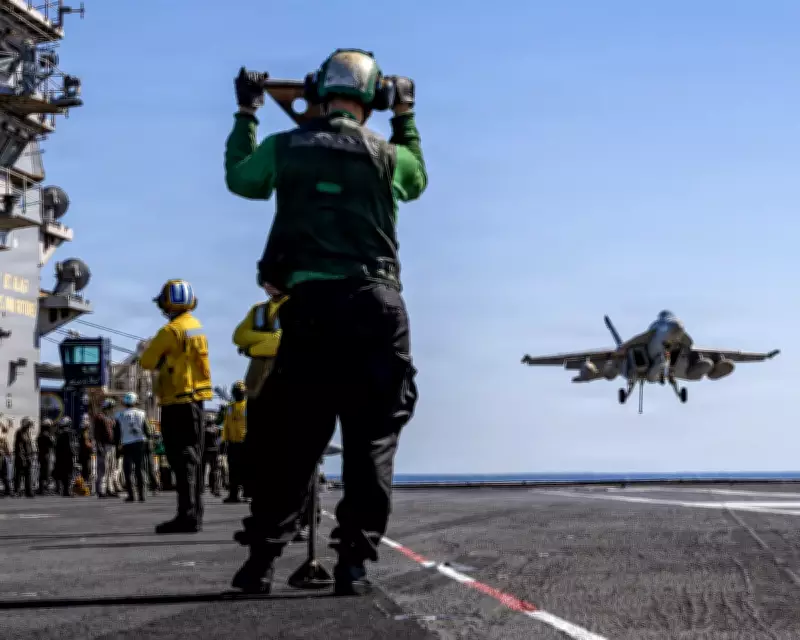
In a critical moment for international relations, a US F/A-18E Super Hornet aircraft recently approached the flight deck of the world's largest aircraft carrier, USS Gerald R Ford, as part of Operation Epic Fury on 8 March 2026. This military maneuver underscores the escalating tensions between the United States and Iran, with Britain facing increasing pressure to become involved.
This Is Not Britain's War
Columnist Simon Jenkins argues forcefully that this conflict belongs to Donald Trump and Benjamin Netanyahu, not to the United Kingdom. The prime minister should exercise extreme caution to avoid becoming ensnared in a foreign war, much like Tony Blair did during the Iraq conflict. Jenkins describes the current situation as potentially the most misguided war of the 21st century, initiated by what he characterizes as a deranged US president and an Israeli prime minister facing prosecution.
The recent Israeli strike on Iran's South Pars gas field appears deliberately designed to provoke a massive Iranian retaliation, which would then justify a ferocious response from the Trump administration. This dangerous escalation pattern threatens to transform a regional conflict into a much larger confrontation. The only viable solution, according to Jenkins, requires both Trump and Netanyahu to cease their bombing campaigns against Iran immediately.

Britain's Security Not Threatened
Britain's national security faces no immediate threat from Iran, Jenkins contends. Whatever challenges Iran might pose to British interests, military engagement represents an inappropriate and ineffective response. The United Kingdom bears no responsibility to judge or replace foreign governments, a task at which its recent record has proven deeply problematic. While containing modern terrorism presents an ongoing challenge, aerial bombardment offers no meaningful solution to this complex problem.
Despite these realities, Keir Starmer has dispatched senior military planners to Washington to assist Trump in strategizing how to reopen the Strait of Hormuz. This approach assumes Iran will refuse to cooperate with peaceful reopening efforts. Additionally, Britain has already made its military bases available to US bombers, ostensibly for defensive purposes only. Jenkins warns that this gradual slide into collaboration mirrors how George W. Bush entangled Tony Blair in both Afghanistan and Iraq—a process he describes as strategic seduction.
Historical Parallels and Current Dangers
Starmer now finds himself in precisely the type of predicament that should have been eliminated following Britain's Suez crisis debacle in 1956. During that episode, an assault on Egypt intended to assert British control over the Suez Canal failed to topple the Cairo regime. The operation only concluded when Washington informed British Prime Minister Anthony Eden that he had lost his senses. Britain eventually accepted that its imperial ambitions had reached their conclusion, though the nation proved reluctant to completely withdraw from global affairs.
Seventy years later, Britain continues spending millions on defense operations in the Indian Ocean and Mediterranean regions. Overseas military bases in locations like Cyprus and Diego Garcia tempt leaders to, as Blair once phrased it, punch above their weight. Britain joined the Iraq war supposedly because of an imminent threat to its base in Cyprus alone. The ongoing dispute over Chagos Islands sovereignty adds another layer of absurdity to these imperial remnants.
The Special Relationship Trap
Downing Street continues to yearn for the White House phone call, the special relationship, tariff agreements, and intelligence exchanges. When the United States commits illegal acts or monumental blunders, Starmer appears to feel unable to respond as other European leaders have—by condemning Trump outright. Instead, he engages in nervous equivocation that fails to protect British interests.
Two weeks ago, some might have argued that Israel's decapitation of the Tehran regime resembled Trump's toppling of Nicolás Maduro in Venezuela—a limited operation with planned outcomes. The past three weeks have demonstrated no such limitations, with the conflict becoming increasingly open-ended and unpredictable.

A Call for Restraint
Jenkins has even reconsidered his position on whether the king's state visit to Washington should proceed under current circumstances. While he doesn't advocate outright cancellation—the visit celebrates bonds between peoples, not governments—he believes it cannot reasonably continue while Trump's aggression persists. Britain's monarch cannot be seen shaking hands with a leader engaged in such violence, Jenkins argues.
The bombing must stop immediately, Jenkins concludes. For now, nothing else matters more than halting this dangerous escalation before it draws more nations into conflict. Britain should learn from its historical mistakes and resist the temptation to involve itself in a war that doesn't threaten its security or serve its interests.