Starmer Defies Trump: UK Will Not Join Offensive War on Iran
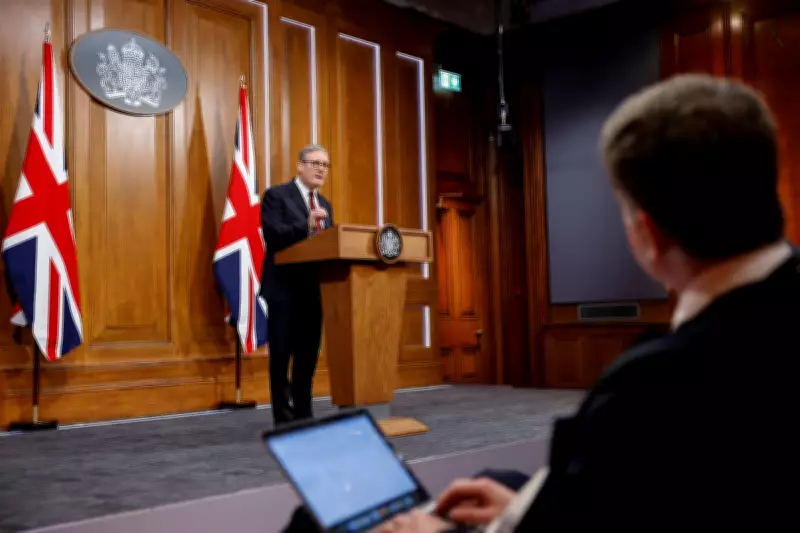
Prime Minister Sir Keir Starmer has firmly rejected calls from former US President Donald Trump for the United Kingdom to deploy warships to the Strait of Hormuz, declaring that Britain will not be drawn into a "wider war" against Iran. Speaking at a Downing Street press conference, Starmer confirmed that the UK is collaborating with international allies to develop a strategy for reopening the vital maritime passage, but emphasised that any military involvement would be strictly defensive.
UK Pursues Diplomatic Solution Amid Global Economic Concerns
The prime minister acknowledged the severe economic repercussions of the blockade, including warnings of soaring fuel prices and potential rationing in Britain. However, he stated that the UK would not participate in offensive strikes alongside Israel and the United States. "While taking the necessary action to defend ourselves and our allies, we will not be drawn into the wider war," Starmer asserted. He highlighted the urgency of ending the conflict swiftly to mitigate its impact on the cost of living for British households.
Starmer revealed that discussions are ongoing with European partners, Gulf states, and the US to formulate a "credible, viable plan" to restore access to the strait, which is a critical conduit for global oil and gas shipments. "This is, to say the least, not easy. It is not straightforward," he admitted, underscoring the complexity of the situation. When questioned about sending warships, the prime minister indicated that no decision has been made, noting that options are still under review.
Trump's Demands Met with Resistance from UK and Allies
Donald Trump has repeatedly urged the UK and other nations to contribute naval assets to secure the Strait of Hormuz, arguing that beneficiaries of the route should assist in its protection. In an interview with the Financial Times, Trump criticised Starmer's reluctance, stating, "The UK might be considered the number one ally... when I asked for them to come, they didn't want to come." He also lamented NATO as a "one-way street," reflecting ongoing tensions over alliance commitments.
Despite these pressures, several countries have rebuffed Trump's plea. In response, UK ministers are reportedly considering alternative measures, such as deploying minesweeping drones to the region. Work and Pensions Minister Pat McFadden reinforced the government's stance, clarifying that Britain is not obligated to engage in what he termed a US "war of choice" and that the Iran conflict falls outside NATO's purview.
Domestic Support Announced Amid Energy Price Crisis
During the press conference, Starmer also addressed the domestic fallout from the strait's closure, announcing a £53 million support package for households reliant on heating oil. He targeted assistance at vulnerable customers and issued a legal direction to energy companies to pass on savings from government policies. Additionally, Starmer threatened legal action against suppliers accused of price gouging, declaring, "I simply will not allow companies to make huge profits from the hardship of working people."
The prime minister did not rule out further government intervention to curb energy bills if prices escalate when the cap expires in June, though he noted the difficulty in predicting oil market trends. His statements come amid concerns from former BP chief Nick Butler about the need for fuel rationing plans and broader anxieties over food price inflation due to the strait's closure.
Starmer concluded by reiterating his commitment to a diplomatic resolution, stressing that the UK's priority is to ensure stability in global markets without escalating military tensions. The ongoing dialogue with allies aims to balance defensive measures with a pragmatic approach to reopening one of the world's most crucial shipping lanes.