G20 Leaders Unite Against Trump's Ukraine Proposal
Prime Minister Keir Starmer has joined forces with other world leaders to firmly reject crucial elements of US President Donald Trump's proposed peace plan for Ukraine. The collective opposition emerged during urgent discussions at the G20 summit in Johannesburg, South Africa.
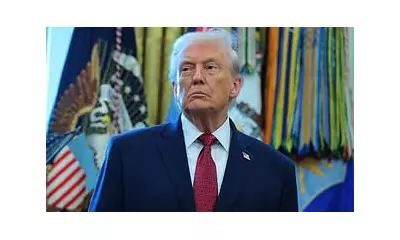
In a significant show of unity, leaders from the G7 nations – excluding the United States – issued a joint statement declaring that Ukraine's borders must not be altered "by force." This principle stands in direct opposition to parts of President Trump's 28-point proposal, which was leaked on Friday.
The Contentious Peace Plan Details
The controversial plan put forward by the US administration includes several points that have raised international concern. It calls for an immediate ceasefire and suggests Ukraine should cede the entire regions of Crimea, Luhansk, and Donetsk to Russia.
Furthermore, the cities of Kherson and Zaporizhzhia would remain under a frozen conflict status along the current front lines. Perhaps most alarmingly for Ukrainian sovereignty, the proposal demands that Ukraine's military forces be reduced from approximately 880,000 troops to just 600,000.
President Trump has set a strict deadline for Ukraine's response, demanding an answer by November 27, which coincides with Thanksgiving in the United States.
International Response and Forthcoming Diplomacy
Speaking to reporters in Johannesburg, Prime Minister Starmer confirmed he expects to speak with President Trump in the coming days and with Ukrainian President Volodymyr Zelensky this evening. However, he has no immediate plans to visit Washington DC, emphasising that the focus remains on urgent talks scheduled for Geneva on Sunday.
The Geneva negotiations will see high-level participation, with the US represented by special envoy Steve Witkoff and Secretary of State Marco Rubio. The UK's National Security Adviser, Jonathan Powell, will attend after departing the G20 summit early. His counterparts from France and Germany are also expected to participate.
When questioned about President Trump's late-November deadline, Mr Starmer expressed a desire for peace "as soon as possible" but stressed the necessity of involving all relevant parties. "I think in order to get an agreement, you've got to get all the relevant parties to agree," he stated, specifically mentioning the European Union and NATO as essential participants in any sustainable resolution.
The Prime Minister emphasised that any peace must be "just and lasting," adding that the international community would have a clearer picture following the Geneva discussions.
While critical of certain aspects, the coalition of nations did acknowledge some positive elements in the US proposal. In their joint statement, they noted that the draft "includes important elements that will be essential for a just and lasting peace" and expressed readiness to engage further to ensure any future peace is sustainable.
The statement received support from a broad coalition including France, Germany, Japan, Canada, Italy, Norway, the Netherlands, Spain, Finland, Ireland, along with the EU Commission and EU Council.
Meanwhile, President Zelensky addressed his nation, assuring citizens that Ukrainian representatives in Switzerland "know how to protect Ukrainian national interests." He described the current moment as "one of the most difficult" in Ukraine's history, facing a choice between "losing its dignity or the risk of losing a key partner."
Russian President Vladimir Putin, who like President Trump is not attending the G20 gathering, cautiously welcomed the US proposal, suggesting it "could form the basis of a final peace settlement."