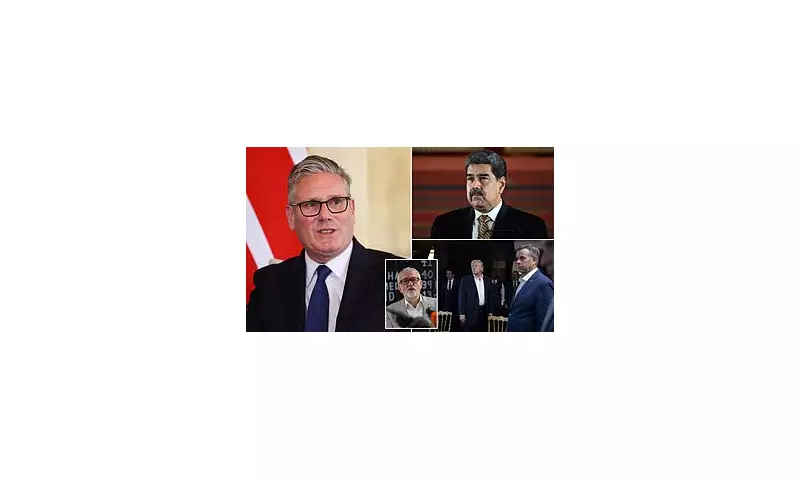
Prime Minister Sir Keir Starmer has been placed in a delicate diplomatic position following a dramatic US military operation in Venezuela, his response highlighting a deep-rooted tension within the Labour Party.
The Prime Minister's Cautious Stance
Faced with the sensitive situation, Sir Keir initially offered a measured reaction, stating he wanted to 'establish the facts, and take it from there'. Speaking to the BBC, he emphasised his lifelong advocacy for international law, but was quick to underscore the critical importance of the UK's relationship with the United States. 'The relationship between the US and the UK is one of the closest relationships in the world. It is vitally important for our defence, for our security, for our intelligence', he stated, acknowledging his responsibility to maintain that alliance.
However, his position appeared to shift later, aligning more closely with Washington. He issued a new line, declaring, 'We regarded Maduro as an illegitimate President and we shed no tears about the end of his regime.' This move towards the US stance reportedly caused significant unease behind the scenes.
Internal Party Pressure and Historical Admiration
Sir Keir's careful navigation is driven by a longstanding affinity that the Labour left has held for Venezuela's socialist government. Former leader Jeremy Corbyn has been a vocal admirer, once describing the late Venezuelan leader Hugo Chavez as 'an inspiration to all of us fighting back against austerity and neo-liberal economics in Europe'.
Under Corbyn's leadership, Labour's 2017 and 2019 election manifestos drew inspiration from Venezuelan policies like public ownership and price controls. When Chavez died in 2013, Corbyn attended a vigil, thanking him for 'showing that the poor matter and wealth can be shared'.
This history creates a potent internal pressure. As recently as November last year, Corbyn joined other left-wing European figures, including Greece's former finance minister Yanis Varoufakis and Labour MP Richard Burgon, in warning against 'the imminent threat of US military intervention in Venezuela'. The Maduro government welcomed Corbyn's support, calling it a 'message of hope'.
Venezuela's Collapse and Diplomatic Alarm
The country Starmer's left flank once admired has suffered a profound economic and social collapse. The introduction of hardline Marxist policies led to empty supermarket shelves, widespread power cuts, and the suppression of free speech. Hyperinflation soared to 230 per cent by last summer, with the economy shrinking to just 75 per cent of its 2012 size. More than a million people fled the nation, with reports of desperate citizens reduced to eating cats.
This context has left UK officials deeply concerned about the aftermath of the US action. One senior diplomat told the Mail on Sunday, 'We know that the US had war-gamed the 'decapitation' of the Venezuelan regime, and the simulation predicted chaos. This is a recipe for anarchy'. The source criticised the government's response, suggesting they seemed 'paralysed' and should be calling for United Nations-supervised elections.
Jeremy Corbyn, now suspended from Labour and leading the new 'Your Party', was unequivocal in his condemnation. He labelled the US strike an 'unprovoked and illegal attack' and a 'brazen attempt to secure control over Venezuelan natural resources'.
Sir Keir Starmer now walks a political tightrope, balancing vital international alliances with the ideological legacy of his party's recent past. His squirming reaction to the Venezuela crisis is a direct product of that enduring and difficult conflict.