Scotland's First Minister Demands International Action on Iran Crisis
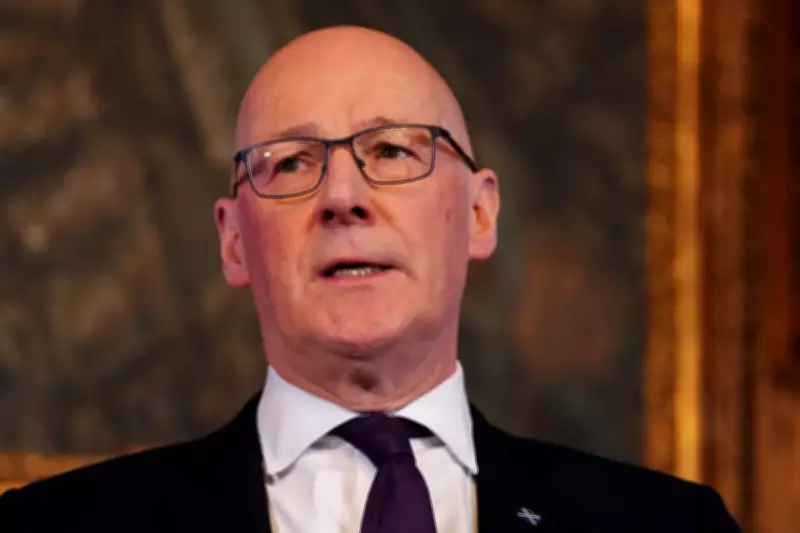
Scotland's First Minister John Swinney has issued a forceful call for the international community to work "at pace" towards a diplomatic resolution, following coordinated military strikes by the United States and Israel against Iran. The attacks, which occurred on Saturday, have intensified regional tensions and prompted immediate retaliation from Tehran.
Strikes Described as Pre-emptive by US and Israel
The United States and Israel have characterised their joint military action as a pre-emptive strike, aimed at countering what they describe as the Iranian government's determined pursuit of nuclear weapons capabilities. This development has sent shockwaves across the Middle East, with missile exchanges reported targeting Israel and other nations in the region.
In response to the escalating crisis, UK Prime Minister Sir Keir Starmer has convened the government's emergency Cobra committee to coordinate the British response as the situation unfolds.

Swinney's Call for Diplomatic De-escalation
First Minister John Swinney emphasised the urgent need for a peaceful, negotiated outcome. "The Iranian government is an undemocratic, repressive regime and there must be a diplomatic solution to ensure they do not become a nuclear power," Swinney stated unequivocally.
He further elaborated on the principles of international conduct, noting: "Recent history shows us that all nations must abide by the international rules-based system and it is for the United States and Israel to now demonstrate how this intervention is compatible with that position."
Swinney's statement outlined a clear three-point objective for the global response:
- Focus on immediate de-escalation of military hostilities.
- Prevent any additional loss of civilian and military life.
- Establish a viable diplomatic pathway to end Iran's nuclear ambitions permanently.
UK Government Position and Non-Involvement
Official sources have confirmed that the United Kingdom was not involved in the planning or execution of the US-Israeli military operations. A spokesperson for the UK Government reiterated Britain's stance, expressing a firm desire to avoid "further escalation into a wider regional conflict."
The spokesperson reaffirmed the UK's longstanding support for a negotiated, diplomatic solution to address concerns over Iran's nuclear programme, aligning with broader international non-proliferation efforts.
The crisis underscores the fragile security landscape in the Middle East and presents a significant test for international diplomacy. Swinney's intervention highlights the role of devolved governments in shaping the UK's foreign policy discourse during periods of global instability.