Swinney Condemns US-Israel Iran Strike as Threat to International Order
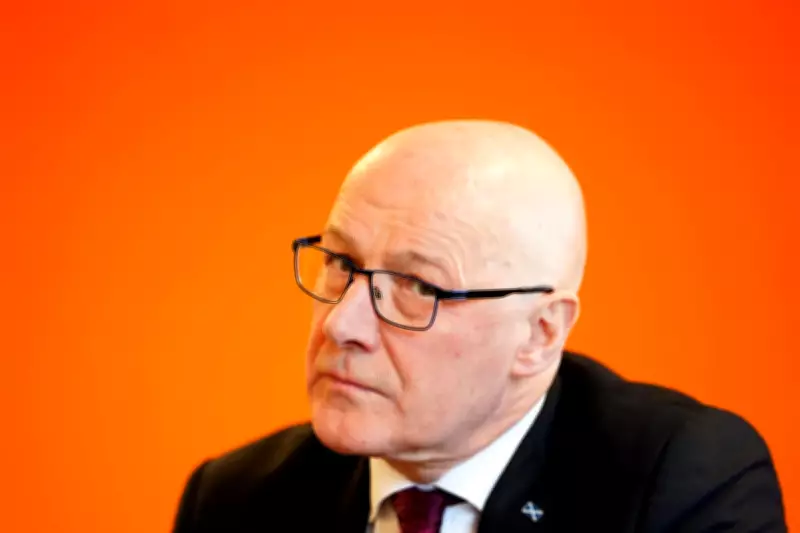
Scotland's First Minister John Swinney has issued a stark warning that the recent United States and Israeli military action against Iran represents a direct challenge to the established international rules-based system. Speaking exclusively to the Press Association on Monday, Swinney expressed profound concern over the weekend's intervention, which resulted in the death of Iran's supreme leader, though he carefully avoided explicitly labelling the operation as illegal.
Escalation and UK Entanglement
The First Minister articulated his deep apprehension regarding the rapid escalation of hostilities in the Middle East. "I'm deeply concerned by the events in the Middle East over the weekend and I bear no warmth towards the Iranian regime," Swinney stated, describing Tehran's government as "an oppressive and a repugnant regime." However, he emphasised that "the United States and Israeli action, the original action, is not compatible with the international rules-based system."
This incompatibility, Swinney argued, has directly drawn the United Kingdom into the burgeoning conflict. "As a consequence of that, the United Kingdom now finds itself getting dragged into this conflict, an illustration of how quickly these events can escalate from their original foundations and that's deeply concerning," he explained. When pressed repeatedly on the specific legality of the military strikes, the First Minister declined to provide a definitive judgement.

Diplomatic Vacuum and Strategic Uncertainty
Swinney urgently called for all involved parties to return to diplomatic negotiations, voicing serious doubts about the existence of a coherent strategy to conclude hostilities. "I'm obviously very concerned about the whole situation, I don't know what the gameplan is – I'm not altogether sure anybody knows what the gameplan is in relation to this," he admitted candidly.
"What I do know is that everybody needs to step back and to get around the negotiating table and resolve these issues, because this intervention has destabilised the Middle East and that's in nobody's interests," the First Minister asserted, highlighting the regional instability triggered by the attack.
Starmer's Stance and the Defence Dilemma
The First Minister's comments coincided with Prime Minister Sir Keir Starmer defending his initial refusal to grant the United States access to UK military bases for the opening strikes – a position later reversed under significant pressure from Washington and Gulf allies. US President Donald Trump had expressed being "very disappointed" with Britain's initial stance.
Swinney supported Starmer's original decision, stating, "I think the Prime Minister was right to have nothing to do with this intervention, because I don't think the original intervention was compatible with the international rules-based system." However, he acknowledged the Prime Minister's increasingly difficult position as the crisis deepens.
"The difficulty the Prime Minister now faces is that as the situation escalates and as it involves a threat to British service personnel and to British people and to bases, it now essentially brings the United Kingdom into the conflict and that is something that is of the deepest concern to me," Swinney said, warning of "very significant" threats arising from this entanglement.
He stressed the critical importance of distinguishing between defensive and offensive actions. "Policing the line between what is defensive action and what is offensive action is very thin indeed, but very important – and it is vital that approach is taken to ensure that we do nothing that escalates this conflict."
Scottish Citizens Caught in the Crossfire
A major humanitarian concern raised by the First Minister involves the safety of British, and specifically Scottish, citizens in the affected region. Approximately 300,000 Britons are estimated to be in countries targeted by Iranian reprisals, though the exact number of Scots among them remains unclear.

"We don't know how many people from Scotland are in the region, but we are in touch with the UK Government about the support that is available to those individuals," Swinney confirmed. He noted that over 100,000 people have registered with the UK Government as being in the area, anticipating "a sizeable number of people from Scotland" to be involved.
These individuals, ranging from long-term residents to short-term holidaymakers, now face extreme peril. "They are now caught up in an incredibly difficult and dangerous situation and one that is getting more dangerous with every day that passes," the First Minister warned. He pledged ongoing coordination with Westminster to provide necessary support while simultaneously advocating for "a de-escalation in the conflict and an approach to negotiations to resolve these issues."
The First Minister's intervention underscores the grave international and domestic ramifications of the military action, framing it not merely as a regional event but as a moment that tests the very foundations of global governance and directly imperils UK national security and citizens abroad.