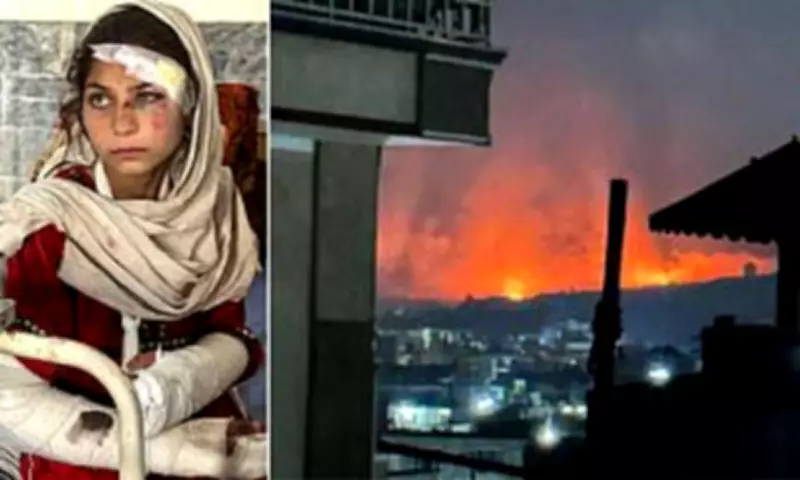
The Taliban regime in Afghanistan has issued a call for peace talks with Pakistan, following a series of devastating aerial attacks on Afghan cities overnight. This appeal comes after Pakistan declared an 'open war' against the Taliban, with strikes targeting Kabul and Kandahar.
Escalation to Open Conflict
Officials in Islamabad confirmed that military operations are 'ongoing,' claiming to have eliminated at least 274 Taliban members in the attacks. This marks the first instance of Pakistan directly engaging Afghanistan militarily, a significant escalation in the long-standing tensions between the two nations.
According to Pakistani authorities, the airstrikes were a direct response to repeated Taliban incursions into Pakistani territory. The situation on the ground was described as volatile, with plumes of black smoke rising from buildings in Kabul following the bombings.

Targets and Casualties
Pakistan stated that the strikes focused on Taliban military infrastructure, including an ammunition depot. Unverified footage circulating online appears to show large explosions rocking Afghan urban centers. Meanwhile, reports indicate that clashes in border regions have resulted in nearly 300 killed and wounded across both sides in recent weeks.
An injured Pakistani girl was treated at a hospital in Bajaur, highlighting the human cost of the conflict. Missiles were reportedly dropped from aircraft visible in the skyline over the Afghan capital, with ambulance sirens echoing through Kabul streets.
Diplomatic Efforts and Statements
Qatar is expected to mediate between the Afghan and Pakistani governments in an attempt to de-escalate the situation and find a peaceful resolution. Taliban Foreign Minister Amir Muttaqi emphasized Afghanistan's preference for resolving issues through 'mutual understanding and respect.'
However, Muttaqi cautioned that this approach would only be effective if Pakistan demonstrates 'a practical and sincere willingness to find solutions.' This statement comes amid reports that the Taliban has previously used drones to attack targets inside Pakistan.
Military Posturing and Threats
Pakistan's Defence Minister Khawaja Muhammad Asif delivered a stark warning to the Taliban, stating that 'our cup of patience has overflowed' and declaring 'now it is open war between us and you.' He threatened that any further attacks by the Taliban would result in a 'measured, decisive and befitting response.'
Pakistan possesses nuclear capabilities and maintains a military that is vastly superior to Afghanistan's in conventional terms. However, the Taliban are seasoned in guerrilla warfare, having honed their tactics through decades of conflict against UK and international forces.
Background and Context
The Taliban returned to power in Afghanistan in 2021, surprising Western observers with the speed of their military campaign to depose the democratic government. The relationship between Pakistan and Afghanistan has been fractious for decades, with Pakistan historically providing sanctuary for Taliban leaders during conflicts with Western troops.
The two countries share a porous 1,615-mile border that is frequently crossed by smugglers and jihadist fighters, complicating security efforts. Taliban spokesman Zabihullah Mujahid detailed that Pakistani forces carried out airstrikes on multiple provinces, including Kabul, Kandahar, Paktia, Paktika, Khost, and Laghman over two nights.
Regional Security Concerns
Pakistan has been on high security alert since launching airstrikes earlier this week, which Islamabad claims targeted camps of Pakistani Taliban and Islamic State militants in eastern Afghanistan. Kabul and the United Nations have reported that these strikes killed 13 civilians, prompting the Taliban to warn of a strong response.
In response to the heightened threat, the government of Pakistan's Punjab province announced it was on high alert for militant attacks and had conducted security operations resulting in 90 Afghan nationals being taken to holding centers for deportation.
As the situation continues to develop, the international community watches closely, concerned about the potential for further escalation in a region already plagued by instability and conflict.