Thousands of Colombians have taken to the streets in a major national protest, as diplomatic tensions with the United States reach a boiling point. The unrest follows a series of incendiary remarks from former US President Donald Trump and a pivotal agreement for a high-stakes meeting with Colombia's leader, Gustavo Petro.
A Nation Mobilises Against US Threats
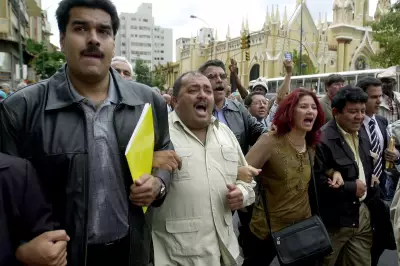
On Wednesday, President Petro announced he had agreed to meet Donald Trump. This decision came shortly after he called for a 'day of national mobilisation' against the former US president's military threats towards the South American nation. The call to action resonated deeply across Colombia, sparking widespread demonstrations where crowds chanted slogans like 'Out with the Yanks!'.
Public anger has been mounting steadily since last week's dramatic US intervention in neighbouring Venezuela, which resulted in the capture of that country's president, Nicolás Maduro. The regional crisis took a direct and alarming turn for Colombians when Trump was asked on Sunday about a potential US operation in Colombia.
His reply, 'Sounds good to me. You know why? Because they kill a lot of people,' was perceived as a direct threat and ignited fury. This comment, seen as a blanket condemnation, served as the immediate catalyst for the large-scale protests witnessed across Colombian cities.
The Stakes of the Forthcoming Trump-Petro Meeting
The planned meeting between President Petro and Donald Trump is now set against a backdrop of intense public pressure and regional instability. Analysts suggest the dialogue will be one of the most consequential in recent US-Colombia relations, with several critical issues on the table:
- The immediate de-escalation of military rhetoric and threats.
- The fallout from the US intervention in Venezuela and the status of Nicolás Maduro.
- Broader concerns about US foreign policy and sovereignty in South America.
The outcome of this confrontation is seen as having implications far beyond bilateral relations. Observers note that the US attack on Venezuela, and its posture towards Colombia, will significantly influence the future direction of South America's vast mineral wealth. Control and access to these resources are a key subtext to the current geopolitical standoff.
Regional Repercussions and a Defining Moment
The protests in Colombia signify more than just anger at a foreign leader's comments; they represent a powerful assertion of national sovereignty and a rejection of external military intervention. The massive turnout for the 'day of national mobilisation' sends a clear message to both domestic and international audiences.
This crisis marks a defining moment for President Petro's administration, testing his ability to navigate intense domestic populist pressure while engaging in fraught diplomacy with a figure like Trump. The situation remains fluid, with the potential to either recalibrate US-Colombia ties or plunge them into a deeper freeze.
As the region watches closely, the coming days will reveal whether the planned meeting can bridge a profound diplomatic chasm or if the streets of Colombia will continue to be the arena where this international dispute plays out.