Trump and Netanyahu's 'Quick War' Claims Clash with Iran's Marathon Strategy
Three weeks of intense US-Israeli bombardment in Iran have failed to extinguish Tehran's ability to launch retaliatory strikes, with experts warning the conflict could drag on for weeks or even months. Despite Donald Trump's boasts of having "obliterated" Iran's military, the reality on the ground paints a more complex picture of a war far from over.
Trump's Victory Claims vs. Ongoing Iranian Strikes
Donald Trump declared on Truth Social this week that the US had "destroyed 100% of Iran's Military capability," following three weeks of fierce attacks targeting missile facilities. However, this assertion starkly contrasts with his failure to achieve stated objectives like regime change or halting Iran's nuclear program.
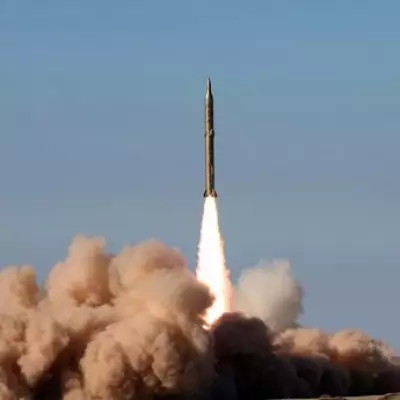
Geopolitical analyst Dmitri Alperovitch reveals that Iranian forces have maintained a steady barrage, firing approximately 30 missiles and 70 drones daily over the past fortnight. This sustained assault has inflicted damage across the Middle East, demonstrating Tehran's continued operational capacity.

Trump himself conceded that Iran could still launch drones, mines, or close-range missiles in the Strait of Hormuz "no matter how badly defeated they are." Experts confirm this assessment, with Alperovitch stating, "I think it's probably safe to assume that [Iran] can continue it at least for weeks, maybe longer, at this rate of fire."
Iran's Stockpile and Production Capabilities
While precise figures are scarce, estimates suggest Iran began the conflict with a missile stockpile of around 3,000 units. Despite significant damage to production facilities, Alperovitch believes Tehran likely retains "hundreds left" to sustain current firing rates.
Iran has heavily relied on Shahed drones, which are relatively cheap and easy to produce compared to missiles. Although drone attacks have declined by approximately 85 percent, Tehran's ability to continue manufacturing these weapons remains intact, ensuring a persistent threat.
Israeli and US forces have struck over 15,000 targets, killing 50 Iranian officials and destroying up to 80 percent of Iran's offensive capability according to some Western officials. Yet Iranian missile and drone attacks persist, with the Bulletin of Atomic Scientists reporting more than 2,000 drones fired at the Gulf region alone.
Iran's Marathon Warfare Strategy
Defense Secretary Pete Hegseth acknowledged there is no "definitive timeframe" for ending the war, stating US attacks will only cease when Trump decides to halt them. This aligns with Iran's perspective, which views the conflict as a marathon rather than a sprint.
Dr. Renad Mansour of Chatham House explains, "From Iran's perspective, this is being seen as a long war; a marathon where you might have times when there are more missiles, times when there are fewer missiles being launched." Tehran has been preparing for this scenario since last year's June war, understanding it could not match US-Israeli military superiority directly.
Instead, Iran has adopted asymmetric tactics, including blockading the Strait of Hormuz to wreak havoc on the global economy. Mansour notes Tehran wanted to "get the US deeply entangled" to avoid a "Venezuela scenario in which the US can just leave and declare victory."
Dual Fronts and Mosaic Defense
The conflict operates on two distinct fronts: the US primarily targets Iran's ballistic missile program and navy, while Israel focuses on regime destabilization through assassinations of military leaders. This has highlighted Iran's "mosaic defense" strategy—a decentralized command structure designed to maintain operations even if senior leadership is eliminated.
Alperovitch observes, "Assassinating military commanders may feel good, but there'll always be a cadre of people to replace them. These assassinations, I'm not certain they are actually accomplishing a whole lot in terms of degrading command control."
Iran's rapid retaliation against Qatar's gas facilities following Israel's attack on the South Pars gas field demonstrates that Tehran's "command and control is not destroyed" and can "retaliate and escalate… within hours."

The Elusive Definition of Victory
While the US could potentially declare victory based on degrading Iran's missile production and naval capabilities, the broader concept of success remains ambiguous. Dr. Mansour questions, "What does victory look like? What does a mission accomplished even look like?"
He warns that even a weakened Iranian regime would continue as "a spoiler in the region" with the ability to reconstitute its systems over time. This reality challenges simplistic narratives of quick victory, suggesting instead a protracted conflict where Iran's marathon strategy may outlast initial expectations of rapid resolution.