US President Donald Trump has claimed Iran's Supreme Leader, Ayatollah Ali Khamenei, is looking for a way to flee the country as it is rocked by nationwide protests demanding regime change. President Trump issued a stark warning that the United States would retaliate forcefully if Iranian authorities targeted unarmed demonstrators.
Unrest and a Stark US Warning
Protests have erupted in over 100 cities and towns across Iran, with human rights groups reporting significant casualties. At least 40 protesters and several police officers have been killed, while arrests have soared past 2,200. In an interview with Fox News' Sean Hannity, Trump stated he had "put Iran on notice," emphasising that the US would "hit them very hard" if harm came to the protesters.
"Nobody’s ever seen anything like what’s happening right now," Trump said, describing the demonstrators as people who "love their country." He added that Iran was on the "verge of collapse" and alleged that Ayatollah Khamenei was "looking to go someplace" to escape the turmoil.
Internet Blackout and Regime Response
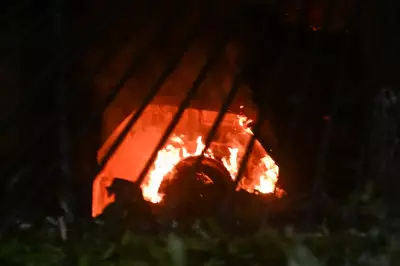
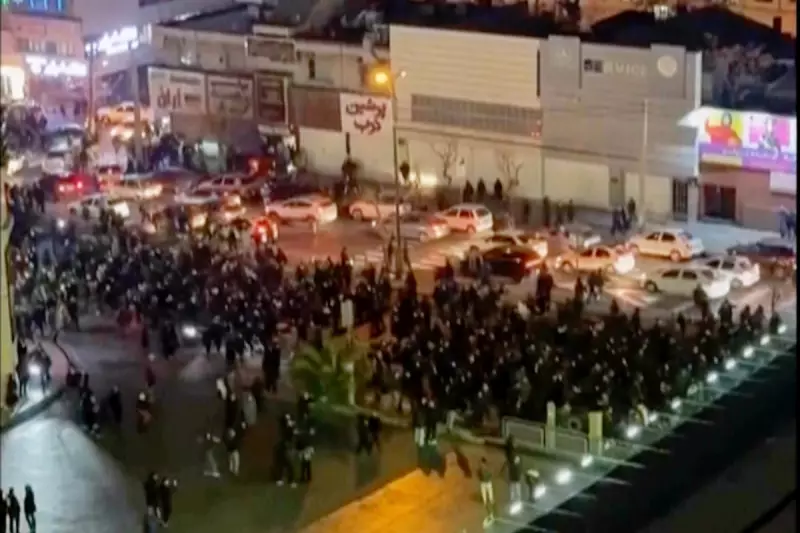
The Iranian regime has moved to suppress information, imposing nationwide internet blackouts on Thursday and Friday, effectively cutting the population off from the outside world. Despite this, footage has emerged showing buildings and shops in flames and overturned vehicles in Tehran.
In his first public address since the unrest began, Ayatollah Khamenei blamed Trump for the demonstrations. He accused protesters of being "saboteurs" and "terrorist agents" working for the US and Israel. "The Islamic Republic will not tolerate mercenaries working for foreign powers," Khamenei asserted, vowing that the regime, which came to power "with the blood of hundreds of thousands," would not back down.
Economic Desperation Fuels Discontent
The immediate protests were sparked a fortnight ago by a call from Reza Pahlavi, the exiled son of the late Shah. However, the groundwork was laid by a severe and widening economic crisis. Inflation has hit 40 per cent, and the re-imposition of UN sanctions in September has plunged the country deeper into hardship, causing the rial to crash to an exchange rate of 1.4 million to one US dollar.
Merchants in Tehran began protesting rising costs in December, and the nation is still reeling from a 12-day conflict with Israel in June, which saw US forces bomb Iranian nuclear facilities. The current wave of dissent follows previous major protests, including the 2022 'Woman, Life, Freedom' movement.
International concern is growing. The UN rights chief, Volker Turk, said he was "deeply disturbed by reports of violence." The EU's foreign policy chief, Kaja Kallas, condemned the "disproportionate and heavy-handed response" and internet shutdown, calling any violence against peaceful demonstrators "unacceptable." Meanwhile, Iran's judiciary has promised "decisive" and maximal punishment for rioters, signalling no domestic leniency is forthcoming.