Trump Urges New Front in Iran as US Forces Battle to Reopen Strait of Hormuz
Former President Donald Trump has called for American forces to open a new military front in Iran, as US jets and helicopters engage in an all-out battle to reopen the strategically vital Strait of Hormuz. Global fuel supplies are facing intense pressure due to Iran's stranglehold on the waterway, through which approximately one-fifth of the world's oil is transported.
US Military Escalates Attacks on Iranian Assets
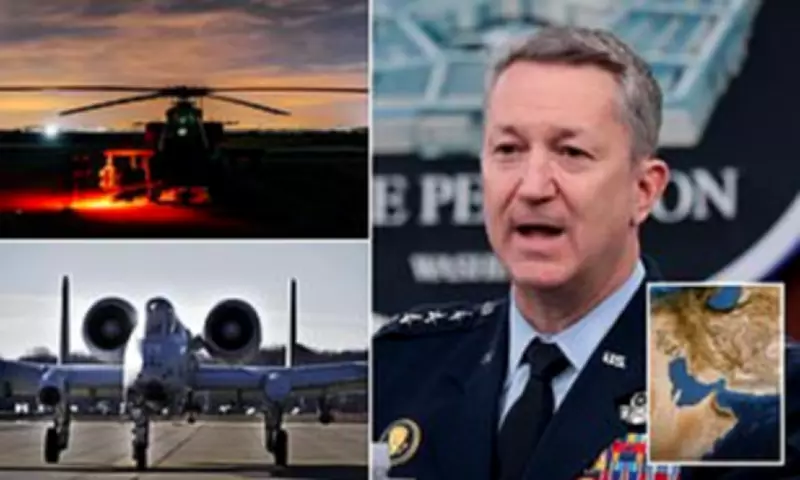
American forces have deployed low-flying A-10 Warthog ground-attack aircraft and Apache attack helicopters to target Iranian ships and drones in the region. The Pentagon's objective is to neutralise threats from Iranian weaponry and restore access to the strait, which has seen only about 90 vessels transit since the conflict began nearly four weeks ago.
Air Force General and Chairman of the Joint Chiefs of Staff Dan 'Raizin' Caine confirmed the mission is focusing on the southern Iranian coastline. 'The A-10 Warthog is now engaged across the southern flank, targeting fast-attack watercraft in the Strait of Hormuz,' he stated on Tuesday. He added that Apache helicopters have 'joined the fight on the southern flank' and noted that allied forces have utilised them to counter one-way attack drones.

International Response and Diplomatic Tensions
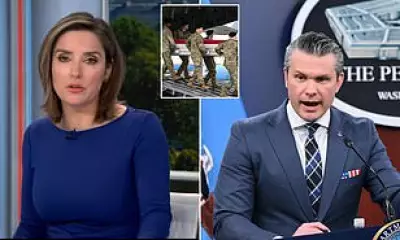
Despite US efforts, The Wall Street Journal reports it could take weeks to clear the strait and restore normal operations. Meanwhile, Pentagon chief Pete Hegseth revealed on Thursday that US strikes have destroyed over 120 Iranian naval ships and targeted bases and IRGC cruise missile batteries.
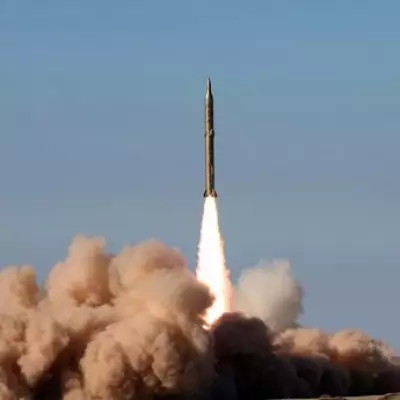
Iran has retaliated with explosive-laden unmanned boats, projectiles, and airborne drones against enemy vessels. This escalation follows recent US deployment of 5,000-pound deep penetrator bombs on underground missile sites along Iran's coastline near the strait.
However, many American allies have expressed reluctance to join Trump's proposed coalition for securing the waterway. Six major powers—Britain, France, Germany, Italy, Japan, and the Netherlands—declared on Thursday they are prepared 'to contribute to appropriate efforts to ensure safe passage through the Strait of Hormuz.' They condemned recent Iranian attacks on commercial vessels but emphasised that Italy, Germany, and France envision any initiative occurring post-ceasefire, not as immediate military involvement.
European and Asian Diplomatic Moves
European leaders, grappling with rising energy prices, have demanded the strait's reopening and a moratorium on strikes against Middle Eastern water and energy infrastructure. The European Council issued a joint statement calling for stabilised energy shipments and 'de-escalation and maximum restraint' from combatants.
In discussions with Japanese Prime Minister Sanae Takaichi, Trump highlighted Japan's reliance on oil transiting the strait as a key reason for increased support. 'I expect Japan to step up, you know, because we have that kind of relationship,' Trump remarked. Takaichi affirmed the importance of strait safety but outlined legal constraints on Japan's potential actions.
Oil Exports and Economic Implications
Despite the effective closure, maritime data indicates about 90 ships, including oil tankers, have crossed the strait since the war began, with Iran exporting over 16 million barrels of oil since March. China remains the primary buyer due to Western sanctions, while vessels from Pakistan, India, Greece, and other nations have also navigated the passage.
Oil prices have surged more than 40% to exceed $100 per barrel, prompting US measures to allow Iranian tankers through to stabilise markets. Treasury Secretary Scott Bessent noted, 'The Iranian ships have been getting out already, and we've let that happen to supply the rest of the world.'
Israel-US Coordination and Strategic Divergences
Israeli Prime Minister Benjamin Netanyahu acknowledged Trump's warning against targeting Iranian oil infrastructure, particularly after criticism of an attack on the South Pars gas field. Netanyahu insisted Israel 'acted alone' but agreed to refrain from further strikes on the gas field, downplaying any disagreements with Trump.

'I don't think any two leaders have been as coordinated as President Trump and I. He's the leader. I'm his ally. America is the leader,' Netanyahu stated. Trump clarified he neither approved nor agreed with Israel's South Pars attack, emphasising close coordination while asserting ultimate authority over US security interests.
The US air campaign continues to focus on degrading Iran's missile and nuclear programs, alongside naval destruction, while Israel pursues targeted assassinations aimed at destabilising Iran's Islamic leadership.