Trump Denies Plans for US Ground Troops in Iran Amid Escalating Conflict
President Donald Trump has firmly denied any intention of deploying American ground troops to Iranian soil, even as a nearly three-week-old conflict between Iran and Israel continues to disrupt global energy markets and drive oil prices to alarming heights.
"I'm Not Putting Troops Anywhere"
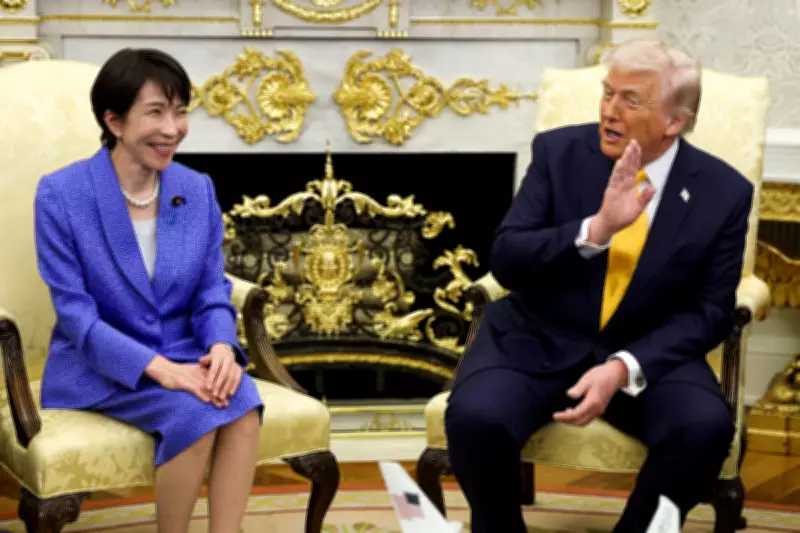
During a joint press conference with Japanese Prime Minister Sanae Takaichi at the White House on Thursday, President Trump was directly questioned about potential US military escalation in the Middle East. When asked specifically if he planned to send additional American forces, including ground troops, to the region, the president offered a characteristically cryptic response.
"No, I'm not putting troops anywhere—if I were, I certainly wouldn't tell you," Trump stated, repeating his assertion that he was not ordering ground forces into Iran. He further pledged to do "whatever is necessary" to stabilize soaring oil and gas prices, though he declined to specify whether this included relaxing longstanding US sanctions on Iranian petroleum exports.

Oil Markets in Turmoil Following Infrastructure Attacks
The president's comments come amid significant volatility in global energy markets, triggered by a series of retaliatory attacks on petroleum and natural gas infrastructure across the Middle East. The conflict escalated dramatically following an Israeli strike on Iran's massive South Pars natural gas field—the country's largest such facility.
Iranian retaliation has since targeted Qatar's largest gas facility (the biggest in the world), a Saudi oil refinery, and forced the United Arab Emirates to temporarily shutter its own gas operations. These strikes have caused Brent Crude Oil prices to spike by more than 13 percent in the single week since the initial Israeli attack.
Trump's late-night social media activity further exacerbated market anxieties, pushing oil prices to $114 per barrel on Thursday morning—the highest level since June 2022, when prices peaked at $119 during the Ukraine war.
Contradictory Claims and Coordinated Strikes
President Trump claimed he had warned Israeli Prime Minister Benjamin Netanyahu against the South Pars strike, stating, "I told him 'don't do that,' and he won't do it." He also insisted the United States had "knew nothing" about the attack in advance and denied any Qatari involvement or foreknowledge "in no way, shape or form."
However, these denials have been swiftly contradicted by three Israeli officials speaking anonymously to reporters. They confirmed the attack was actually coordinated with the United States, describing the dynamic as similar to previous incidents where US officials publicly distanced themselves from Israeli strikes on Iranian targets.
Meanwhile, Iran has issued urgent evacuation warnings for multiple energy facilities across the region, including:
- Saudi Arabia's Samref Refinery and Jubail Petrochemical Complex
- The United Arab Emirates' Al Hosn Gas Field
- Qatar's Mesaieed Petrochemical Complex, Mesaieed Holding Company, and Ras Laffan Refinery
An Iranian state media declaration warned these sites had become "direct and legitimate targets" and would be attacked imminently.
Threats of Further Escalation
In a Truth Social post late Wednesday, President Trump attempted to de-escalate tensions by declaring there would be "NO MORE ATTACKS" on Iranian facilities if Tehran refrained from further strikes on Qatari infrastructure. Yet in the same message, he issued a stark threat: if Iran attacked Qatari LNG facilities again, US forces would join Israel in a strike that would "massively blow up the entirety of the South Pars Gas Field at an amount of strength and power that Iran has never seen or witnessed before."
"I do not want to authorize this level of violence and destruction because of the long term implications that it will have on the future of Iran," Trump added, "but if Qatar's LNG is again attacked, I will not hesitate to do so."

As the conflict enters its fourth week, the global economy faces mounting pressure from energy market instability, while diplomatic and military tensions continue to simmer with no clear resolution in sight.