Trump and Netanyahu's Mar-a-Lago Meeting Set Stage for Iran Conflict
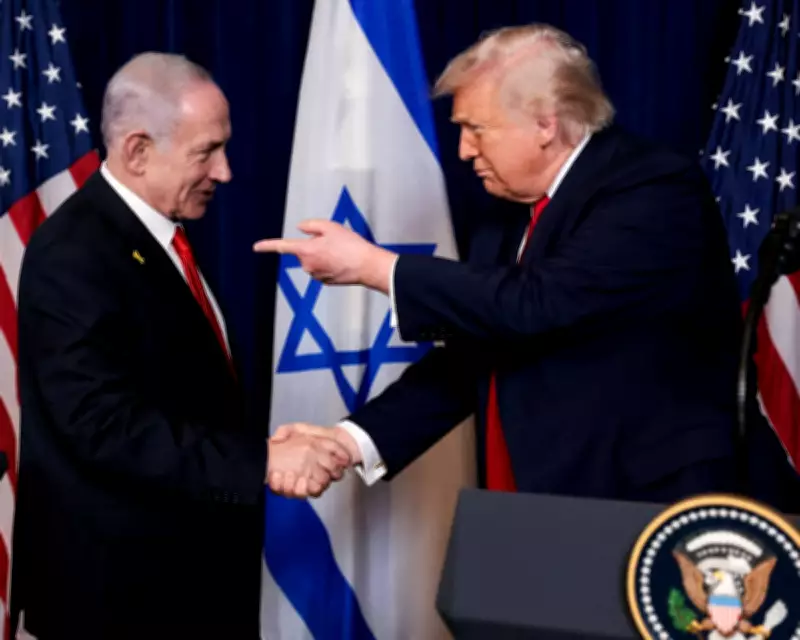
On 29 December last year, Donald Trump and Benjamin Netanyahu held a press conference at Mar-a-Lago, where the US president closely echoed his Israeli counterpart's talking points on Iran. Trump stated, "Now I hear that Iran is trying to build up again. Then we are going to have to knock them down. We'll knock the hell out of them. But hopefully, that's not happening." This event marked a pivotal moment in the lead-up to the current war, with Netanyahu seeking US support for a comprehensive conflict against Tehran.
Netanyahu's Pitch: An 'Easy' War with Grand Ambitions
Netanyahu arrived at Mar-a-Lago with a specific request, backed by inducements aimed at appealing to Trump's ego. He offered the Israel Prize, a rare honour for non-Israelis, for Trump's "tremendous contributions to Israel and the Jewish people." According to reports, Netanyahu also suggested that defeating Iran would allow Israel to reduce its reliance on US military aid, a benefit for the transactional president. Multiple accounts indicate this meeting was part of a series of contacts as Netanyahu worked to secure US participation in a war with far grander objectives than previous conflicts.
The Israeli leader presented an assessment from Mossad, Israel's secret service, claiming Iran's regime was fragile and unpopular, ripe for toppling due to internal protests. Netanyahu pitched this as a historic opportunity requiring only a short campaign, with some accounts noting he dangled the extra benefit of Trump taking revenge for alleged Iranian plots against his life. Israeli military planners had stockpiled missile interceptors for a war they assumed would last three weeks at most, and officials briefed that the Iranian threat would taper off within days.

Reality of the Conflict: Escalation and Global Fallout
As the war enters its second month, it is clear that Netanyahu's promise of an "easy" war has proven illusory. Despite the killing of Supreme Leader Ali Khamenei and other senior officials, a decapitation strategy has not led to quick regime change. Instead, the regime appears to be consolidating around the Islamic Revolutionary Guards Corps. The conflict has expanded regionally, with ongoing hostilities in Gaza, Lebanon, Yemen, and Syria, where Netanyahu's declared victories often prove ephemeral.
In Gaza, Hamas persists despite a horrific campaign of destruction. In Lebanon, Hezbollah retains rocket-firing capabilities, forcing Israel into a failed occupation policy reminiscent of past failures. The global economy is reeling from the closure of the Strait of Hormuz, and the war has strained advanced US weapons inventories, reduced support for Ukraine, and undermined NATO while potentially emboldening China, Russia, and North Korea.
Internal US Perceptions and Diplomatic Consequences
Even among Trump administration senior officials, there is a perception that Netanyahu overpromised. Axios reported a US source stating, "Before the war, Bibi really sold it to the president as being easy, as regime change being a lot likelier than it was." This was echoed in a challenged conversation between Vice-President JD Vance and Netanyahu. However, some analysts argue Trump was a willing partner, with former US ambassador Daniel C Kurtzer noting he was "risk-ready and caught up in a self-generated aura of military power."
Diplomatically, the war threatens Israel's detente with Gulf states under the Trump-mediated Abraham Accords. Raphael Cohen of the Rand thinktank suggested Arab states may blame Israel for being thrust into an unwanted war, potentially altering geopolitical alliances. French President Emmanuel Macron reflected widespread skepticism, stating military action would not resolve Iran's nuclear issue long-term and describing operations in the Strait of Hormuz as "unrealistic."

Domestic and International Opinion Shifts
Support for Israel is declining globally, with polls showing Americans are now more sympathetic to Palestinians than Israelis for the first time since 2001. Among US Jewish voters, 60% oppose the military action against Iran, and 58% believe it weakens the US. Rahm Emanuel, a former US ambassador, warned that Israel may lose its unique beneficiary status for US military assistance, facing the same restrictions as other countries.
This conflict, viewed as part of Netanyahu's state of permanent conflict since Hamas's 2023 attack, has long-term consequences for Israel's diplomacy and public opinion. As the war continues with no end in sight, the detrimental effects of Netanyahu's overpromised "easy" war are spreading far beyond the immediate region, impacting global stability and US-Israel relations profoundly.