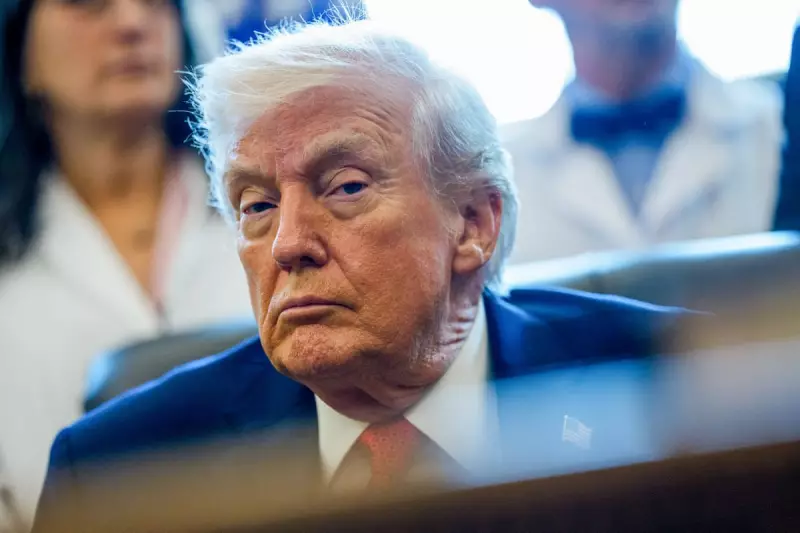
Former US President Donald Trump has made a series of stark declarations about the limits of presidential power, stating he does not "need international law" and that his authority is constrained solely by his personal sense of morality.
'My Own Morality' as the Sole Constraint
In a revealing new interview with the New York Times, Trump outlined his view of executive authority. He asserted that the only thing limiting his power as president was "my own morality, my own mind." He doubled down on this point, stating, "It's the only thing that can stop me," while adding, "I'm not looking to hurt people."
When pressed on whether his administration needed to adhere to international law, Trump initially conceded "I do," but immediately qualified his answer. He said, "It depends on what your definition of international law is," casting doubt on the concept's universal application.
Ownership, Greenland, and Global Precedents
The interview took place as his administration explored options regarding Greenland, with Trump emphasising the psychological importance of ownership over territory. "Ownership is very important," he said, arguing it provided elements unattainable through leases or treaties.
Trump also dismissed concerns that his administration's push to oust Nicolás Maduro in Venezuela could set a precedent for Chinese action in Taiwan or Russian moves in Ukraine. Justifying US policy, he repeated claims that Maduro had sent gang members into the United States, a charge he linked to drug trafficking and crime.
Views on Taiwan, Russia, and Arms Control
On the sensitive issue of Taiwan, Trump expressed a personal belief that Chinese President Xi Jinping would not seize control while he was in office. "I've expressed to him that I would be very unhappy if he did that and I don't think he'll do that," Trump stated. However, he suggested the situation might change "after we have a different president."
Regarding the last major arms control treaty with Russia, which is set to expire next month, Trump appeared unconcerned. "If it expires, it expires," he said, proposing that future agreements should include China and other global players.
These comments emerge amidst domestic tensions in the US and fraying relations with European allies, particularly over the potential US interest in acquiring Greenland. The interview provides a clear insight into the unilateral and personality-driven approach to diplomacy and governance that characterised Trump's presidency.