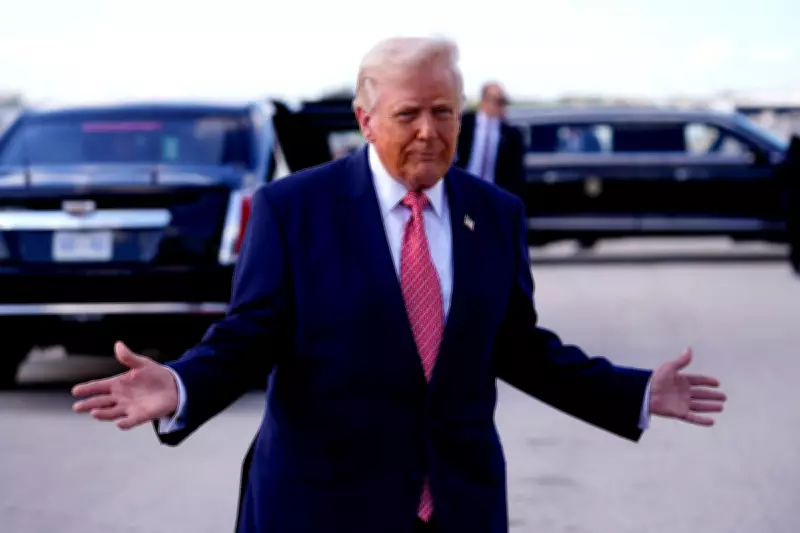
President Donald Trump has made a striking claim that Iran has formally requested a ceasefire in the ongoing conflict, but he insists he will not agree until a critical condition is met. In a post on Truth Social on Wednesday morning, Trump stated that the United States will consider the request only when the Strait of Hormuz is "open, free, and clear." Until that happens, he threatened to escalate military action, vowing to "blast Iran into oblivion or, as they say, back to the Stone Ages!!!"
Trump's Assertions and Conditions
The president's comments come amid heightened tensions, with Trump alleging that Iran's new regime president, whom he described as "much less radicalized and far more intelligent than his predecessors," has asked America for a ceasefire. However, Tehran has not publicly confirmed this assertion. Iranian Foreign Minister Abbas Araghchi has previously denied any ongoing negotiations with Washington, casting doubt on Trump's claims.
Timeline for Withdrawal and Nuclear Concerns
In related remarks on Tuesday, Trump indicated that the US could withdraw from the conflict "very soon," potentially within two to three weeks, but only if Iran is prevented from acquiring nuclear weapons. He told reporters that Iran "doesn't have to make a deal" to end the conflict, suggesting a swift US departure might be imminent regardless of diplomatic progress.

Strategic Importance of the Strait of Hormuz
The Strait of Hormuz is a vital maritime chokepoint for global oil shipments, and its closure or restriction could have severe economic repercussions. Trump's demand for its opening underscores the strategic stakes in the region, linking ceasefire negotiations directly to geopolitical and economic stability.
As of now, there has been no official response from Iran regarding Trump's latest statements, leaving the situation uncertain. The international community watches closely, with concerns mounting over potential escalations and the broader implications for Middle East peace and global security.