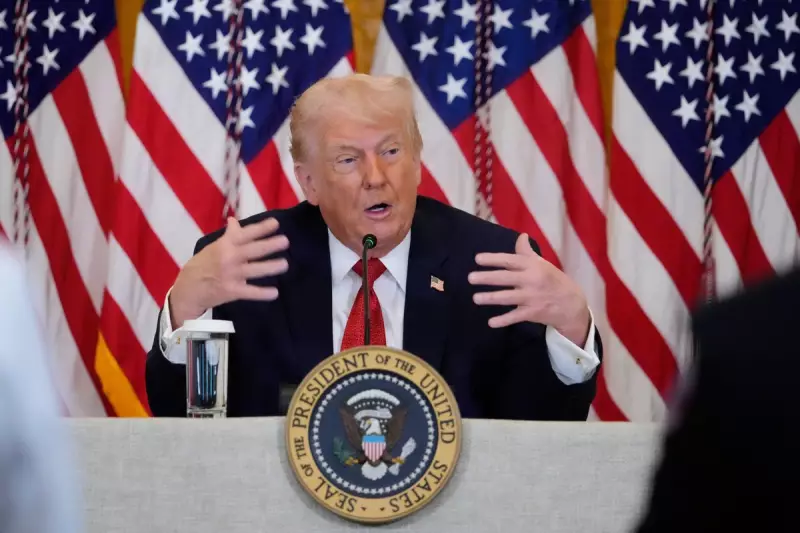
Former US President Donald Trump has declared he is "no longer only thinking of peace" after being denied the Nobel Peace Prize, linking the rejection to a startling demand for the United States to occupy Greenland.
A Letter Linking Prize and Territory
In a direct communication sent on Monday 19 January 2026, Trump addressed Norway's Prime Minister, Jonas Gahr Støre. The letter explicitly connected his perceived snub by the Nobel committee to a radical shift in foreign policy posture. Trump stated he no longer feels obligated to prioritise peace after the award was not granted to him.
Within the same message, he made an audacious territorial demand. Trump argued that Denmark cannot protect Greenland from Russia and China and insisted the US must assume "Complete and Total Control" of the vast Arctic island. He framed this as a necessary strategic move for Western security.
Calling in NATO Favours
To justify this proposed annexation, Trump invoked his past relationship with the North Atlantic Treaty Organisation. He claimed to have done more for NATO than anyone since its founding. His letter suggested the military alliance should now reciprocate that support by facilitating the American acquisition of Greenland.
The response from Oslo and the Nobel Foundation was swift and unequivocal. Both Prime Minister Støre and the independent Nobel Foundation reiterated that the prize is awarded solely by its committee and cannot be transferred or demanded. This followed Trump's repeated public assertions that he deserved the honour.
European Allies Rally Behind Denmark
The reaction from European capitals has been one of firm solidarity with Copenhagen and Nuuk. Key allies, including Britain, have publicly expressed their support for Denmark and Greenland's sovereignty. They have collectively condemned Trump's accompanying threats, which reportedly include potential punitive tariffs and the possibility of military intervention over the island.
This episode has sent shockwaves through diplomatic circles, raising fresh concerns about the stability of transatlantic relations and the future of Arctic security. The explicit connection between a personal grievance over a prestigious award and a threat of territorial expansion is viewed as a highly unusual and destabilising diplomatic manoeuvre.