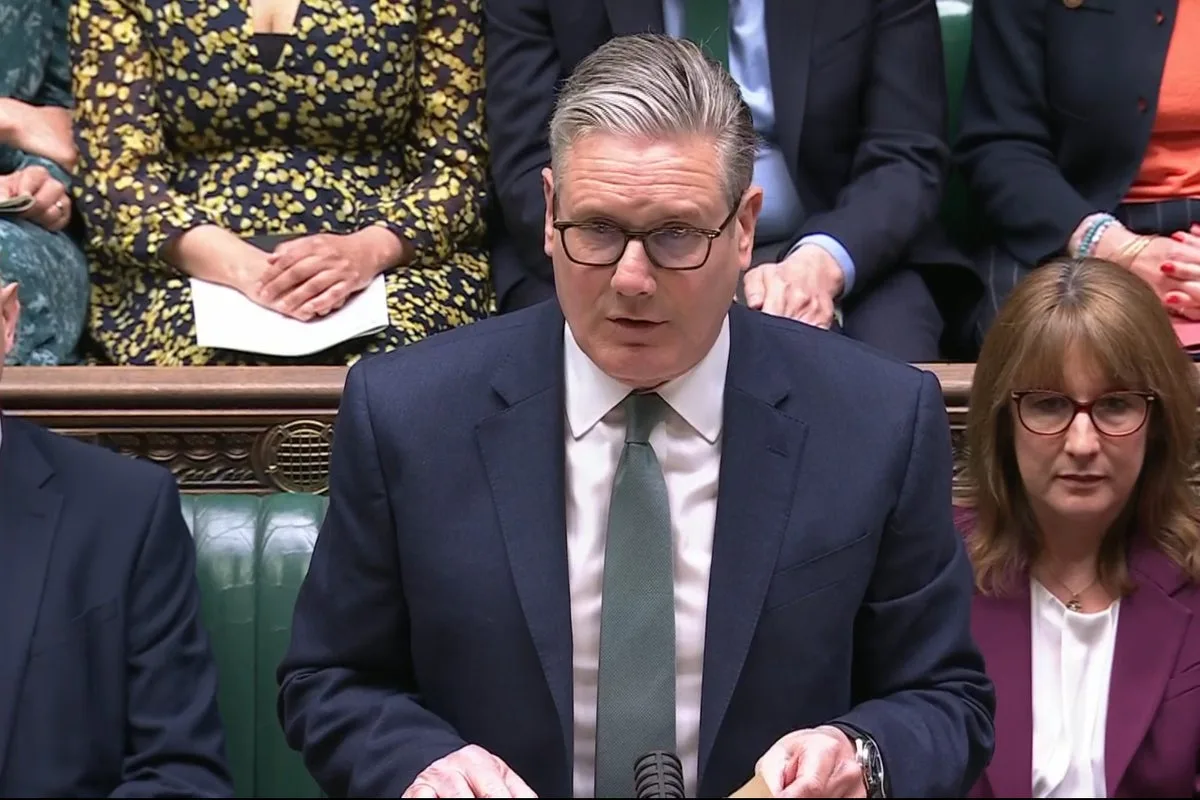
The UK and France are spearheading political and military planning to reopen the Strait of Hormuz, but no mission will commence until hostilities between the US and Iran cease, Prime Minister Sir Keir Starmer has said. Speaking after Donald Trump's blockade of Iranian ports took effect, Sir Keir refused to back the US president's actions and called for unfettered access to the vital waterway for global oil and gas supplies.
Alongside French President Emmanuel Macron, Sir Keir said he was working to assemble an international coalition to secure freedom of navigation in the strait. The Prime Minister told MPs that a summit of world leaders later this week would focus on diplomatic efforts to reach a negotiated end to the conflict and the reopening of the strait, which he described as a 'running sore' for the world. Military planning would also take place 'to provide assurance to shipping as soon as a stable environment can be established'.
Mr Macron described the proposed mission as 'strictly defensive' and separate from the warring parties, intended to be deployed as soon as circumstances permit. Meanwhile, oil prices jumped to around $100 a barrel after US talks with Iran broke down and Mr Trump threatened to prevent ships from leaving Iranian ports, warning that any Iranian fast attack vessels approaching the blockade would be 'immediately eliminated'.

Deputy Prime Minister David Lammy met with US Vice President JD Vance and Secretary of State Marco Rubio in Washington to discuss the crisis, highlighting the UK's role in ensuring safe passage through the waterway. Sir Keir told BBC Radio 5 Live that the UK was 'not supporting the blockade' and was instead focused on keeping the strait open. Iran has selectively allowed some vessels through, but Mr Trump's blockade aims to stop this to prevent Tehran from benefiting from tolls and oil export revenues.
The rising cost of oil has already pushed up fuel prices for motorists and added expenses for businesses, while households face uncertainty over domestic energy bills when the price cap expires at the end of June. The Resolution Foundation think tank has suggested the average working-age household could be £480 worse off this year as a result of the war. Sir Keir expressed concern about the impact on people in the UK who had 'played no part in the war', but declined to blame Mr Trump directly for the economic consequences.