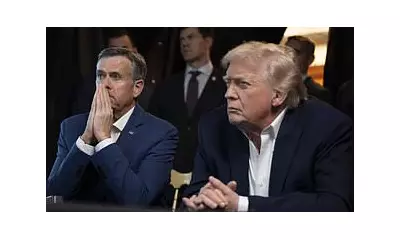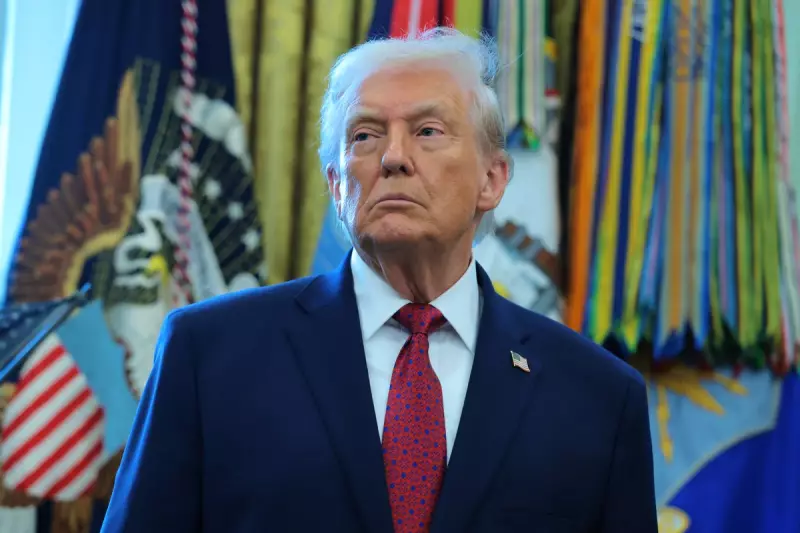
Former US President Donald Trump has publicly suggested that the future of Taiwan is ultimately for Chinese leader Xi Jinping to decide, drawing a sharp distinction with Washington's recent military action in Venezuela. The comments, made in an interview with the New York Times, have sparked concern among geopolitical analysts about the precedent set by the American operation.
Trump's Remarks and the Venezuela Precedent
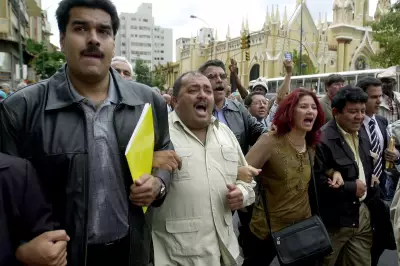
Speaking on Wednesday, 8 January 2026, Trump addressed the recent US military raid that led to the capture of Venezuelan President Nicolás Maduro. He dismissed any notion that this action could justify China using force to achieve what it calls the "reunification" of Taiwan with the mainland.
"He considers it to be a part of China, and that's up to him what he's going to be doing," Trump told the newspaper, referring to President Xi. While stating he would be "very unhappy" if China launched a military assault on the self-governed island, Trump effectively deferred to Beijing's stance on sovereignty.
The former president argued the situations were not analogous, claiming Maduro's government posed a direct threat to the US that Taiwan does not replicate against China. He repeated his belief that Xi would not move against Taiwan while he was in office, but suggested "he may do it after we have a different president."
Regional Tensions and Global Alarm
Trump's interview followed a day after China threatened a "head-on blow" against Taiwan, criticising the American intervention in Venezuela. This escalation comes on the heels of major Chinese war games around Taiwan in December 2025, which analysts saw as blurring the lines between routine drills and preparation for an actual attack.
Geopolitical experts are deeply concerned that the Venezuela raid has hardened Beijing's perspective on its options regarding Taiwan. The attack appears to have emboldened nationalist sentiment within China; on the social media platform Weibo, related topics amassed approximately 450 million views, with some users advocating for a similar approach to "reclaim" Taiwan.
The Delicate Framework of US-Taiwan Policy
The United States, like most nations, has no formal diplomatic ties with Taiwan but is legally committed to supporting its defence capabilities. This delicate balance is a persistent source of friction in Sino-American relations.
The cornerstone of this policy is the 1979 Taiwan Relations Act. This legislation does not mandate a US military response if China invades but establishes it as American policy to ensure Taiwan has the resources to defend itself. Reflecting this, the Trump administration last month announced a historic $11.1 billion arms sale to the island.
Historically, Washington has maintained a posture of "strategic ambiguity" regarding its specific response to a crisis over Taiwan, a policy Trump has largely adhered to by avoiding direct statements on how he would react to rising tensions.
The administration's stated strategy, outlined last year, focuses on preventing conflict through bolstering US and allied military power in the region. However, Trump's latest comments, seen as leaning towards Beijing's position, introduce fresh uncertainty into an already volatile geopolitical landscape.