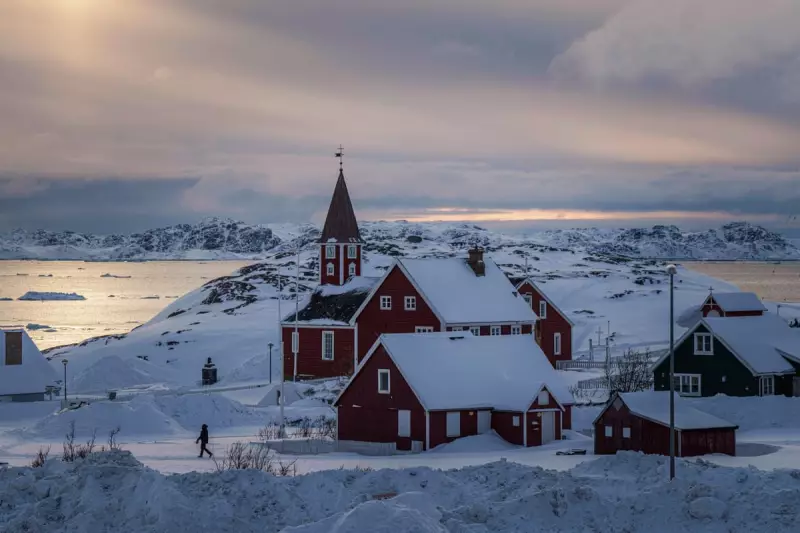
US President Donald Trump has intensified his rhetoric over Greenland, declaring that the United States is prepared to act in the Arctic territory "whether they like it or not." The comments, made during a meeting with oil and gas executives at the White House on Friday, mark a significant escalation in a long-standing geopolitical contention.
Justifying Intervention with Great Power Rivalry
Trump framed the potential US intervention as a strategic necessity to counter rivals. "If we don't do it, Russia or China will take over Greenland," he asserted. "And we're not going to have Russia or China as a neighbour." He presented the US with a binary choice, stating, "So we're going to be doing something with Greenland, either the nice way or the more difficult way."
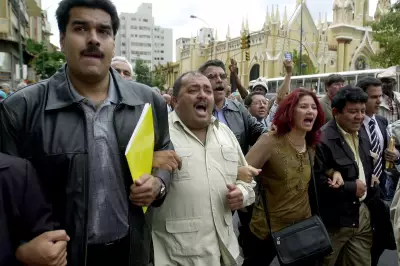
This stance revives an ambition first publicly floated by Trump in 2019 during his initial term, which was met with immediate and firm rejection from both Copenhagen and Nuuk. The president recently renewed his focus on the issue, particularly following US military actions in Venezuela, underscoring what he describes as a "national security imperative."
Firm Rejection from Greenland and Denmark
The response from the affected parties has been unequivocal. Both the government of Denmark, which handles Greenland's foreign and defence policy, and Greenland's own autonomous leadership have consistently and forcefully rebuffed Trump's proposals. Danish Prime Minister Mette Frederiksen has previously warned that a US attack on Greenland would signify the end of "Nato and therefore post-second world war security."
Public sentiment strongly aligns with this official position. A 2025 poll indicated that 85% of Greenland's population rejects the idea of becoming part of the United States. Support for such a move is also scant in the US itself, with polling showing only 7% of Americans backing a military invasion of the territory.
Broader Context: NATO Tensions and Iran Warnings
Trump's latest remarks come amid heightened tensions with NATO allies over his administration's foreign policy direction. Despite the friction, he sought to reaffirm his support for the alliance in the same speech, claiming, "If it weren't for me, you wouldn't have a Nato right now."
Greenland was not the sole international flashpoint addressed. Trump also issued a stark warning to Iran regarding its handling of domestic protests. "If they start killing people like they have in the past, we will get involved," he stated. "We'll be hitting them very hard where it hurts... You'd better not start shooting, because we'll start shooting too."
The situation leaves a critical transatlantic relationship under strain, with the future of a vast, strategically significant region becoming a focal point of great power assertion and local resistance.