Trump Voices Frustration Over UK's Delayed Approval for Military Operations Against Iran
Former US President Donald Trump has publicly criticised British Prime Minister Keir Starmer for what he described as a "very late response" in granting permission for American forces to utilise United Kingdom air bases to conduct strikes against Iranian targets. The objective of these proposed operations is to secure the vital Strait of Hormuz shipping lane.
'Surprised' by UK's Hesitation Despite Strong Alliance
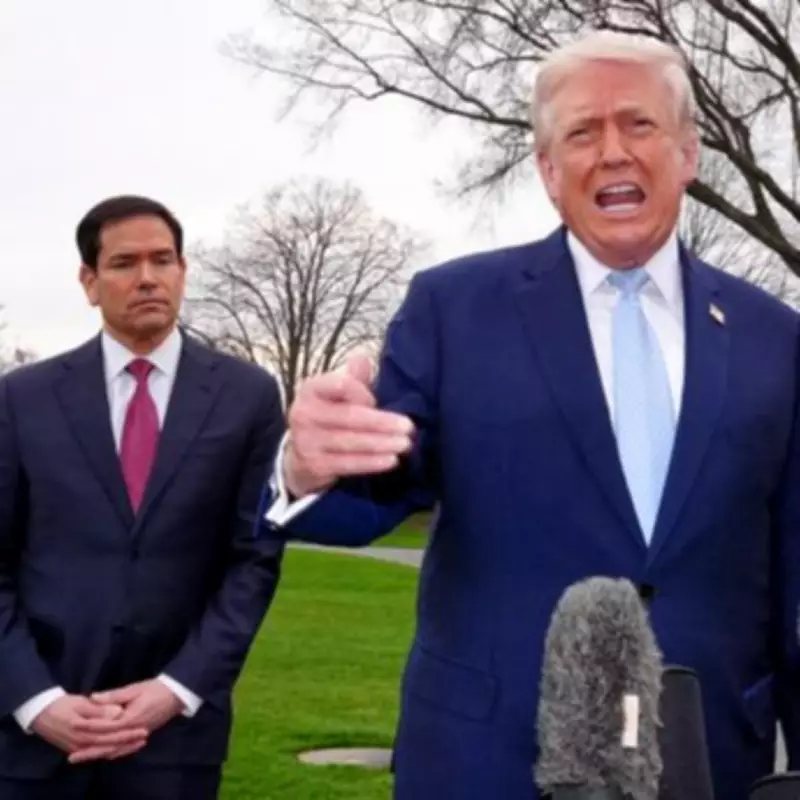
Speaking to reporters en route to Palm Beach, Florida, Trump confirmed he had engaged in discussions with Prime Minister Starmer but expressed clear disappointment. "It's been a very late response from the UK. A surprise because the relationship is so good," Trump stated. He emphasised the historical closeness of the alliance, noting, "This has never happened before. They were pretty much our first ally all over the world."
Trump further elaborated on his frustration, adding, "I was a little surprised by the UK, to be honest with you. They should have acted a lot faster." His comments referenced a specific territorial point, mentioning, "They didn't want us to use the island, the so-called island, that for some reason they gave up the rights to it," alluding to strategic locations in the region.

Strategic Focus on Kharg Island and Broader Military Plans
When questioned about potential US military actions targeting Kharg Island—a crucial hub for Iran's oil network located in the Persian Gulf—Trump remained deliberately vague regarding specific operational details. "I may have a plan, I may not," he remarked, declining to provide confirmation to journalists. He acknowledged the strategic significance, stating, "It's certainly a place that people are talking about. But I can't tell you that."
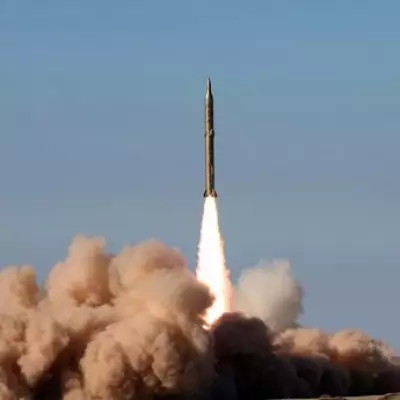
The context for this diplomatic exchange stems from an agreement authorised by Prime Minister Starmer several days after the onset of heightened regional conflict on February 28. Following Iran's initiation of missile and drone launches across the Middle East, particularly targeting areas on the opposite side of the Persian Gulf, the UK permitted US armed forces to employ British bases in the region for defensive operations. This authorisation explicitly included targeting Iran's missiles and associated military facilities.
Criticism of NATO Allies and Assessment of Iranian Military Capability
In broader remarks, Trump branded NATO partners as "cowards" for their reluctance to directly participate in operations aimed at securing the Strait of Hormuz. He assessed Iran's military position starkly, claiming, "from a military standpoint, they're finished," but highlighted their disruptive capacity in "clogging up" the critical maritime passageway.
Trump characterised keeping the strait open as a "simple military maneuver" but stressed that it necessitates substantial assistance, which he defined as "ships" and "volume." He appealed for greater involvement from nations dependent on the strait for trade, commenting, "It would be nice if the countries that rely on the strait would get involved in helping to keep it open."
Condemnation of Iranian Human Rights Abuses
Departing from the White House, Trump also addressed a separate, grave issue concerning Iran's internal affairs. When asked about the execution of three men accused of violence during anti-government protests in Iran the previous year, he condemned the actions unequivocally. "These are thugs and animals and horrible people," Trump declared. He expressed sorrow over the executions, stating, "It's terrible... I'm not surprised, they executed three young people for protesting." Reflecting on US sanctions pressure, he added, "Can't hit anybody harder than we've hit them."
The public critique from the former president underscores ongoing geopolitical tensions and highlights the complexities of international military coordination, even among historically close allies like the United States and the United Kingdom.