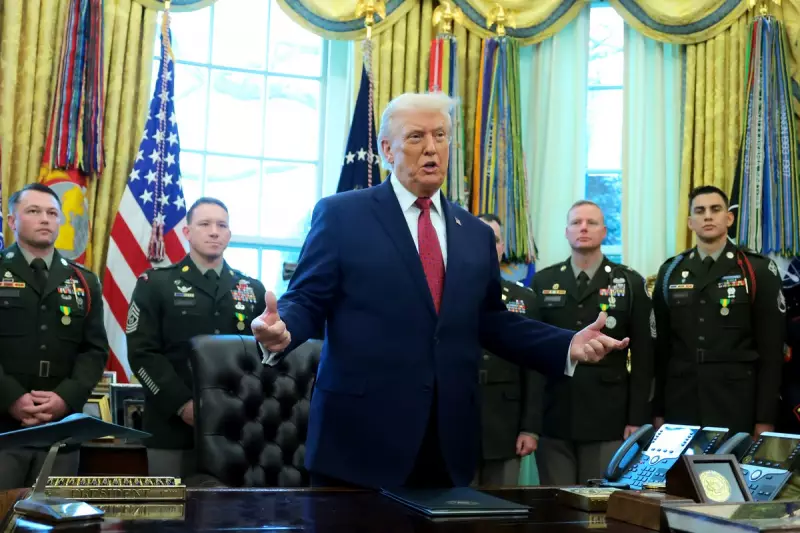
Former US President Donald Trump has launched a staggering $10bn defamation lawsuit against the BBC, escalating a long-running dispute into a high-stakes legal and diplomatic confrontation. The move, confirmed on Tuesday 16 December 2025, follows the broadcaster's apology for a Panorama programme which Trump alleges used artificial intelligence to misrepresent his words.
More Than an Apology: Money and Leverage
For Donald Trump, the BBC's apology was insufficient. According to analysis, he sees this lawsuit not merely as a means to challenge his media critics but as an opportunity to gain significant financial compensation and, crucially, political leverage. As a UK state broadcaster, the BBC is an institution where Prime Minister Sir Keir Starmer holds influence. This transforms the corporation from a simple adversary into a diplomatic bargaining chip Trump can wield in wider dealings with the British government.
The timing is notable. The lawsuit was initiated as Trump placed a promised $31bn "prosperity deal" with the UK on hold, officially due to US dissatisfaction with new UK digital taxes. While presented as separate issues, the confluence is characteristic of Trump's approach, where legal, commercial, and political pressures often intersect.
A Legal Fight on Home Turf
Trump has filed the case in a Florida court, choosing home ground for the battle. The core allegation is that a Panorama investigation into the Capitol Hill riots edited his speech to falsely suggest he was exhorting violence. The BBC maintains that while the editing was flawed, it did not damage his reputation as the implied sentiment was 'in character'.
Legally, the BBC has some defences. The programme never aired in the United States, being confined to BBC iPlayer and BBC One, which are geo-blocked. Furthermore, the original broadcast was some time ago, with complaints only arising from Trump himself after the editing technique was revealed.
Discovery and Potential Embarrassment
The real danger for the BBC may lie in the discovery process. Should the case proceed, Trump's legal team could compel the BBC to hand over extensive internal communications regarding the Panorama episode. This would include emails and discussions among producers and management about their reaction to the editing error and their personal views of Trump.
Such disclosure could prove deeply embarrassing for an organisation built on a reputation for objectivity, potentially exposing it to accusations of political bias. Careless comments made in private, without anticipation of a lawsuit, could resurface with damaging consequences.
Trump has a history of litigating against media giants, often settling for substantial sums. He secured a $15m settlement with ABC (Disney) over comments by anchor George Stephanopoulos and a $16m deal with Paramount (CBS News) regarding an edited interview with Kamala Harris. While he initially sues for enormous figures, the pattern often involves a negotiated settlement after a period of public pressure.
For the BBC, the path forward is fraught. While public figures may rally to its defence, such support could simply fuel Trump's narrative of a 'liberal news conspiracy'. Ultimately, this lawsuit represents a multifaceted threat: a costly legal proceeding, a risk to the BBC's reputation, and a new instrument of pressure in the delicate arena of UK-US relations.