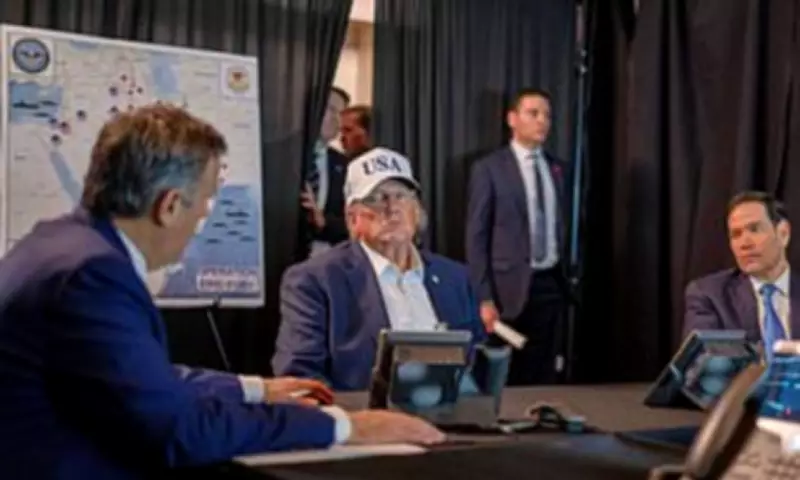
Former United States President Donald Trump has made a striking claim regarding recent military actions against Iran. He asserts that the initial attacks effectively eliminated all of Washington's main choices to take over the regime following the death of Ayatollah Ali Khamenei.
Wiping Out Succession Plans
Trump stated that the White House had previously shortlisted several preferred successors to the late supreme leader. However, he described the military operation as 'so successful' that it not only killed the primary contenders but also the secondary and tertiary options considered by the United States.
'The attack was so successful it knocked out most of the candidates,' Trump told ABC News. He further claimed that forty-eight Iranian leaders perished in the weekend bombings, decimating a significant portion of the country's leadership structure.

Key Figures Among the Casualties
While Trump has not disclosed the specific individuals earmarked as potential successors, notable casualties from the attacks include Ali Shamkhani, a top regime adviser; General Mohammad Pakpour, commander of the Revolutionary Guard; and the hardline former president Mahmoud Ahmadinejad. These deaths represent a substantial blow to Iran's political and military hierarchy.
Iran's Response and Internal Dynamics
In the aftermath, Iran's foreign minister, Abbas Araghchi, condemned the killing of the supreme leader as a 'religious crime' with serious impending consequences, as reported on state television. Tehran has vowed resilience against continued assaults, with security chief Ali Larijani declaring that Iran 'will not negotiate with the United States.'
Despite this public stance, Trump revealed that he had been contacted by someone within the Iranian regime expressing a desire to negotiate a deal, indicating potential internal divisions.
Potential Successors and Current Governance
Iran is now navigating a complex leadership vacuum. Key figures under consideration for the supreme leader role reportedly include Ali Larijani, Mojtaba Khamenei (the second eldest son of the late Ayatollah), and Mohammad Baqer Qalibaf, the speaker of parliament. Additionally, Hassan Khomeini, grandson of the late Ayatollah Ruhollah Khomeini, is expected to be a prominent figure in the clerical deliberations.
Currently, Iran is being governed by a temporary council comprising President Masoud Pezeshkian, Chief Justice Gholam-Hossein Mohseni Ejei, and senior cleric Alireza Arafi. This interim arrangement underscores the urgency and complexity of establishing a permanent successor.
Trump's Unrevealed Preferences
In a separate interview with the New York Times, Trump mentioned having 'three very good choices' for Iran's next potential leader but opted not to disclose their identities. This secrecy adds a layer of intrigue to the already tense geopolitical situation, highlighting the strategic calculations involved in the United States' approach to Iran's future leadership.
The situation remains fluid, with both nations poised for further developments as Iran grapples with its leadership crisis and the United States assesses the ramifications of its military actions.