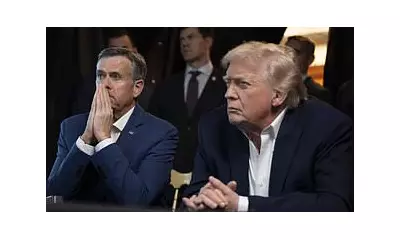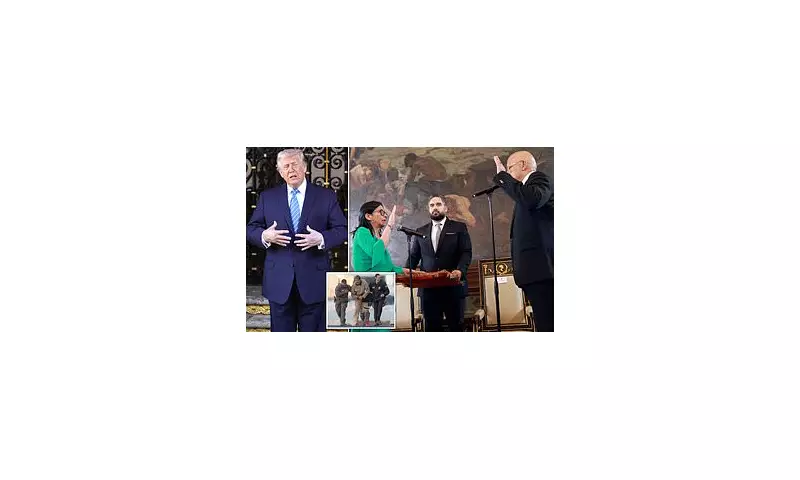
Former President Donald Trump has outlined a controversial plan for the United States to rehabilitate Venezuela, suggesting American taxpayers could ultimately foot the bill for rebuilding the country's shattered energy infrastructure with the help of major oil firms.
A Costly Rebuilding Effort
In an interview with NBC News, Trump stated that the process of restoring Venezuela would require a "tremendous amount of money." He indicated that while oil companies would front the initial investment, they would later be reimbursed "by us or through revenue," a move that could place a significant burden on the US Treasury.
"I think we can do it in less time than that, but it'll be a lot of money," Trump said, referencing an 18-month timeline he suggested might be needed before the country could hold a presidential election. He argued that fixing the nation's basic infrastructure must come first, claiming, "There's no way the people could even vote."
Defending the Strategy to His Base
When questioned on whether his "America First" supporters would accept such extensive overseas nation-building, Trump was defiant. He insisted his political base, the MAGA movement, would back the plan.
"MAGA loves it. MAGA loves what I'm doing. MAGA loves everything I do. MAGA is me," he declared, adding, "and I love everything I do, too."
Trump named several key figures responsible for overseeing the Venezuela project, including Secretary of Defense Pete Hegseth, Vice President JD Vance, Secretary of State Marco Rubio, and Stephen Miller. However, when pressed on ultimate accountability, he simply stated "me."
Maduro's Dramatic Court Appearance
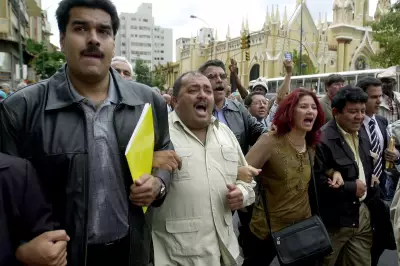
The comments follow the dramatic capture of former Venezuelan President Nicolás Maduro, who was hauled before a federal court in Manhattan on Monday to face drug trafficking charges. The preliminary hearing descended into chaos, with Maduro—wearing prison-issue clothing and shackles—engaging in a shouting match with a member of the public.
Pedro Rojas, who claimed to have been jailed by Maduro's regime, warned the deposed leader he would "pay" for his crimes. Maduro screamed back that he was a "prisoner of war," before a judge cut short his rant about being "kidnapped" by US forces.
His wife, Cilia Flores, appeared alongside him in similar attire. The scene marked a stark fall for the 63-year-old, who just days prior was a head of state.
Geopolitical Repercussions and a New 'American Dominance'
Trump framed the operation as a decisive reassertion of US power, declaring that "American dominance in the Western Hemisphere will never be questioned again." He has used Maduro's capture to pressure other nations, including Mexico and Greenland, to align with US interests or face potential consequences.
Despite the aggressive stance, the White House has signalled it is not seeking full regime change, but rather Maduro's removal and his replacement with a compliant government, which could include some of his former allies.
The move has drawn swift condemnation from nations with deep ties to Caracas, including China, Russia, and Iran, while even some US allies like the European Union have voiced alarm. Meanwhile, Venezuela's opposition, which the Trump administration says was cheated by Maduro, finds itself sidelined and furious at the emerging political strategy.