Trump Administration Contemplates Significant Military Escalation Against Iran
President Donald Trump is reportedly considering a substantial escalation in the ongoing Middle East conflict, with proposals under review that could involve deploying thousands of additional American troops to the region. As the war with Tehran enters its third week, the Pentagon is actively preparing for various military scenarios in an increasingly volatile campaign.
Reinforcement Plans and Strategic Objectives
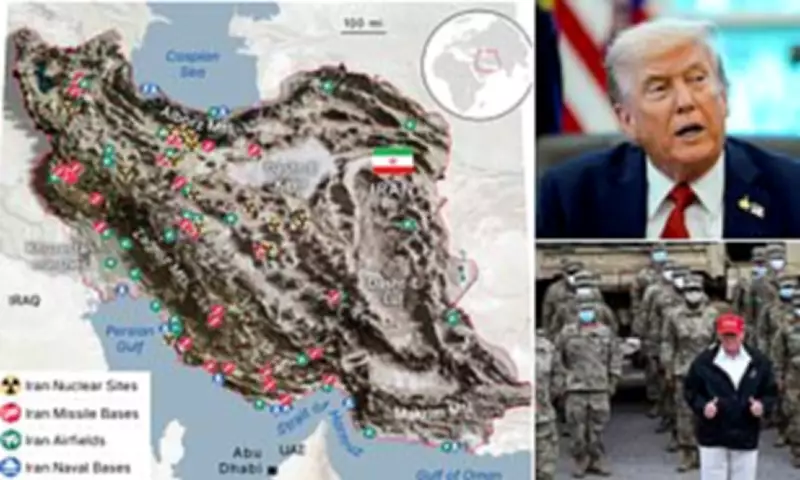
Among the options being examined is a major reinforcement of US forces stationed across the Middle East, which would provide President Trump with greater operational flexibility as he contemplates expanding military actions against Iran. According to sources familiar with the discussions, these reinforcements could support efforts to ensure safe passage for global oil supplies through the critical Strait of Hormuz, a vital artery for international trade that handles approximately twenty percent of the world's oil on a typical day.
While such a mission would primarily rely on American air and naval power, insiders have cautioned that it might also pave the way for US troops to be stationed along Iran's coastline, representing a significant escalation in the conflict. Behind closed doors, officials have additionally explored the possibility of sending ground forces to Kharg Island, the strategic Iranian facility through which ninety percent of the country's oil exports flow.

High-Risk Operations and Political Considerations
Although US forces previously struck military targets on Kharg Island earlier this month, some experts suggest that seizing control of the facility could prove more advantageous than destroying it outright. However, the risks associated with such operations are considerable. One US official warned that any mission targeting Kharg Island would be highly dangerous, given Iran's capability to attack the island with missiles and drones.
The prospect of deploying American troops, even for limited missions, carries substantial political weight for President Trump. Public support for the conflict remains low, and the President has repeatedly pledged to avoid entangling the United States in new Middle Eastern wars. Despite this, discussions have reportedly extended to whether US forces could be used to secure Iran's stockpiles of highly enriched uranium, a complex and perilous task that would likely fall to elite special operations units.
Current Military Situation and Strategic Ambitions
Sources emphasize that no immediate ground deployment appears imminent, and operational details remain closely guarded. A White House official speaking anonymously stated, 'There has been no decision to send ground troops at this time, but President Trump wisely keeps all options at his disposal.' The official added that the President remains focused on achieving all objectives of Operation Epic Fury, which include destroying Iran's ballistic missile capacity, annihilating their navy, preventing terrorist proxies from destabilizing the region, and ensuring Iran cannot obtain nuclear weapons.
These high-level deliberations occur as US forces continue relentless assaults on Iran's military infrastructure, targeting naval assets, missile systems, drone stockpiles, and defense facilities nationwide. According to US Central Command, more than 7,800 strikes have been conducted since the campaign began on February 28, with over 120 Iranian vessels damaged or destroyed. Approximately 50,000 American troops are currently stationed across the Middle East, with thirteen US service members killed and roughly 200 wounded, though most injuries are described as minor.
Complications and Mixed Signals
President Trump has made clear that his ambitions extend beyond weakening Iran's military to securing maritime routes and preventing Tehran from developing nuclear weapons. However, committing ground troops could dramatically widen the war's scope and associated risks. For years, Trump has criticized previous administrations for involving the US in overseas conflicts, yet he has recently declined to rule out the possibility of 'boots on the ground' in Iran.

A senior White House official told Reuters that Trump has various options for acquiring Iran's nuclear material but has not decided how to proceed. 'Certainly there are ways in which it could be acquired,' the official noted, adding that no decision has been made. In testimony to lawmakers, Director of National Intelligence Tulsi Gabbard stated that Iran's nuclear enrichment program had already been crippled by strikes earlier this year, with underground facilities effectively sealed off and 'buried and shuttered with cement.'
Military planning appears to extend beyond the arrival of an Amphibious Ready Group in the region next week, which will include more than 2,000 Marines. Complicating matters is the temporary loss of the USS Gerald R. Ford aircraft carrier, which is being sent to Greece for maintenance after an onboard fire, reducing available American firepower at a critical moment.
Strait of Hormuz Focus and International Tensions
President Trump has sent mixed signals regarding the strategic importance of the Strait of Hormuz. While initially suggesting US naval escorts for tankers, he later urged allies to step in and, with little response, even floated the idea of withdrawing entirely. On Truth Social, Trump posted, 'I wonder what would happen if we 'finished off' what's left of the Iranian Terror State, and let the Countries that use it, we don't, be responsible for the so-called 'Strait?'
This comes just days after the US military deployed multiple 5,000-pound deep penetrator bombs on underground missile sites along Iran's coastline near the Strait of Hormuz. US Central Command announced that these strikes targeted Iranian anti-ship cruise missiles that posed risks to international shipping. The 5,000-pound GBU-72 Advanced 5K Penetrator, first deployed in 2021, was used in these operations.
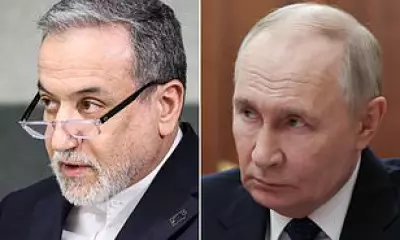
The bombings were disclosed hours after Trump criticized the United Kingdom, France, Japan, and Australia for declining to help secure the waterway. Iran's Foreign Minister Abbas Araghchi stated on Monday that the strait was 'open, but closed to our enemies,' while the United Arab Emirates indicated it might join a US-led international effort to ensure the waterway's safety.
Trump expressed frustration with American allies who 'don't want to get involved' in the Iran war despite his appeals for assistance as oil prices spiral. On Truth Social, he wrote, 'We no longer 'need,' or desire, the NATO countries' assistance - we never did,' referencing past threats to withdraw from NATO while claiming he had 'nothing currently in mind' regarding retaliation against the alliance.