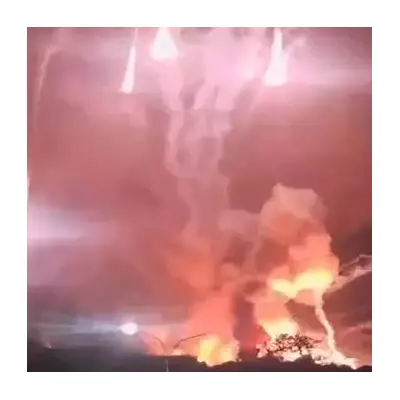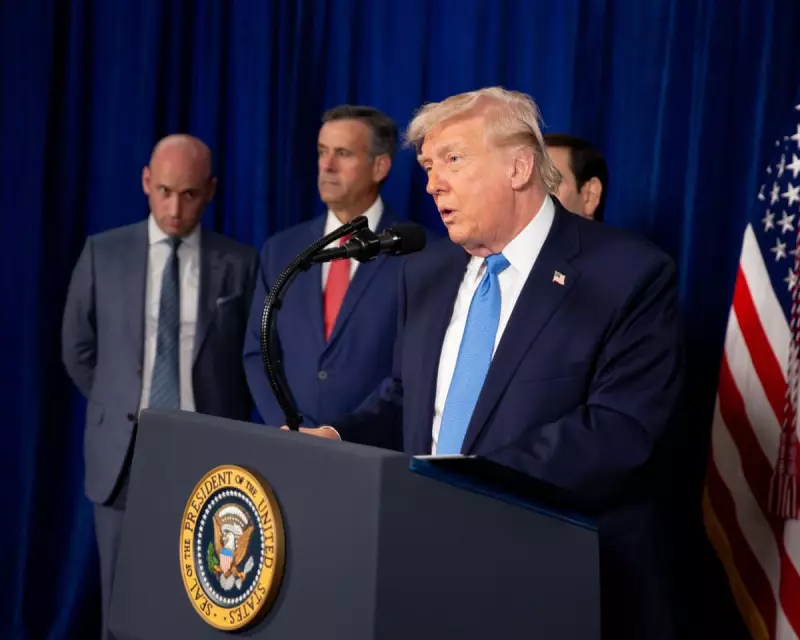
In a stark declaration that sent shockwaves through diplomatic circles, former US President Donald Trump announced his intention to launch a military strike on Caracas, the capital of Venezuela. This statement, made on 3rd January 2026, was not a hypothetical musing but a presented as a direct policy objective for a potential future administration.
A Doctrine of Unilateral Force
The core of Trump's alarming proposition lies in its justification. He framed the proposed attack on Venezuela not as a response to an imminent threat, but as a demonstration of power and a warning to other nations perceived as adversaries. This represents a radical departure from established international norms governing the use of military force, moving towards a model where might alone dictates right.
Such a doctrine, if enacted, would effectively grant a single nation the authority to act as global judge, jury, and executioner. The target, in this instance, was the government of Nicolás Maduro, a long-standing foe of Washington. However, the precedent set is universally dangerous, creating a template that could be used against any state deemed inconvenient or defiant by a powerful actor.
The Chilling 'Tomorrow' in Trump's Rhetoric
The most concerning aspect of the statement is its forward-looking menace. By stating "today's target was Caracas," Trump implicitly invites the question: who will be tomorrow's? This rhetorical device establishes a continuous cycle of threat, keeping the international community in a state of apprehension and coercion.
This strategy mirrors tactics used by authoritarian leaders to suppress dissent both domestically and abroad. It bypasses complex diplomacy, alliances, and legal frameworks in favour of simple, brutal demonstrations of capability. The message to other nations is clear: fall in line, or face the consequences, with the rules of engagement defined solely by the powerful.
Global Repercussions and the Erosion of Order
The implications of this declared intent extend far beyond the Caribbean. Firstly, it undermines the entire post-war international system built on concepts of sovereignty and collective security, however imperfectly applied. It signals a return to a might-makes-right worldview, encouraging similar behaviour from other regional powers and triggering a new, unstable arms race.
Secondly, it devastates any prospect for trusted diplomacy. How can nations negotiate in good faith when the threat of unilateral attack is a stated tool of policy? It forces countries into pre-emptive defensive postures and hardens geopolitical blocs, making the world a more divided and volatile place.
Finally, for the people of nations like Venezuela, it treats an entire population as collateral in a geopolitical power play. The human cost of a military strike on a capital city is incalculable, rendering the lives of civilians secondary to the sending of a political message.
Trump's statement on Caracas is more than a bellicose outburst; it is a blueprint for a new, more dangerous era of international relations. It discards the rulebook and proposes a world governed by the threat of impulsive force. Recognising this threat is the first step for democracies and the international community in defending a system of order, however fragile, from one of pure, unpredictable authority.