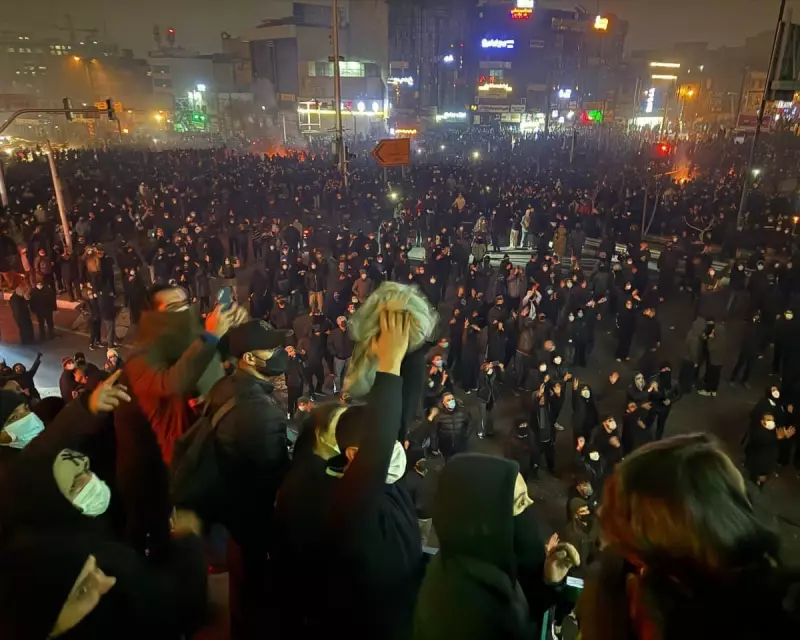
Donald Trump is facing urgent warnings from Iranian opposition figures to act swiftly on his promise to help protesters facing violent repression from security forces in Tehran. However, the US President is receiving deeply conflicting advice on the potential effectiveness and consequences of American intervention.
The Plea for Action and the Risk of Backfire
Over the weekend, a coalition of seven prominent Iranian political, civil, and cultural figures sent a letter to President Trump. The signatories, including Nobel peace prize winner Shirin Ebadi, journalist Javad Akbarin, and Komala party secretary general Abdullah Mohtadi, urged him to recognise the scale of the repression. They argued that the regime's violence amounts to a crime against humanity and cautioned that "every minute of delay will expand the dimensions of the crime."
Yet, a significant intervention from Washington carries a major risk. Analysts warn it could fuel the Iranian government's narrative that the unrest is part of an anti-Islamic plot orchestrated by the US and Israel, thereby undermining the protesters' domestic legitimacy.
Military Complexities and Cautious Voices
President Trump has vowed to "shoot at Iran" if its security services attack protesters. However, reports suggest his administration lacks a developed response to the fast-moving crisis, with no major movement of US military assets. The logistical challenges are stark. The population density of Tehran, home to roughly 12 million people, makes targeted aerial campaigns highly risky, as evidenced by a US-Israeli assault in June that resulted in over 1,000 Iranian deaths.
Potential targets like senior Islamic Revolutionary Guard Corps (IRGC) figures and Supreme Leader Ayatollah Ali Khamenei have bolstered their security. While IRGC bases in south Tehran are seen as more feasible, the wisdom of strikes is widely questioned. Danny Citrinowicz, a former Israeli defence intelligence specialist, pondered whether limited US action would hinder the regime or instead backfire by raising expectations for deeper involvement.
International Perspectives on Intervention
Sanam Vakil of Chatham House suggested US intervention would likely "shore up elite unity" within the Iranian regime at a moment of internal vulnerability. Esfandyar Batmanghelidj highlighted the Trump administration's failed track record in stewarding political transitions in Syria and Venezuela as a strong argument against involvement.
Former UK ambassador to Tehran, Rob Macaire, noted that previous US strikes in June did not diminish state power. He pointed to the growing gap between Trump's rhetoric and the reality of a complex situation where the regime's economic failures fuel anger, but no clear alternative leadership exists.
Meanwhile, the Iranian government is actively framing the crisis as a battle against foreign-engineered chaos. President Masoud Pezeshkian, in a Sunday television interview, appealed for national unity against an external enemy, accusing the US of using the economy as a weapon.