Trump's Misguided Predictions for Iran's Political Future
The assassination of Iran's Supreme Leader Ayatollah Ali Khamenei by a US-Israeli operation has created a volatile power vacuum, but former President Donald Trump's assumptions about a democratic revolution may be dangerously simplistic. Like Vladimir Putin's miscalculations in Ukraine, Trump's lack of understanding about Iran's intricate internal dynamics could lead to disastrous consequences.
A Regime Built to Endure
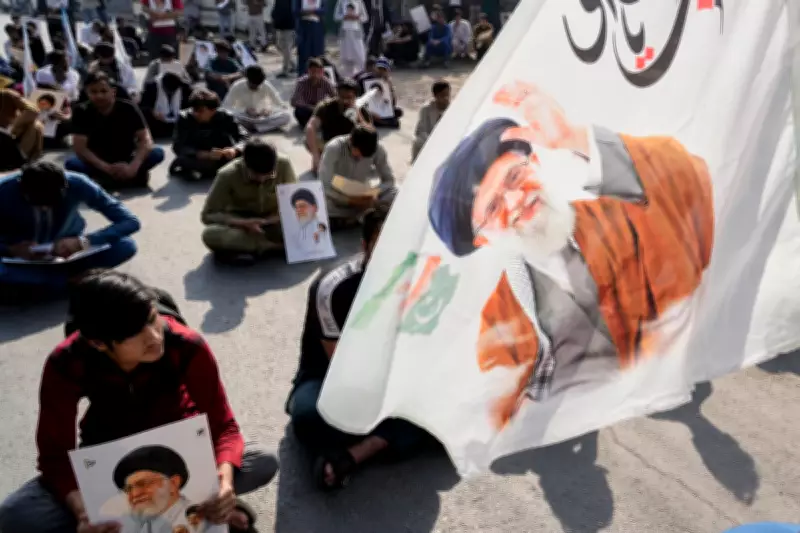
Despite widespread jubilation on Tehran's streets following the announcement of Khamenei's death, the Islamic Republic's structures remain remarkably intact. The Iranian economy is approximately forty percent controlled by secret services still operated by the Islamic Revolutionary Guard Corps (IRGC), even without its recently killed leader. These institutions are prepared to fight aggressively to maintain their grip on power, demonstrating that regime change requires more than decapitation strikes.
Trump's administration, influenced by evangelical Christian extremists and MAGA loyalists who have consistently supported Israel's far-right government, has embraced a distorted reality similar to Putin's pre-invasion assumptions about Ukraine. The former president removed independent voices from intelligence services and armed forces, surrounding himself instead with yes-men who likely told him what he wanted to hear about Iran's fragility.

Iran's Complex Opposition Landscape
The country faces significant centrifugal forces from armed separatist movements that complicate any simple transition to democracy. In the southeast, Baluch communities armed with weapons and a fierce reputation seek independence from Tehran's control. Meanwhile, Iranian Kurds have formed a coalition including the Democratic Party of Iranian Kurdistan, Kurdistan Free Life Party, and several other organizations opposing central government authority.
These Kurdish groups represent generations of fighters who suffered severe repression both before and after the 1979 revolution. Although comprising approximately twelve percent of Iran's population alongside Baluch minorities, they possess military capacity that could support broader challenges to governmental authority. A small Arab minority in southern regions adds another layer of complexity to Iran's ethnic tapestry.
Competing Visions for Iran's Future
Reza Pahlavi, son of the Shah deposed in 1979, has emerged as a rallying point for opposition demonstrations, with many protesters carrying his flag during January's anti-government rallies. However, Pahlavi has already condemned Kurdish moves as separatist and undermining national unity, revealing fractures within opposition movements. His proposed plan involves ruling for three years before holding a referendum on whether Iran should become a monarchy or democracy, while promising to end support for global terror groups and nuclear programs.
Meanwhile, the Mujahedin al Khalq (MEK), now based in Albania after fighting for Saddam Hussein against Iran, presents itself as a government-in-exile promising democracy. This armed cult-like organization has found advocates including Rudy Giuliani, Trump's former personal attorney, though its credibility remains questionable among many Iranians.
Public Sentiment and Regime Resilience
Academic surveys reveal significant secularization within Iranian society, with only forty percent identifying as Muslims and just thirty-two percent as Shia Muslims according to a 2020 study of fifty thousand Iranians. Thousands of anti-government protesters were killed by regime forces in January, demonstrating deep discontent with theocratic rule, economic collapse, and systemic corruption in a country four times Germany's size.
Yet the regime's survival mechanisms cannot be underestimated. All opposition groups recognize that in Iranian revolutions, failing to back the winner can prove terminal. None possess sufficient strength alone to carry Iran to freedom, requiring elements of the existing regime to defect from central control. As Ukraine enters its fifth year of war against Russia with NATO expanding, the parallel with Putin's miscalculation serves as a stark warning: understanding a nation's complexities matters more than ideological certainty.