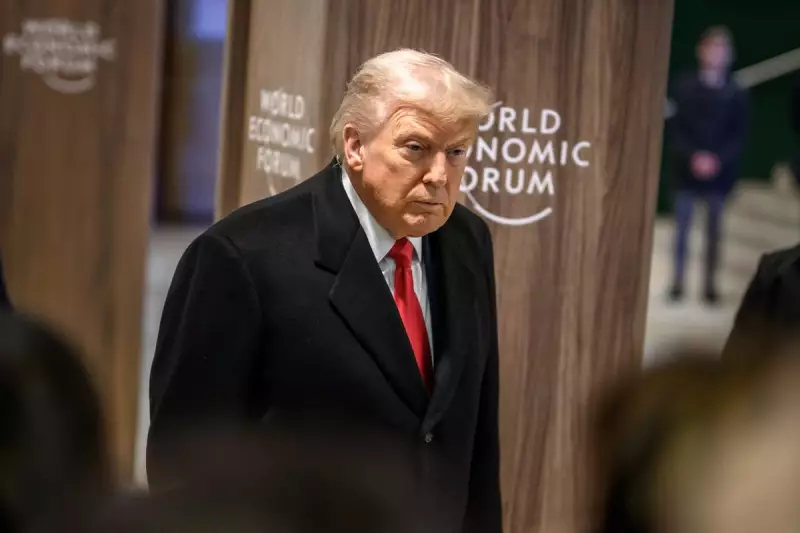
From the Swiss Alps, a diplomatic drama unfolded this week that perfectly encapsulated the turbulent nature of transatlantic relations in the era of Donald Trump. The President's cavalcade arrived in Davos with a fixation that had already rattled European capitals: the United States' perceived need to "have Greenland" under its full control to counter Arctic threats from Russia and China.
The Contradictory Messages from the Alpine Resort
Trump's warm-up to the World Economic Forum had been characteristically combative. He had waged a significant fight with European allies, threatening additional tortious tariffs on countries including the United Kingdom for supporting Denmark's authority over Greenland and treating NATO as what he views as a mere instrument of American interests.
Yet, simultaneously, a more conciliatory message was being circulated by pragmatic figures within the administration. Treasury Secretary Scott Bessent took to the dining circuit, reassuring global entrepreneurs that calm should prevail and events should be allowed to unfold naturally.

A Nerve-Wracked Week of Fire, Fury, and Retreat
Remarkably, this pragmatic advice proved correct during an intensely anxious period. Following Trump's characteristically fiery discourse, news emerged hours later that a framework agreement on Arctic cooperation had been reached with NATO Secretary-General Mark Rutte. The previously looming tariff threats evaporated into the thin Alpine air.
On a strictly logical level, the Trump position remains massively contradictory. Practically, however, the retreat represents relatively good news as it halts a cycle of bad-tempered escalation that had become a hallmark of transatlantic relations. Just as Europe was preparing to discuss serious tariff retaliation—effectively a trade war with the United States—over Trump's menacing deployment of trade levies, the American position softened.
The European Perspective: Relief Mixed with Exhaustion
As Democratic Senator Chris Coons of Delaware, a veteran opponent who has sparred with Trump across two presidencies, noted regarding the Greenland issue: "It will either be annoying and insignificant—or it will be a catastrophe." This week, catastrophe was avoided, but significant irritations and anxieties persist.
The European side will claim that standing firm against Trump's barrage in defence of Denmark, which oversees Greenland's security, helped precipitate the American retreat. Meanwhile, UK Prime Minister Keir Starmer will highlight the channels his team maintains with the administration, including through business adviser Varun Chandra, who has cultivated relationships even with the most heated MAGA figures around Trump.
The Underlying Contempt and Its Consequences
Trump's fundamental attitude toward Europe was laid bare in his comments: "I love Europe, and I want to see it go good, but it's not heading in the right direction." Regardless of how many state visits, blandishments, and attempts at bonhomie European leaders engage in with Trump, the underlying message remains that he essentially regards "Yurrup" as a region of slow-growing economies led by figures he can tease and belittle.
This perspective gave Canadian leader and former Bank of England Governor Mark Carney material for what became the conference's counter-speech. He insisted that America's turn away from international institutions represents not merely a blip but a full-on "rupture," arguing there is no point in nostalgia from liberal elites: "The old order is not coming back."
The Political Calculus Behind the Retreat
There exists a significant midterm elections angle to the American withdrawal. The Arctic lunge has not resonated well with US voters, with polls showing twice as many Americans oppose purchasing Greenland as support doing so. The most plausible explanation for this week's switchback events is that Trump refused to alter his speech, keen to reserve the right for more aggressive action while simultaneously clarifying that the United States would not pursue Greenland by force.
As one EU veteran foreign minister starkly described the experience: "It was like being locked in an abusive relationship, in which you end up being grateful that you escaped a beating."

The Lingering Headache for European Leadership
This episode leaves Europe's leaders confronting the persistent headache of determining how far to indulge any wild or threatening plan the administration might embrace next. Whims are transforming into demands with alarming rapidity in the current political climate.
The giddy events of this week in Davos underline a fundamental truth about Trumpworld: anything can happen and then unhappen. This pattern is growing even more erratic and unpredictable than before. The result is a wave of relief tempered by an undertow of sheer exhaustion. As one Nordic foreign minister confessed late last night: "I just want to get out of here." Many of her fellow leaders understand that sentiment all too well this week.